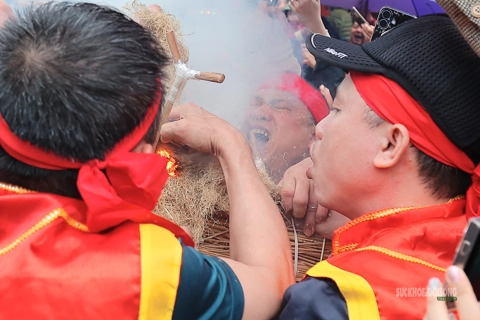
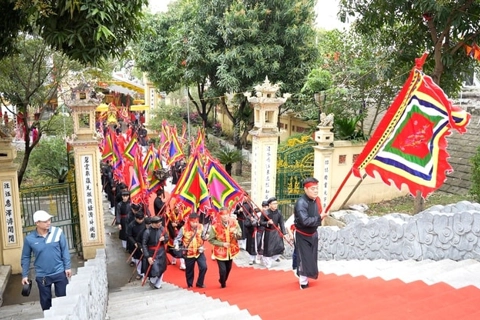
Eight offerings, one legend: Inside the sacred rituals of the Giong Festival
At Soc Temple in Hanoi’s outskirst each Lunar New Year, eight handcrafted offerings honor Saint Giong, turning legend into ritual and memory into spectacle.
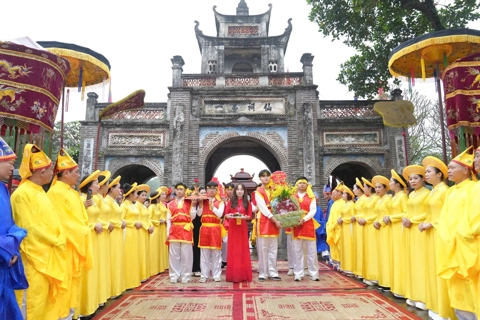
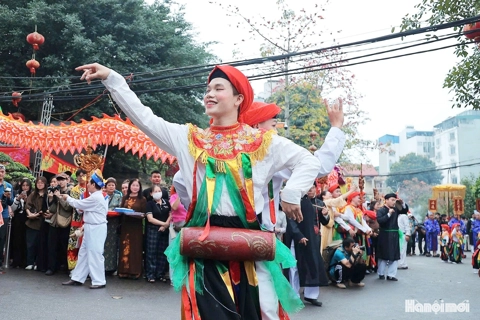
THE HANOI TIMES — Drums thunder across Soc Son each spring as villagers shoulder eight symbolic offerings to Saint Giong, the legendary hero who rode into battle to defend the nation, turning the Giong Festival into a powerful convergence of myth, memory and living heritage in Hanoi’s northern outskirts.
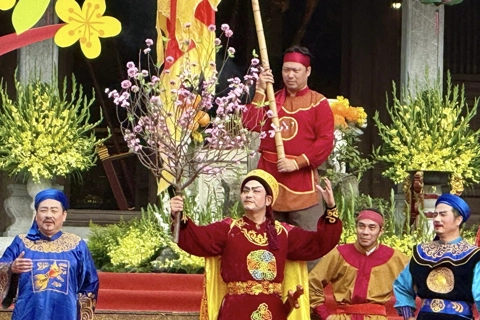
Bamboo flowers

The "bamboo flowers" symbolically represent the splintered stalks of bamboo that Saint Giong wielded in battle. Photos: Tung Nguyen/ The Hanoi Times
The bamboo tree, prepared by artisans in Ve Linh Village, is considered the most distinctive of the festival’s eight offerings. According to artisan Pham Van Thanh, young bamboo is selected at the right age, split into slender strips, dyed yellow with gardenia extract and meticulously shaped into fine, feathery petals.
Folklore recounts that Saint Giong used bamboo as a weapon in battle. In today’s ritual, the bamboo flowers embody resilience and unity, evoking the collective strength that has enabled the Vietnamese people to withstand hardship and defend the nation.
The horse goddess
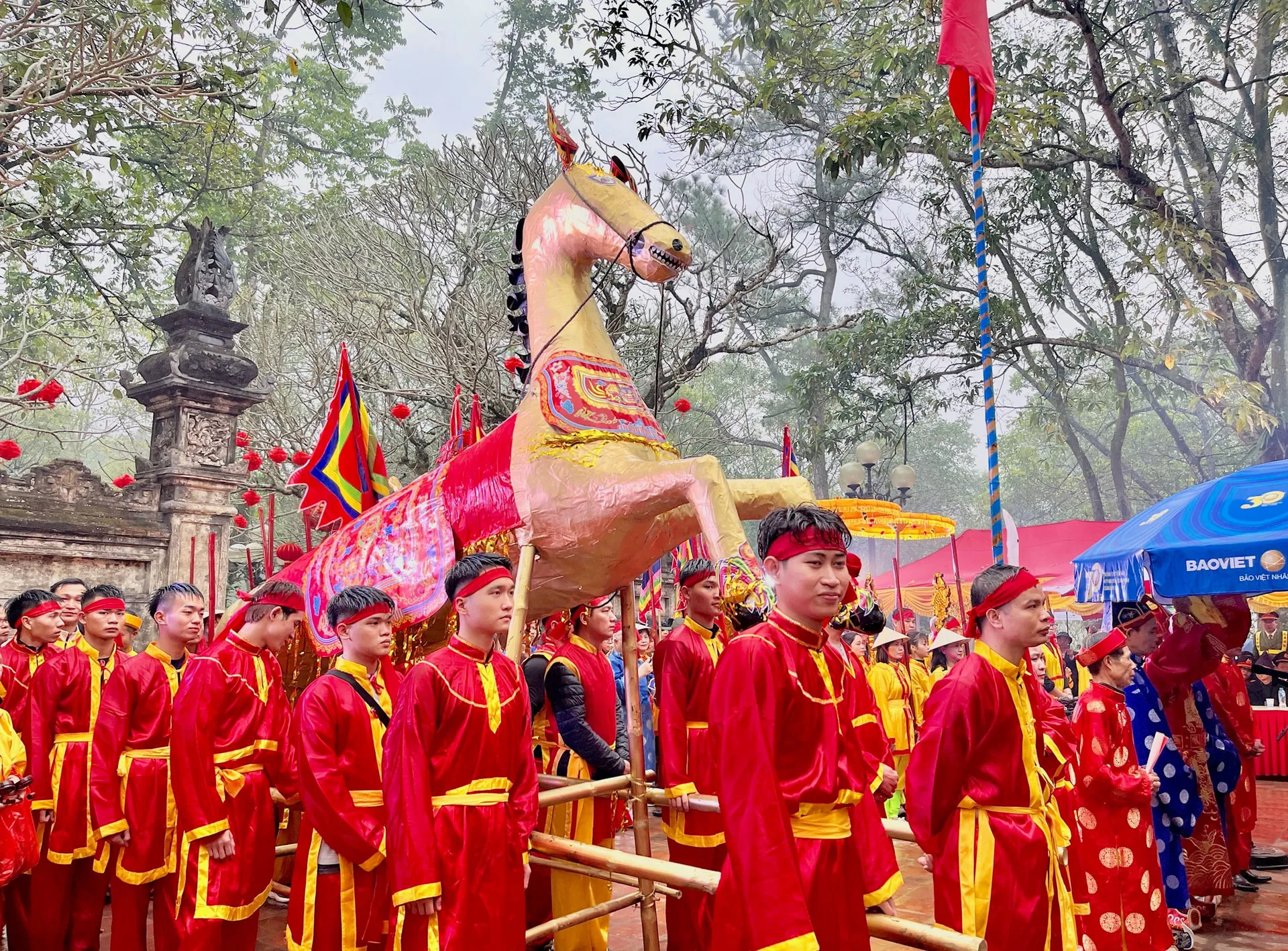
Horse Goddess Procession ritual.
From Phu Ma Village comes a striking papier-mâché Horse Goddess. War horses, central to the mythical battle, are venerated here as divine guardians. After victory was secured, villagers began worshipping the animals as protective spirits, embodiments of loyalty and strength. The offering pays tribute to creatures believed to have carried the nation toward freedom.
The war elephant

The War Elephant procession.
Equally commanding is the War Elephant, constructed from bamboo and papier-mâché by villagers of Duoc Thuong. Elephants, long associated with royal power and battlefield might, are honored as steadfast protectors. Their tusks, carefully preserved by residents of Duc Hoa, are paraded with solemn ceremony, underscoring the reverence accorded to these animals.
Betel and areca
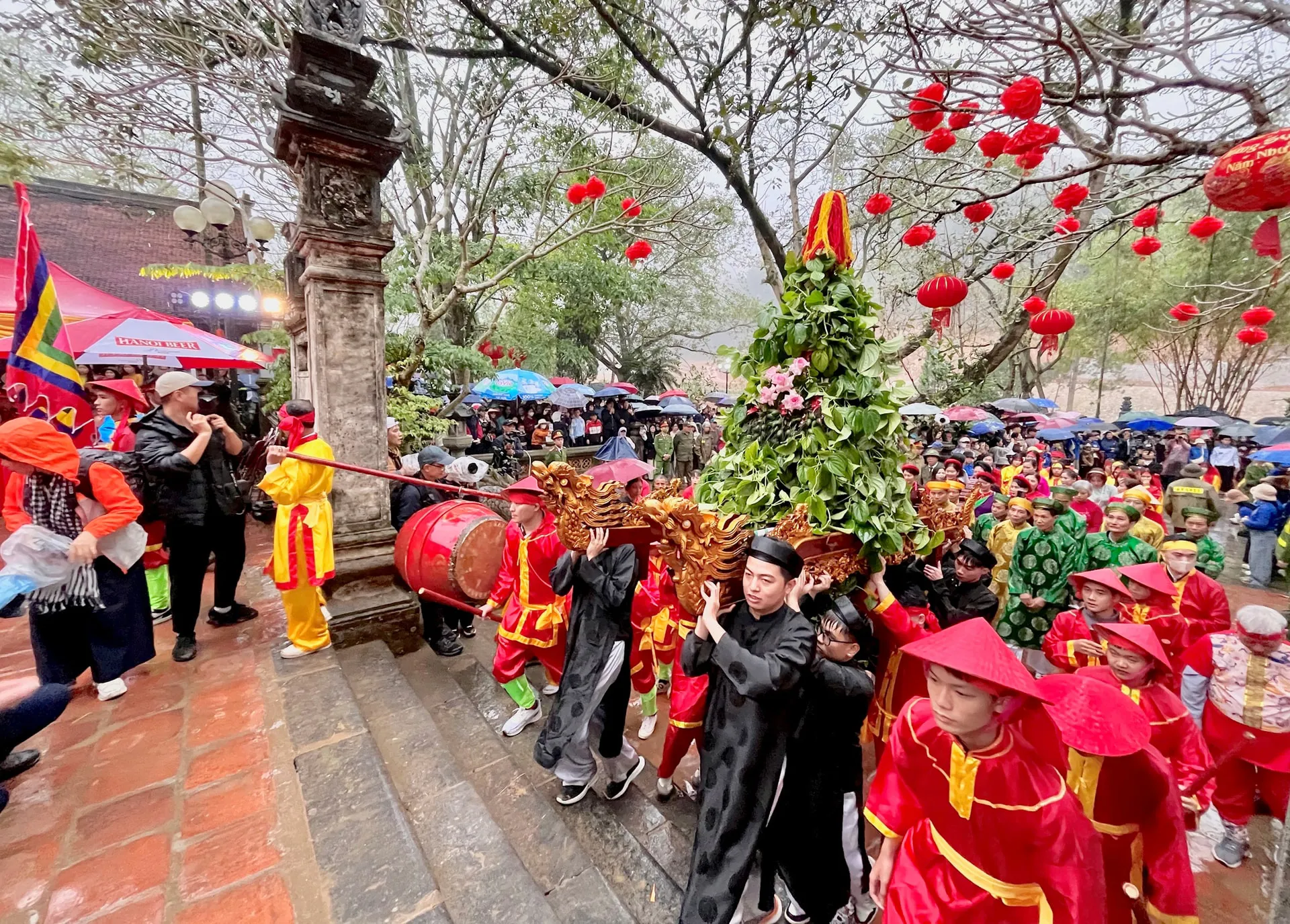
Betel and areca are prepared by residents of Dan Tao Village symbolizes the harmonious relationship between man and nature.
In Dan Tao Village, offerings of betel leaves and fresh areca fruit evoke hospitality and wisdom. According to legend, after defeating the enemy, Saint Giong paused here to rest, share a simple meal and impart guidance to future generations. The pairing of betel and areca is deeply rooted in Vietnamese custom that signals harmony between people and the natural world.
Elephant tusks
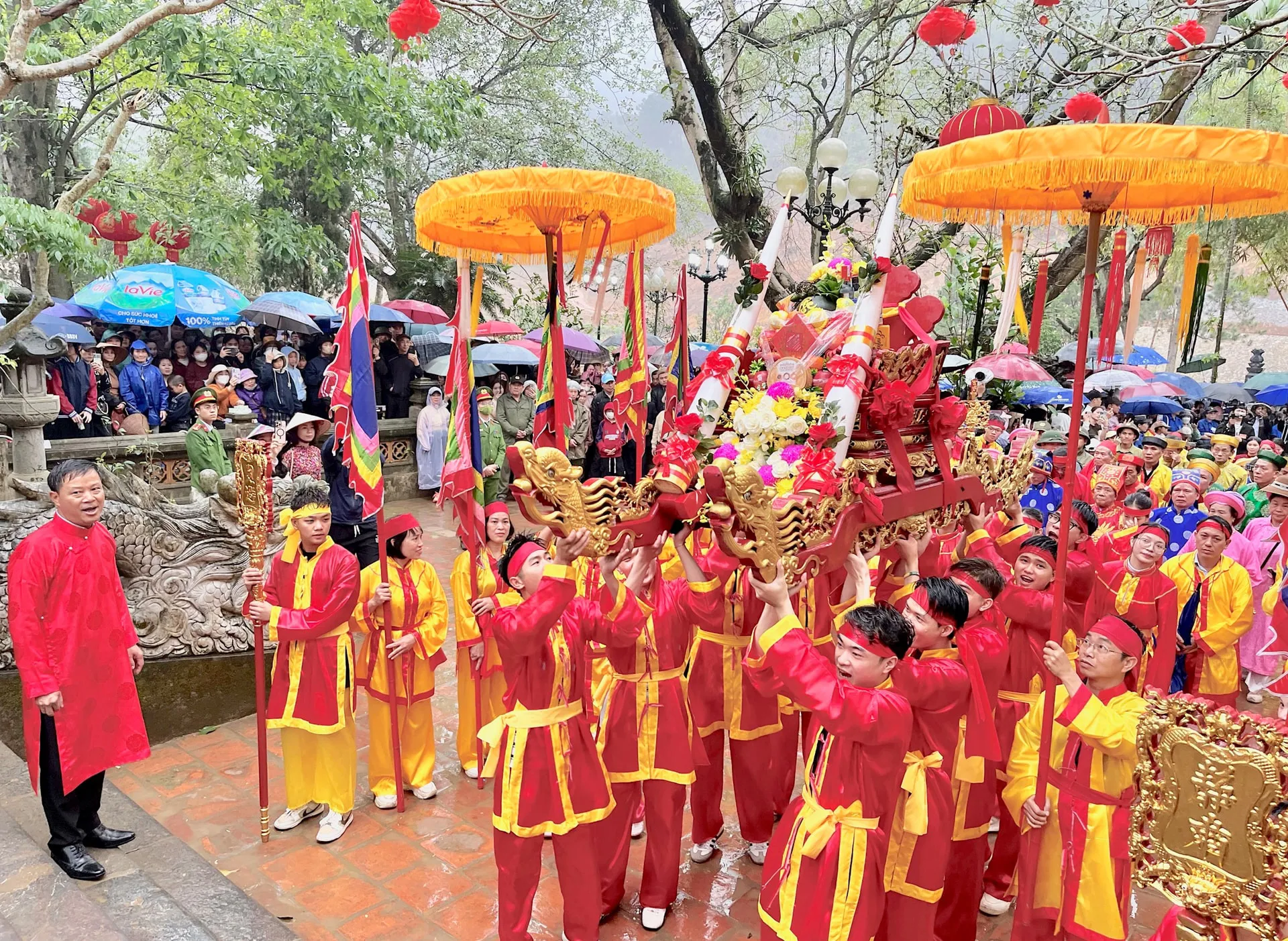
The ritual of offering elephant tusks serves as both an act of atonement and a prayer for the well-being of the residents of Duc Hoa Village.
Da Phuc Commune is responsible for the festival’s fifth offering, the annual presentation of elephant tusks at Soc Temple.
According to legend, a war elephant returned to the area after Saint Giong’s departure and damaged local fields. Villagers subdued the animal and broke off its tusks, only later learning of its sacred connection to the Saint.
Since then, the community has offered elephant tusks each year in reverence and repentance, praying for peace, well-being and prosperity for residents and the nation.
Elephant grass
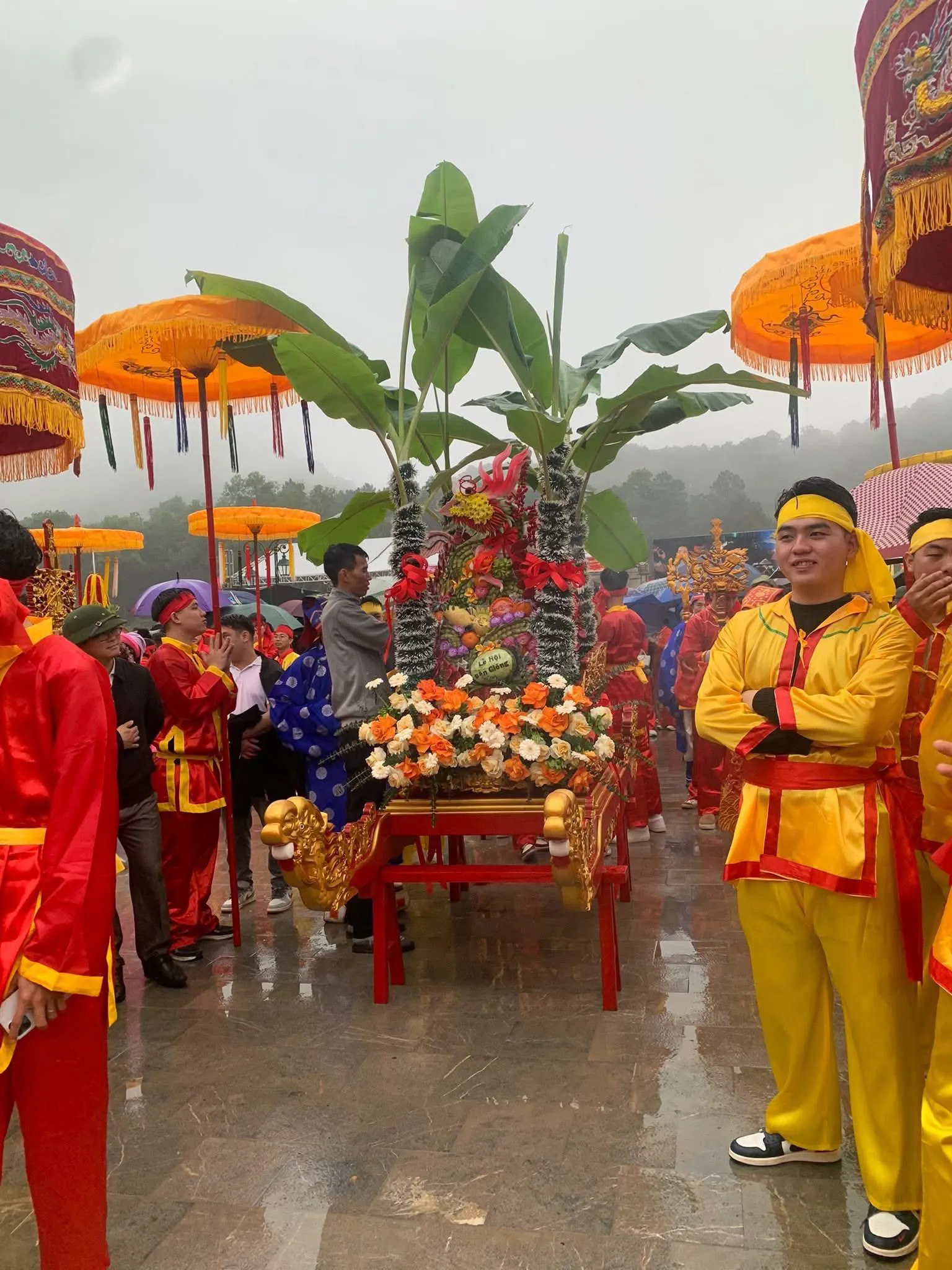
Elephant grass - a humble offering, meticulously prepared by the people of Yen Sao Village.
Elephant grass, known locally as Co Voi, is another essential offering. Traditionally used to feed the war horse, it is arranged on ornate palanquins by villagers of Yen Sao. The lush green fronds symbolize gratitude and attentiveness toward the animals that bore the brunt of the battle.
The female general’s palanquin

The procession of Female General’s Palanquin.
Yen Tang Village presents the Female General’s Palanquin, honoring a woman believed to have contributed to Saint Giong’s victory. This year, local primary school student Tran Thi Anh Linh has been chosen to take on the ceremonial role, joining the procession in tribute to the Saint.
The ritual affirms the enduring role of women in the nation’s history of defense and leadership.
The Cau Huc Game
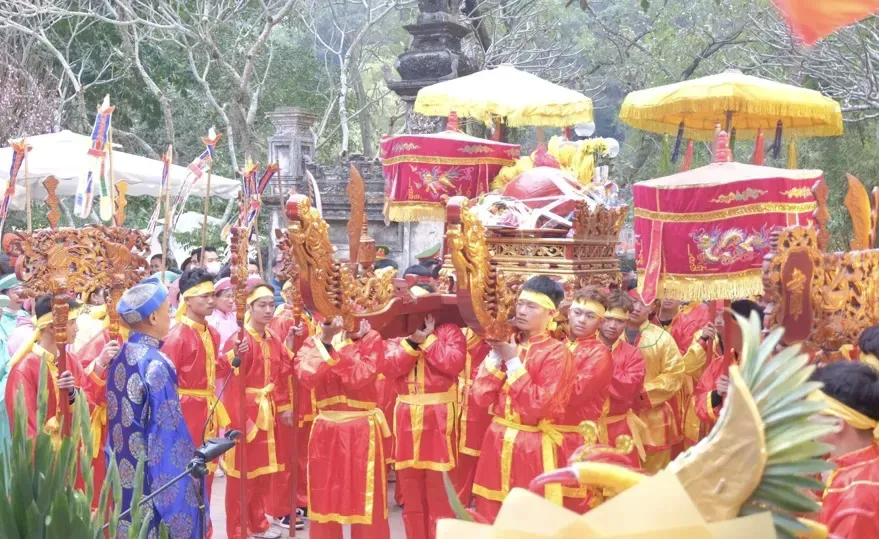
The Cau Huc ball symbolizes the competitive and martial spirit of the local community.
Another is the Cau Huc, a large bamboo-and-papier-mâché ball, intricately decorated by the people of Tan Minh Commune. Used in a ritual game in which participants strike the ball with their heads, it is a kinetic display of dexterity and martial vigor. The spectacle, at once playful and disciplined, channels the intelligence and resilience that the festival seeks to preserve.
Together, the eight offerings are more than ritual objects, but living links between myth and memory, past and present. Each spring, as incense rises over Soc Temple and drums echo across the hills, they renew the sacred legend at the heart of Vietnam’s cultural heritage.
|
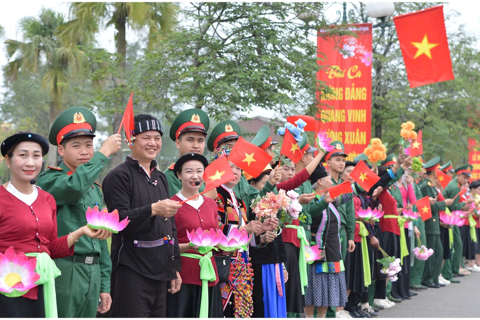
The Giong Festival opened on February 22, drawing pilgrims to Soc Son in Hanoi to honor Saint Giong, the legendary hero who defeated foreign invaders and is believed to have ascended to heaven at Soc Temple. Commemorated each year through ritual processions and symbolic reenactments at Soc Temple and Phu Dong Temple, the festival was inscribed by UNESCO in 2010 on the Representative List of the Intangible Cultural Heritage of Humanity, recognizing its enduring cultural significance. |