Festival gathers ethnic communities in Hanoi for three-day cultural showcase
The 2026 “Spring Colors Across the Nation” festival brings together hundreds of artisans and community representatives, highlighting living traditions from across Vietnam while reinforcing efforts to preserve cultural heritage in a rapidly modernizing society.
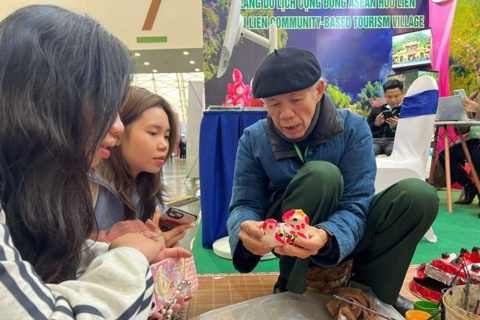
THE HANOI TIMES — The 2026 “Spring Colors Across the Nation” festival opened on February 28 at the Vietnam National Village for Ethnic Culture and Tourism in Hanoi’s Doai Phuong Commune, recreating traditional rituals, staging folk performances and presenting regional specialties.
Around 300 representatives from 32 ethnic communities across 15 provinces and cities have assembled to form a cultural space rooted in heritage and regional diversity.

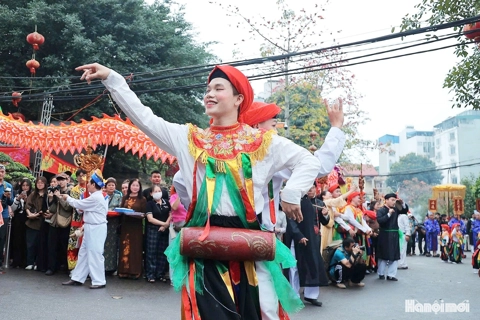
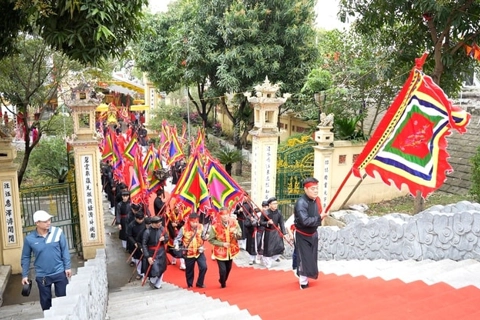
The event gathers 300 representatives from 32 ethnic communities across 15 provinces and cities in the country. Photo: Hanoimoi Newspaper
Participants include the Ede and Gia Rai from the central province of Dak Lak, the Khmer from the southern province of Ca Mau and the Cao Lan–San Chay from the northern province of Phu Tho.
Visitors can take part in folk games such as bamboo dancing, stilt walking, nem con (cloth ball throwing) and shuttlecock kicking.
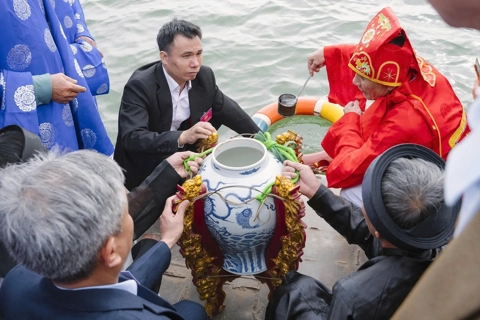
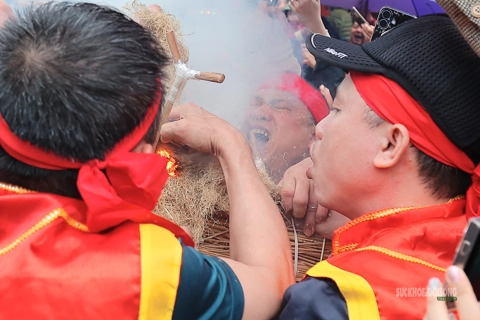
Over three days, the festival reenacts traditional rituals and seasonal celebrations while honoring artisans, village elders and respected community figures who create, preserve and pass on cultural values.
Minister of Culture, Sports and Tourism Nguyen Van Hung said each ritual, folk melody and custom presented at the event represents a continuation of history and identity, contributing to the preservation and dissemination of Vietnamese cultural values.
He said safeguarding cultural heritage remains a shared responsibility of the entire political system and society.
Deputy Prime Minister Mai Van Chinh described the event as a symbol of national unity that strengthens pride in cultural roots and supports aspirations for national development in a new era.
He called on authorities to give priority to ethnic minority, remote, border and island communities, advance digital transformation in heritage preservation, assist artisans in applying technology and develop cultural industries and community-based tourism to create sustainable livelihoods and encourage broader community participation.
He also urged expanding cultural exchanges and making use of international integration to introduce Vietnam’s cultural heritage globally while linking heritage with economic development.
The deputy prime minister added that authorities should enhance the role of the cultural village as a national and international cultural hub through coordinated infrastructure investment and sustainable tourism products.
He said recent efforts to preserve and promote traditional cultural values have delivered tangible results and generated positive social impact.