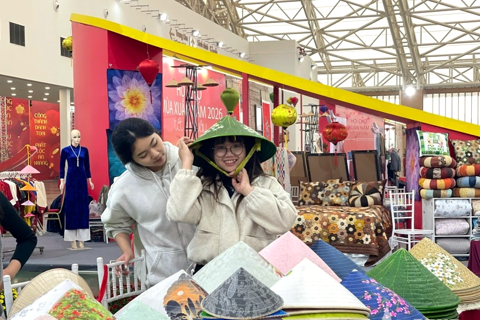
From clay toys to tea: culture shapes shopping at Spring Fair 2026
Beyond its record-breaking scale, the first Spring Fair 2026 feels less like a marketplace than a cultural crossroads, where regional identities, handcrafted goods and digital ambition converge, hinting at how Vietnamese products may find new value ahead of the Lunar New Year 2026.
THE HANOI TIMES — From the northern mountainous province of Lang Son, 80-year-old artisan Hoang Choong quietly draws crowds with his handmade clay rooster toys and animal masks at the Spring Fair 2026 in Hanoi.
A member of the Tay ethnic group, Hoang Choong is among the few remaining artisans who continue to practice the traditional craft.
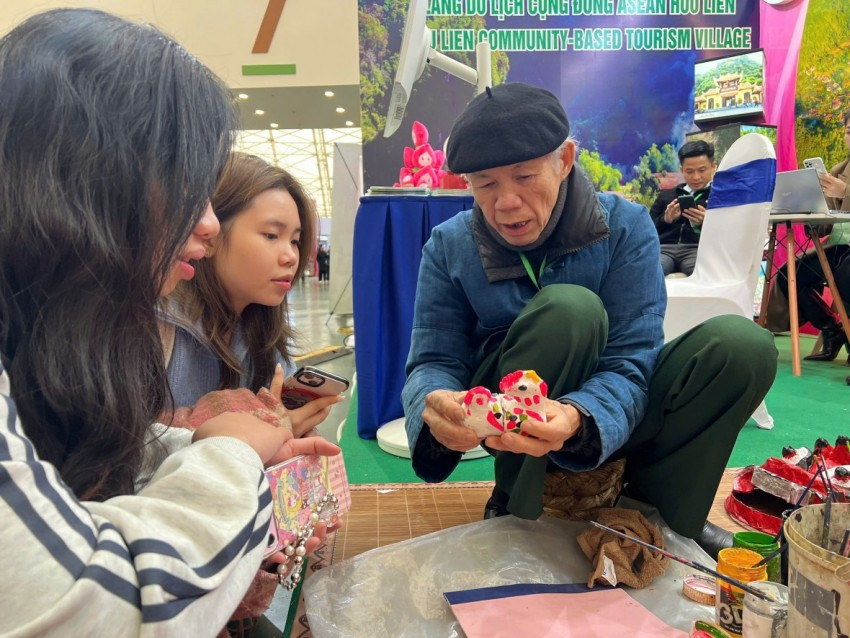
80-year-old artisan Hoang Choong from the northern province of Lang Son at the fair's his booth. Photo: Phap luat Newspaper
He does not focus on sales. Instead, he patiently demonstrates each step, viewing his work as a responsibility to preserve and pass on cultural memory.
“For the Tay people, the clay rooster symbolizes blessings and good fortune,” he said. “I follow the old methods because I hope this tradition will survive.”
Young visitors watch closely as he explains how the toys produce sound, a process that requires careful shaping and precise airflow. For many, it is their first direct encounter with a folk craft previously seen only in books or museums.
Le Mai, a university student from Hanoi, said she came to the fair to shop but stayed longer after discovering the craft demonstrations.
“It’s more than a toy,” she said. “It carries a whole story. I ended up experiencing many cultures in one place.”
Nearby, performances of Central Highlands gongs filled the exhibition hall with deep, resonant rhythms.
The contrast between ancient instruments and the modern venue created a striking moment, drawing visitors into an experience that felt both physical and emotional.
For Nguyen Duc Minh, a 38-year-old office worker in Hanoi, the fair changed how he viewed Vietnamese products.
He arrived planning to buy dried fruits and tea as Tet gifts but stayed far longer than expected.
“I realized I wasn’t just buying products, I was choosing stories,” he said. “When producers explain where ingredients come from and why they avoid shortcuts, the price makes sense. I feel confident giving these as gifts.”
That sense of confidence was shared by Tran Thu Hoa, who visited the fair with her young daughter and deliberately sought Vietnamese-made toys, food and household items.
“I want my child to understand where things come from,” she said. “These products feel thoughtful, not mass-produced. That makes me proud to choose them.”
At her booth, Tran Ha May, a tea practitioner from the Truc Lam Teahouse, did not focus on elaborate brewing techniques or formal rituals. Instead, she spoke about Vietnam’s tea-drinking culture.
“A betel leaf is often the beginning of a conversation. It brings people together to talk and share their joys and sorrows,” she said.
“For Vietnamese people, enjoying tea is a ‘way of tea’. It means nurturing and passing on core values.”
“The word ‘Way’ here refers to ethics and lifestyle, to foundations such as humanity, righteousness, propriety, wisdom and trust, all expressed through a cup of tea,” she said.
May said that even if younger people feel distant from traditional tea, many still long to reconnect with cultural roots when guided with sincerity, especially through the value of filial piety.
“Filial piety is the easiest value to approach. It begins with children toward parents and grandparents,” she said.
“If we do not know gratitude for those who came before us and for what shaped who we are today, we lose our moral foundation.”
Vietnamese cultural stories take center stage
Held at the Vietnam Exposition Center in Hanoi’s Dong Anh Commune, the Spring Fair 2026 has taken on the character of a “living museum,” where goods appear alongside the culture and labor behind them.
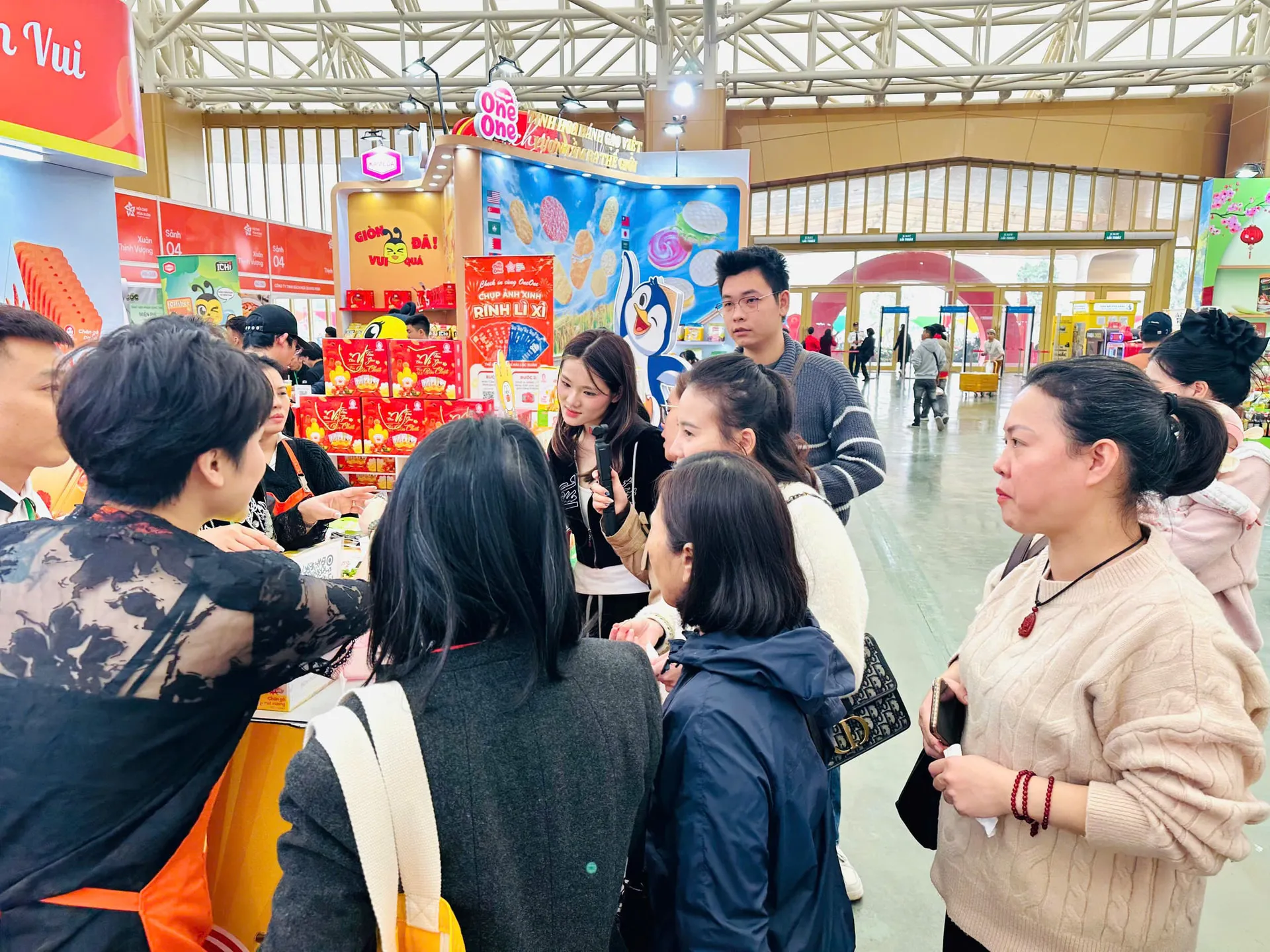
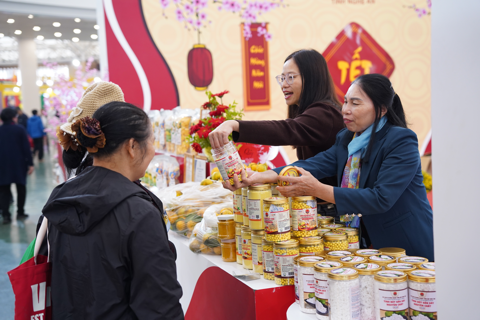
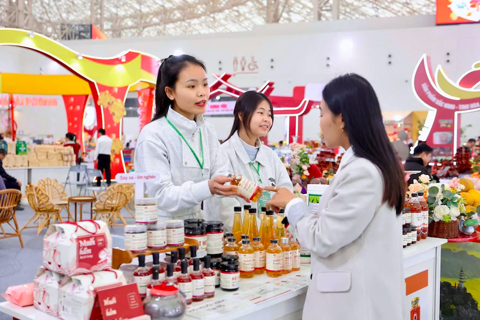
Consumers gather at a local shop during the Spring Fair 2026. Photo: Hanoimoi Newspaper
Rather than competing mainly on price, many exhibitors emphasize storytelling, craftsmanship and transparency about production. The approach has helped build consumer trust and encouraged visitors to spend more time at booths.
The fair’s layout reinforces that idea. Booths are arranged as a journey across Vietnam, allowing visitors to move through distinct regional identities. Shoppers can handle products, listen to producers and watch parts of the crafting process unfold.
The Spring Fair 2026 opened on February 2 and runs through February 13 under the theme “Connecting prosperity – Welcoming a glorious spring”. It spans about 100,000 square meters of indoor exhibition space and more than 45,000 square meters outdoors.
In its first edition, the event features eight thematic zones, nearly 3,000 booths and dedicated spaces for culture, cuisine and interactive activities. A central highlight, “Journey across Vietnam in Spring”, blends trade promotion with hands-on cultural experiences.
The “Tet of Reunion” zone recreates traditional holiday scenes through handicrafts, calligraphy, chung cake making and introductions to Hanoi’s cuisine, costumes and tourism. Seven other zones showcase goods, handicrafts, ornamental plants and regional cuisine from 34 provinces and cities.
More than a commercial event, the Spring Fair 2026 reflects a broader shift in Vietnam’s domestic market, where culture, craftsmanship and consumer trust increasingly shape purchasing decisions ahead of Tet.