Spring Fair 2026 spotlights Vietnamese agricultural and OCOP products
Vietnamese agricultural products and One Commune One Product (OCOP) goods are taking center stage ahead of the 2026 Lunar New Year, as the first Spring Fair 2026 creates a major trade promotion space to showcase domestic strengths, connect producers with consumers and expand market access at home and abroad.
THE HANOI TIMES — As demand rises for Vietnamese agricultural products, OCOP goods and green, sustainable items, particularly for Tet (Lunar New Year) shopping and gifting, the inaugural Spring Fair 2026 emerges as a key platform to promote domestic brands and expand market access.
In an interview with the Vietnam News Agency, Hoang Van Du, Deputy Director of the Agricultural Trade Promotion Center under the Ministry of Agriculture and Environment, outlined the ministry’s trade promotion priorities and its role at the event.
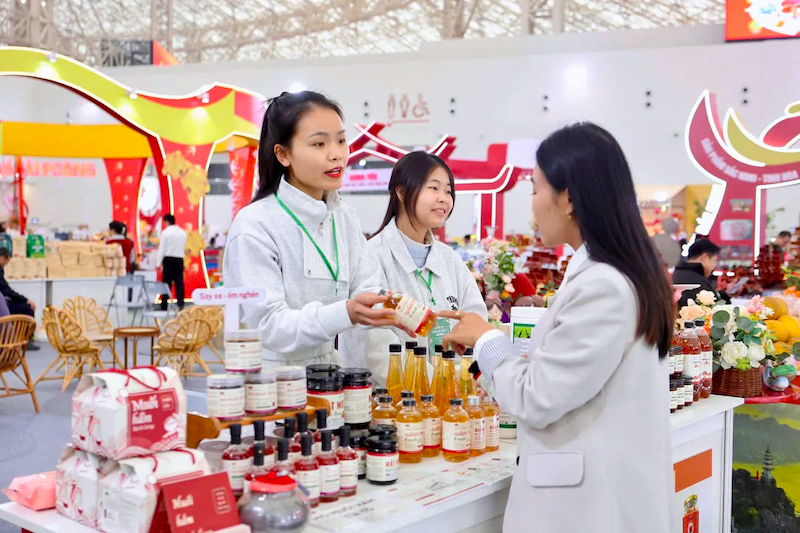
Natural products and honey from the central province of Dak Lak introduced at the Spring Fair 2026. Photo: Anh Kiet/The Hanoi Times
What is the significance of the ministry’s participation in the first Spring Fair 2026 with the themed zone “Vietnamese Agricultural Products – Spreading the Colors of Spring”?
The first Spring Fair 2026 is a national-scale trade, cultural and consumer promotion event with special meaning as it celebrates the success of the 14th National Party Congress.
As demand grows for agricultural products, OCOP goods and green, sustainable items to serve Tet consumption, the ministry’s decision to lead the themed zone “Vietnamese Agricultural Products – Spreading the Colors of Spring” is practical and timely.
This zone goes beyond product display. It highlights the ministry’s role in state management, market coordination and strategic guidance for developing agriculture, food products, OCOP goods and the green consumer economy.
Through this initiative, the agriculture and environment sector gains a unified space to showcase key achievements and effective models, connect enterprises and cooperatives with markets and deliver strong messages on green agriculture, sustainable consumption and environmental responsibility to the public and domestic and international partners.
What specific benefits does the ministry expect this activity to bring to businesses, cooperatives and OCOP stakeholders?
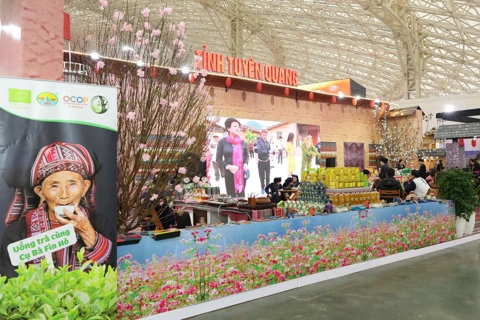
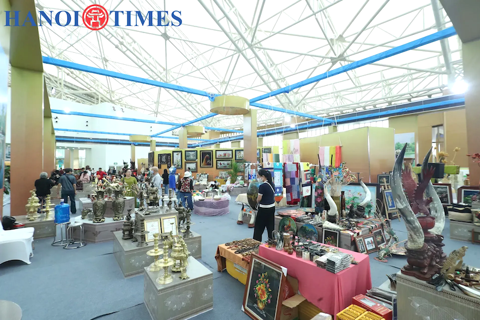
The themed zone is designed as a large-scale, professional trade promotion space dedicated to agricultural and environmental products. It is expected to feature around 300 standardized booths, bringing together enterprises and cooperatives in agriculture, agro-processing, forestry, fisheries, environmental products and services, as well as artisans and traditional craft villages.
Visitors will find a wide range of agricultural products, regional specialties, OCOP goods, items with geographical indications and green, safe and traceable products. Many processed foods and traditional handicrafts will appear in creative Tet gift packaging.
The zone follows a scientific, visitor-friendly layout to ensure smooth viewing and transactions, while maintaining unified visual identity, aesthetics, safety and fire prevention standards. The overall design clearly emphasizes green and sustainable development.
The zone creates direct engagement opportunities between producers, consumers, distributors and partners, supporting contract signings and commercial cooperation. It also helps participants better understand emerging consumer trends, especially growing demand for green and environmentally responsible products, allowing them to adjust production and business strategies to market needs.
Could you share more about the agriculture and environment sector’s trade promotion orientation in the coming period?
Trade promotion must become more professional, sustainable and closely linked with digital transformation.
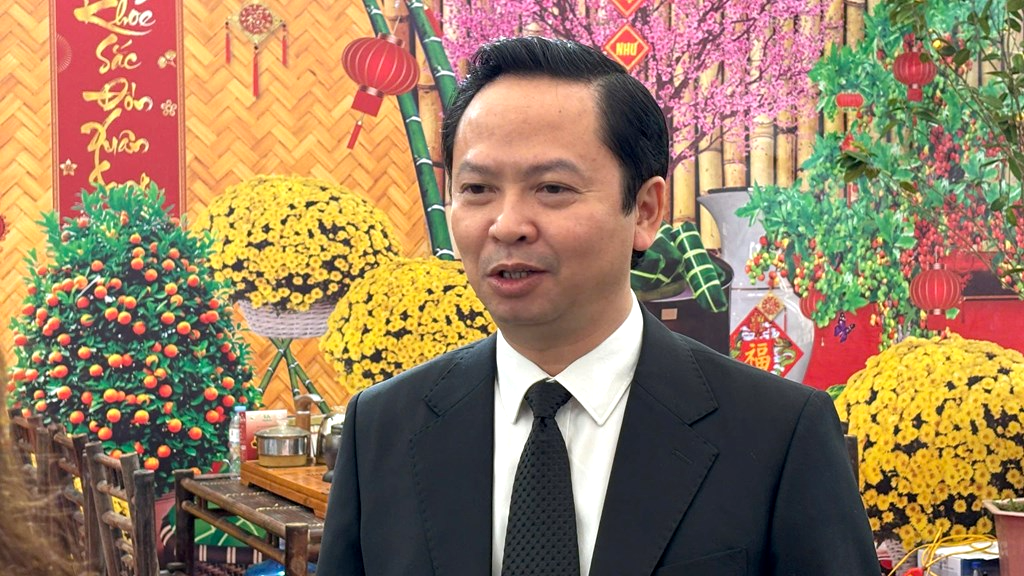
Hoang Van Du, Deputy Director of the Agricultural Trade Promotion Center under the Ministry of Agriculture and Environment. Photo: Vietnam News Agency
The sector will strengthen trade promotion along the full value chain, connecting production, processing, circulation, distribution and consumption, especially during peak periods such as Tet.
Another key direction involves stronger coordination between the Ministry of Agriculture and Environment, the Ministry of Industry and Trade and local authorities to implement national trade promotion programs in a synchronized and effective way.
This coordination supports domestic consumption and prepares products for export. By improving quality, standards, traceability and information transparency, Vietnamese agricultural goods can better meet international market requirements.
How is the sector promoting Vietnamese agricultural products in international markets?
Beyond the domestic market, international trade promotion remains a priority. Early in 2026, under the National Trade Promotion Program, the Agricultural Trade Promotion Center led a delegation of 30 leading food and beverage enterprises to Gulfood Dubai 2026, one of the world’s largest food exhibitions.
The Vietnam pavilion stood out with its strong design and export-ready products such as pepper, cashew nuts, rice, seafood, processed fruits, canned goods and tea.
Throughout 2026, the center plans to organize similar delegations to major international trade fairs, promoting Vietnamese agricultural brands and expanding exports to global markets, including the Middle East, where demand and purchasing power continue to rise.
What role does digital transformation play in future agricultural trade promotion?
Digital transformation will play a central role. Trade promotion will increasingly combine in-person events with e-commerce platforms and digital trading systems.
This approach expands market access, cuts intermediary costs and improves transparency, while building stronger consumer trust in green, safe and sustainably produced agricultural products.
In the long term, trade promotion serves as a strategic tool to build the Vietnamese agricultural brand and project the image of a modern, green and responsible agriculture sector.
Through experiential activities, communication and investment linkages, the sector aims to attract social resources, encourage large-scale production and connect agriculture with cultural and rural tourism. These efforts support national goals on new rural development, poverty reduction and sustainable growth.
Thank you for your time!
|
Spring Fair 2026 opens in Hanoi, stimulates trade and domestic consumption The Spring Fair 2026 opened at the Vietnam Exposition Center in Hanoi’s Dong Anh Commune on February 2 to showcase exemplary Vietnamese products and encourage domestic spending before Tet (Lunar New Year). Running until February 13 under the theme “Connecting prosperity – Welcoming a glorious spring”, the fair spans about 100,000 square meters of indoor exhibition space and more than 45,000 square meters outdoors. The event presents a spring journey across Vietnam, where economic, cultural and creative values converge. It features eight thematic zones, about 3,000 standard booths and dedicated spaces for culture, cuisine and interactive activities. A highlight is the “Journey across Vietnam in Spring” concept, which blends trade promotion with cultural and experiential elements. The “Tet of Reunion” zone, hosted by Hanoi, recreates the traditional holiday atmosphere through handicrafts, craft villages and activities such as calligraphy, making chung cake and demonstrations of traditional trades, alongside introductions to the capital’s cuisine, costumes and tourism. Seven other zones showcase goods, handicrafts, ornamental plants and regional cuisine from 34 provinces and cities nationwide. |