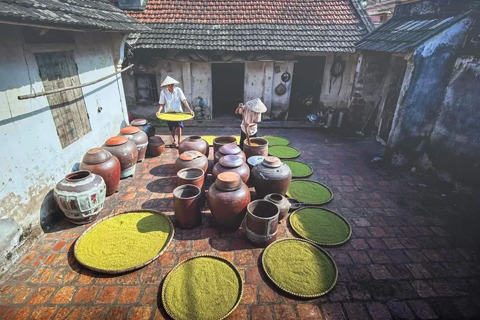
Hanoi craft villages resume production early, aiming for growth in 2026
After the Lunar New Year break, Hanoi’s traditional craft villages have quickly resumed production, fulfilled orders and prepared for new markets while blending heritage craftsmanship with modern technology to strengthen competitiveness and sustain growth in 2026.
THE HANOI TIMES — The steady rhythm of work has returned to Hanoi’s craft villages as the Lunar New Year holiday drew to a close.
In villages such as Hat Mon, Hong Van and Van Phuc, workshops reopened as early as February 21, the fifth day of the Lunar New Year, to complete existing orders and maintain production momentum.
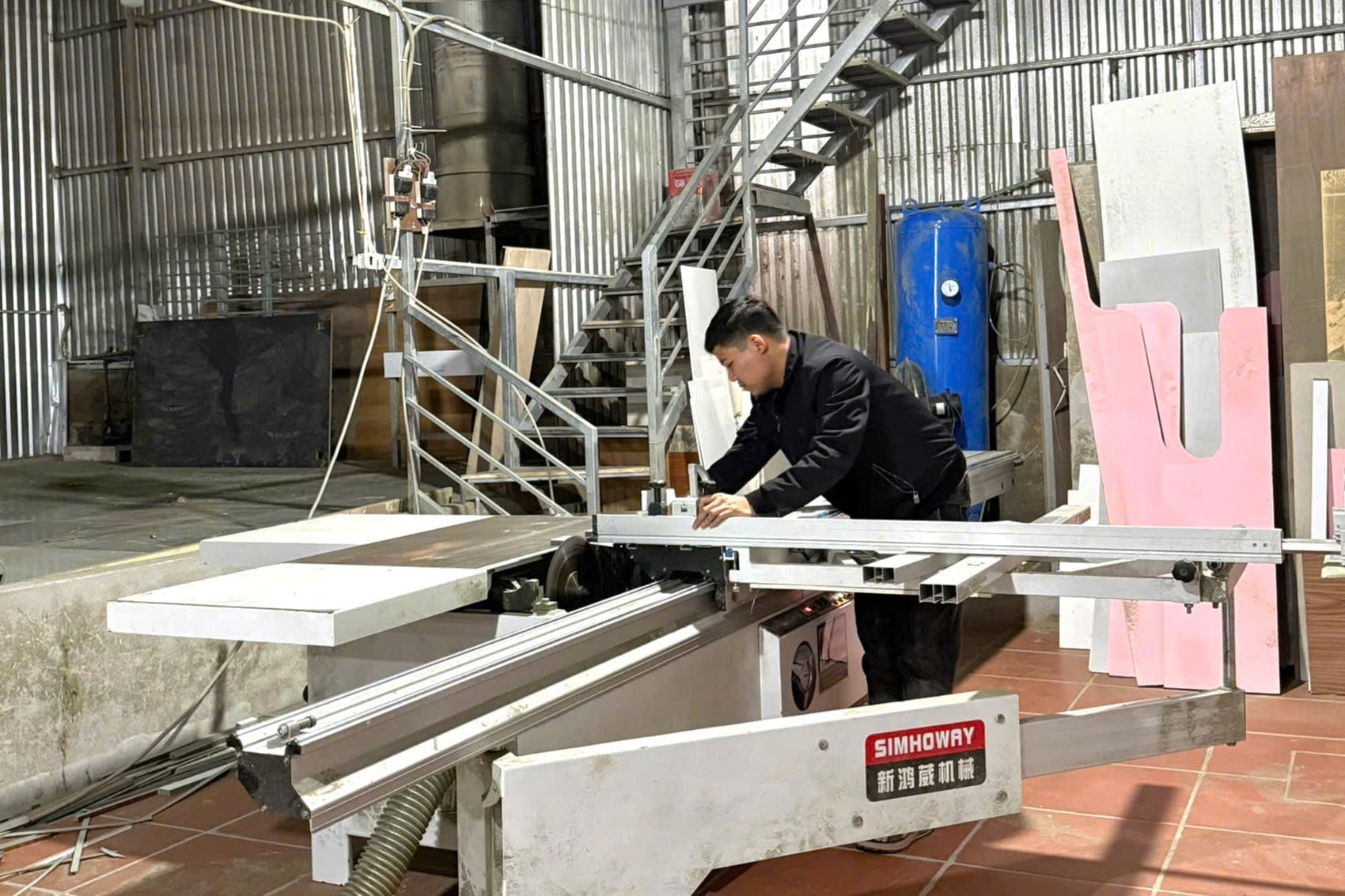
Hoang Dinh Trung of Phu An Hamlet begins producing kitchen cabinets on the fifth day of the Lunar New Year 2026. Photos: Hanoimoi Newspaper
In Phu An Hamlet of Hat Mon Commune, the sound of saws and planers marked the start of a new production cycle. Woodworking workshops began preparing materials for orders placed before the holiday.
Hoang Dinh Trung, a workshop owner, said operations have yet to reach full capacity as many workers are still returning from Tet travel.
For now, he is cutting panels for a kitchen cabinet order so production can accelerate once the workforce is fully back.
The workshop produces tables, wardrobes, kitchen cabinets and retail display shelves. Demand remained stable throughout 2025, driven largely by contracts with retail chains.
At the start of the year, Trung focuses on refining production processes and craftsmanship instead of pushing output as during the year-end peak.
Spanning more than 500 square meters, the facility uses modern cutting and finishing machines.
Trung plans to invest in a CNC cutting system in 2026 to improve precision and productivity, targeting higher-end interior markets such as hotels and major retail chains.
According to the local carpentry association, many households resumed operations immediately after Tet.
Nguyen Tien Quyen, Chairman of the Phu An Carpentry Association, said the village posted strong results last year, with average worker incomes reaching about VND15 million (US$570) per month.
Annual household revenues typically ranged from VND500 million ($19,200) to VND700 million ($26,870), while some enterprises recorded billion-dong turnovers, he said.
Of more than 500 households in the hamlet, over 170 engage in carpentry, generating estimated annual revenue exceeding VND200 billion ($7.7 million).
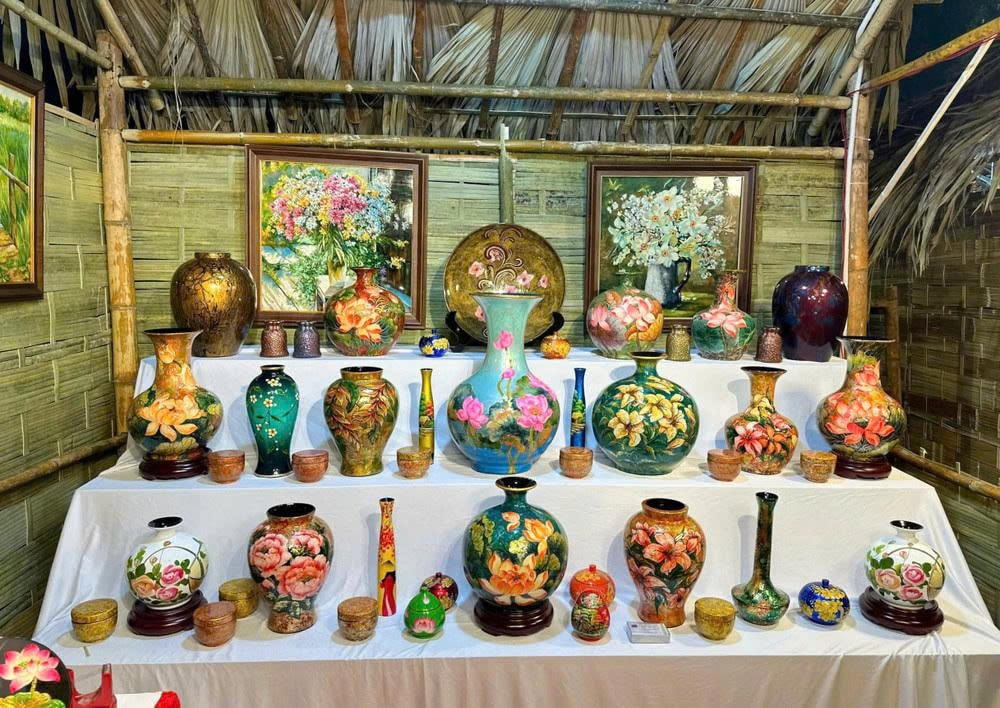
Lacquerware products crafted by the family of artisan Nguyen Thi Hoi.
To meet changing market demand, producers are diversifying materials, combining natural wood with stainless steel, aluminum, plastics and stone to create designs suited to modern tastes, Quyen said.
Ha Thai Lacquerware Village in Hong Van Commune has also resumed production.
Workshops reopened shortly after the holiday to complete pre-Tet export orders, said Nguyen Thi Hoi, Chairwoman of the Ha Thai Lacquerware Association.
The village comprises hundreds of producing households and provides jobs for a large local workforce. A significant share of lacquerware exports goes to the United States and other Asian markets.
Artisans are focusing on lacquer paintings, decorative vases and longevity-themed gifts for early spring. While preserving traditional techniques, they are adapting designs and finishes to meet international preferences.
In Van Phuc Silk Village in Ha Dong Ward, shops reopened early to welcome visitors and shoppers, said Tran Thi Ngoc Lan, vice chairwoman of the Van Phuc Silk Weaving Association.
“The village serves as both a craft center and a cultural tourism destination, attracting large numbers of visitors during the holiday. Many shops reopened quickly to serve tourists and early-year buyers,” she said.
Households are preparing silk threads and looms to weave the first fabrics of the year. Business owners expect spring tourism to support sales and sustain momentum, Lan added.
Expectations for 2026
Looking ahead, Hanoi’s craft villages are prioritizing higher product quality, stronger productivity, expanded markets and greater use of technology in 2026.
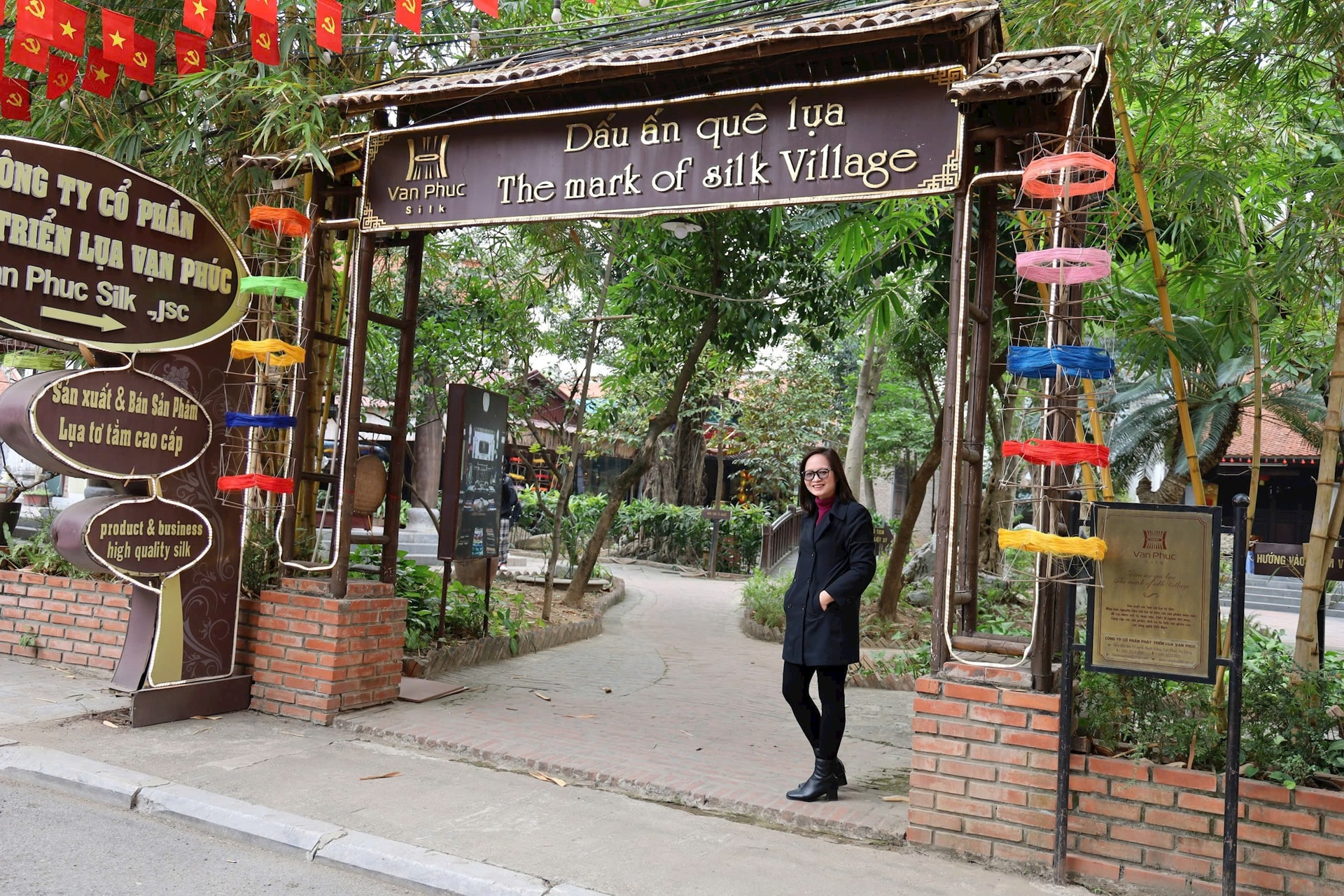
Van Phuc Silk Weaving Village
Quyen said carpentry producers aim to strengthen brand protection and improve infrastructure to facilitate trade. Many workshop owners are reviewing new tax policies and market regulations to adjust strategies.
Investment in modern machinery remains key to improving quality, cutting costs and boosting competitiveness, he said.
Hoi said lacquerware producers plan to step up trade promotion and join domestic and international fairs to expand export markets.
Artisans are blending traditional techniques with contemporary design and technology to meet stricter global standards.
In Van Phuc Silk Village, households are integrating silk production with experiential tourism, promoting the craft within a distinctive cultural setting. Early-year visitor flows are expected to bolster sales and brand visibility.
Recent market volatility has underscored a shared lesson among artisans: improving quality, building strong brands, embracing digital tools and diversifying markets are vital for resilience.
As 2026 begins, Hanoi’s craft villages enter a new production cycle with renewed determination, preserving heritage while expanding their reach in domestic and international markets.