Hanoi’s craft villages find new life in the creative economy
From village workshops to global showcases, Hanoi’s craft villages are reinterpreting tradition through creativity, turning cultural identity into economic value and strengthening domestic consumption at home and abroad.
THE HANOI TIMES — Hanoi’s craft village products, shaped by skilled artisans, have gained international recognition while encouraging Vietnamese people to prioritize domestic goods.
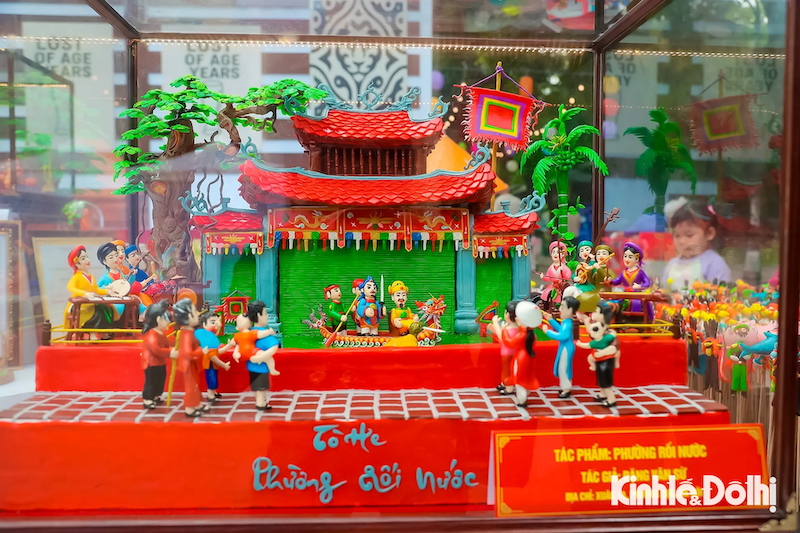
Unique to he figurines crafted by artisans of Xuan La Village, Phuong Duc Commune. Photos: Duy Minh/The Hanoi Times
Despite the dominance of industrial products, traditional handicrafts in Hanoi continue to develop with quiet resilience and growing vitality.
Far from fading into nostalgia, these crafts now play an active role in the creative economy, where heritage, cultural identity and market-oriented thinking converge.
This renewal comes from artisans who remain deeply rooted in tradition yet remain open to innovation. Their work shows that preserving craft tradition does not mean resisting change, but guiding it carefully.
To he, once a simple children’s plaything made and sold at village markets, has become a cultural symbol of northern rural life.
Artisans create to he mainly from glutinous rice flour blended with other edible flours to form a flexible dough that allows shaping without breaking.
Traditional colors come from natural sources such as gac fruit, pandan leaves, camellia leaves and bamboo charcoal, reflecting a close relationship between craft and nature.
In Hanoi’s Phuong Duc Commune, where the to he figurine craft recalls rural fairs and childhood memories, Meritorious Artisan Nguyen Van Hau has given the traditional toy a fresh life.
Drawing on decades of experience, Hau has expanded to he beyond familiar animal figures. He uses folk tales, traditional theater and Vietnamese cultural symbols to tell stories through each piece.
Instead of selling individual figurines, the artisan designs themed gift sets that present coherent cultural narratives.
“Each set becomes a small cultural ambassador,” Hau said. International visitors enjoy the playful design, while Vietnamese audiences recognize images tied to their roots.
Through this approach, to he has moved from village stalls to cultural events, tourism markets and international exhibitions.
Hau’s journey illustrates a broader lesson: when artisans modernize heritage with care and insight, traditional crafts can compete effectively in today’s market.
This transformation has also drawn younger generations back to traditional crafts. Court embroidery and traditional Vietnamese attire, once seen as distant from modern life, now attract renewed interest among creative communities.
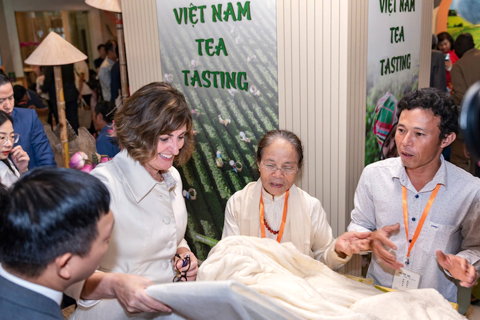
Vu Tam Thu, Director of Vu Tam Thu Co Ltd, has played a key role in restoring traditional garments with refined craftsmanship.
Her designs recreate ancestral clothing through careful research and skilled embroidery, while adapting forms and uses to suit contemporary lifestyles.
Each garment offers more than visual beauty. It provides a cultural experience, allowing wearers to connect with history in a personal and practical way.
Thu’s creations appear at festivals, exhibitions, tourism events and international cultural programs, showing how heritage can evolve through knowledge, creativity and passion.
When Vietnamese people choose to wear, use and promote domestic handicrafts, they actively support the campaign “Vietnamese people prioritize using Vietnamese goods,” Thu said.
This choice reflects cultural pride as well as confidence in Vietnamese craftsmanship.
A broader picture of Hanoi’s craft villages
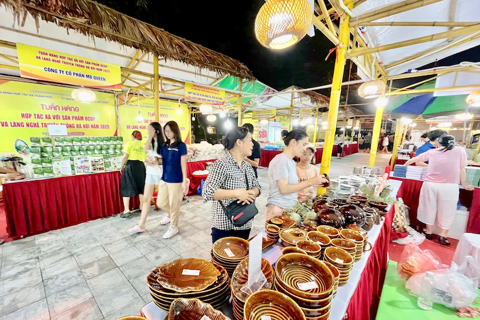
Hanoi is home to more than 1,350 craft villages, including 337 officially recognized ones.
These villages preserve history, culture and artisanal skills across a wide range of sectors, from ceramics and silk weaving to bamboo and rattan crafts, mother-of-pearl inlay, jewelry and traditional cuisine.
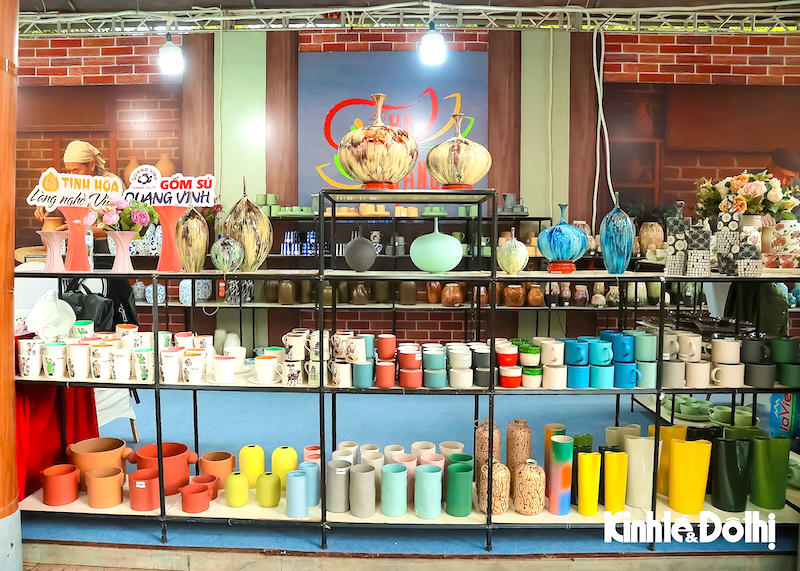
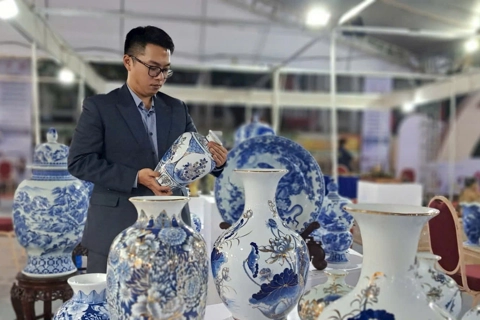
A wide range of Bat Trang ceramic products on display at the Hanoi Autumn Fair 2025.
In 2024, Bat Trang ceramics and Van Phuc silk joined the Global Network of Creative Cities for Crafts, becoming the first Vietnamese craft villages to receive this recognition. The designation honors their heritage while opening doors to global value chains.
According to Nguyen Dinh Hoa, Deputy Director of the Hanoi Department of Agriculture and Environment, a more systematic approach now helps craft villages contribute more effectively to the capital’s cultural industries.
Authorities increasingly view craft villages as integrated ecosystems rather than isolated production sites. From production and design to display and tourism, many villages are evolving into open spaces that link economy, culture, tourism and creativity.
Hanoi aims to develop craft villages as cultural spaces, tourist destinations, living museums and centers for hands-on experiences. The International Craft Village Conservation and Development Festival in 2025 reflects this vision.
By connecting artisans, businesses, designers, experts and distributors, the festival promotes collaboration, technology transfer, product innovation and market expansion for both domestic and international consumers.
Well-designed craft village spaces also allow Vietnamese consumers to engage more deeply with local products. Each visit, souvenir, or handcrafted item purchased strengthens trust in Vietnamese goods and reinforces the idea that domestic products can meet both aesthetic and quality expectations.
The campaign “Vietnamese people prioritize using Vietnamese goods” gains substance through high-quality, creative and culturally rich handicrafts.
Choosing Bat Trang ceramics over imports, selecting Van Phuc silk as gifts, or decorating homes with bamboo, embroidery and wooden crafts reflects confidence in Vietnamese skill and creativity.
A strong domestic market encourages artisans to innovate, businesses to invest and policymakers to refine supportive regulations. From this foundation, craft products gain the strength needed to compete internationally.
By preserving traditional values while expanding creative space, Hanoi’s craft villages are becoming vital assets for sustainable development.
They protect heritage, generate employment, raise incomes, boost tourism, safeguard the environment and strengthen rural identity.
Vietnamese consumers play a decisive role in this process. Every choice to use a domestic handcrafted product and every effort to promote Vietnamese goods helps build an independent, resilient and culturally rich economy rooted in the enduring value of tradition.