Hanoi issues action plan to implement 14th Party Congress resolution
The goal is to turn policies into outcomes under the principle of “less talk, more action, effective results to the end, all for the capital and its people.”
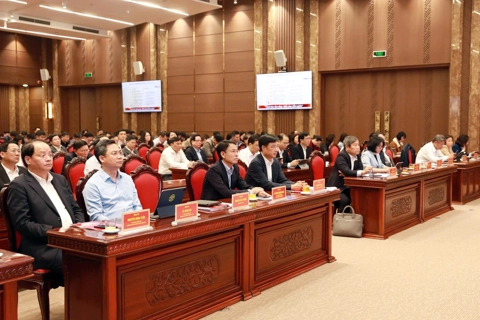
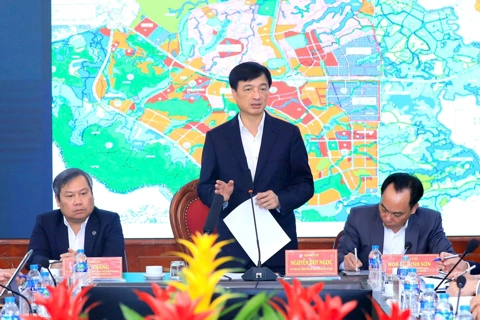
THE HANOI TIMES — Secretary of the Hanoi Party Committee Nguyen Duy Ngoc has signed and promulgated the Action Program of the municipal Party Committee to implement the Resolution of the 14th National Party Congress.
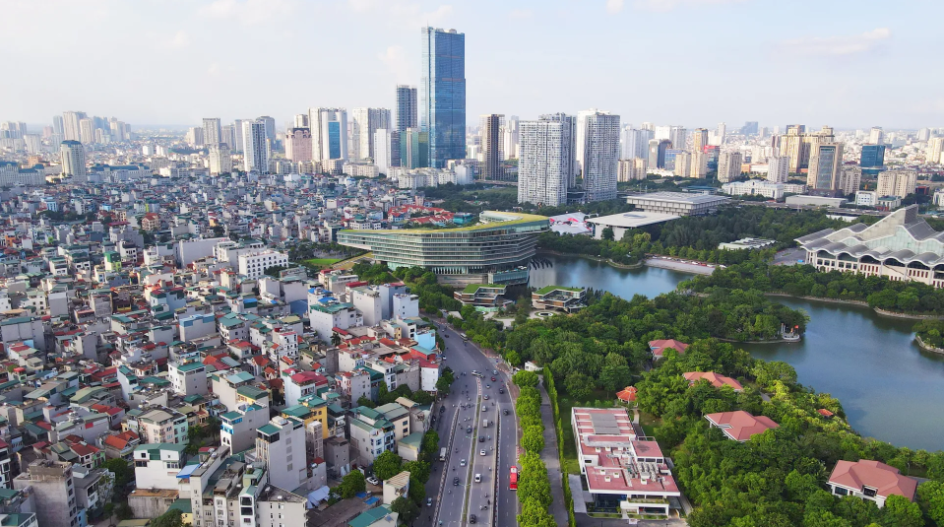
Hanoi from above. Photo: Pham Hung/The Hanoi Times
The program translates the 14th Congress Resolution into concrete measures while ensuring alignment with the 18th Hanoi Party Congress Resolution.
It seeks to unify awareness and action across the political system and among residents in response to the Congress message of trust and aspiration, breakthrough and action, solidarity and development, firmly advancing toward socialism.
The document calls for renewed leadership methods, stricter discipline and stronger focus on delivering measurable results. It emphasizes turning policies into tangible outcomes under the principle of “less talk, more action, effective results to the end, all for the capital and its people.”
The Action Program reaffirms Hanoi’s position as Vietnam’s political and administrative center and a major hub for the economy, culture, science, education and healthcare as well as an increasingly globally connected city. It underscores innovation in development thinking, stronger governance capacity and more effective execution.
Public satisfaction, trust and happiness are identified as the ultimate benchmarks for leadership performance.
For the 2026-2030 period with a vision to 2045 and beyond, the program outlines strategic objectives and major projects. Responsibilities are assigned under the principle of six clarities: clear people, clear tasks, clear timelines, clear accountability, clear products and clear authority, with one focal point for each task.
The plan calls for unified implementation across the political system, strict accountability at all levels and regular monitoring and evaluation to ensure timely adjustments and prevent delays.
Twelve major task groups define the capital’s development orientation in the new era.
Institutional reform and a new growth model
Institutional reform forms the foundation of the strategy. Hanoi prioritizes stronger governance capacity and more effective mobilization of resources.
The city implements central policies under the principle of Party leadership, State management and people’s ownership. It coordinates with central agencies to propose a new resolution guiding Hanoi’s development in the new era, creating a long-term political framework for the capital’s growth.
Effective enforcement of the revised Capital Law is a key focus. Special and breakthrough mechanisms are proposed to unlock resources, remove bottlenecks and create new development space.
The 100-year Master Plan serves as the central instrument for managing development and organizing economic, social, cultural, urban and rural space. Coherence, connectivity and feasibility are emphasized.
Building on this institutional and planning foundation, Hanoi aims to bolster its regional and international standing as a core urban center that radiates modern and innovative development values.
Hanoi is shifting toward a growth model driven primarily by labor productivity grounded in knowledge, science and technology, innovation, digital transformation and high-quality human resources.
A comprehensive scheme to renew the development model targets sustainable double-digit growth in quality and depth, moving away from capital- and resource-based expansion toward productivity-led growth powered by science and innovation.
Economic restructuring advances along modern, green, digital and circular lines. High value-added sectors with strong spillover potential are prioritized.
The data economy, digital economy, knowledge economy, green economy, circular economy and creative economy are identified as pillars of the new model.
Meanwhile, the application of technology and digital transformation is expanding across urban management, industry, trade, finance, logistics, education, healthcare and agriculture.
New business models, including the night-time economy, low-altitude economy, underground economy, silver economy and digital asset economy, are set for pilot implementation.
Culture, education and smart city development
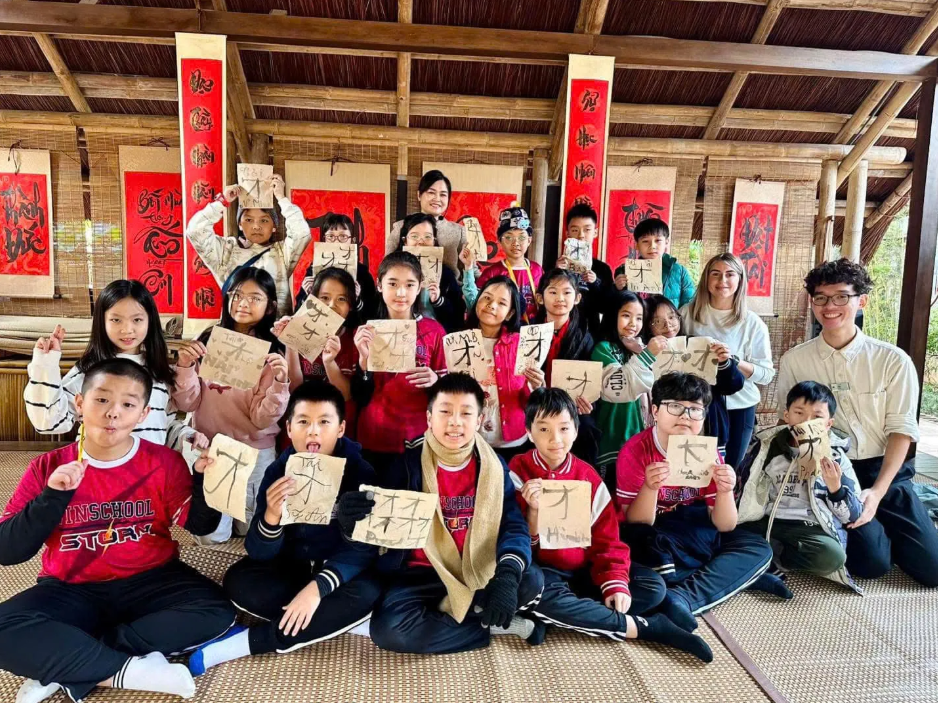
Children during a heritage education program at the Temple of Literature. Photo: The Temple of Literature
Cultural development remains central to Hanoi’s identity as a thousand-year-old capital. Culture is defined as a cause of the entire people under Party leadership and State management, with citizens as both creators and beneficiaries.
The preservation and promotion of tangible and intangible heritage have been prioritized, particularly at the Thang Long Imperial Citadel and the Co Loa relic site.
Traditional cultural values are being integrated with modern techniques, while selectively embracing global artistic excellence to elevate Hanoi’s cultural presence on the international stage.
Cultural industries are positioned as key economic sectors. Planned projects include international-standard conference and resort complexes in the Ba Vi area and the northwest, along with free trade centers, film studios and international entertainment zones north of the Red River and in the Soc Son area.
The 2026–2030 Information and Communications Development Scheme aims to modernize journalism and build a professional digital media ecosystem.
Hanoi aims to become a leading education and talent training center in Asia while maintaining its national leadership position.
Education integrates closely with healthcare, science, technology and cultural development. STEM and STEAM education expand to foster creativity and research capacity. Students are developed comprehensively in ethics, intellect, physical strength and aesthetics.
Investment in teachers, facilities and international-standard universities strengthens the education system. Vocational education plays a key role in building a highly skilled workforce.
Science, technology, innovation and digital transformation form a central pillar of the strategy. A smart city model places people and businesses at the center.
An innovation ecosystem supports scientists and enterprises in translating ideas into practical applications. Digital government, digital economy and digital society initiatives advance alongside telecommunications and data infrastructure, including data centers, cloud computing, IoT and big data services.
Technology is applied to address persistent urban challenges such as traffic congestion, environmental pollution, land management and administrative reform. Real-time data, artificial intelligence and shared digital platforms enhance forecasting and governance capacity, improving quality of life and competitiveness.
Beyond these priorities, the program outlines tasks in sustainable social development, social equity and improved living standards. It reinforces national defense and security, disaster response capacity and international integration, while continuing Party building and administrative reform to strengthen leadership and governing effectiveness at all levels.