Party Chief urges stronger state economy and cultural drive
Developing the state economy and Vietnamese culture forms the twin pillars of a unified development strategy, one strengthening material capacity, the other reinforcing cultural and social resilience.
THE HANOI TIMES — Vietnam will prioritize the development of the state economy and Vietnamese culture as key pillars of its strategic growth in the coming period, said Party General Secretary To Lam.
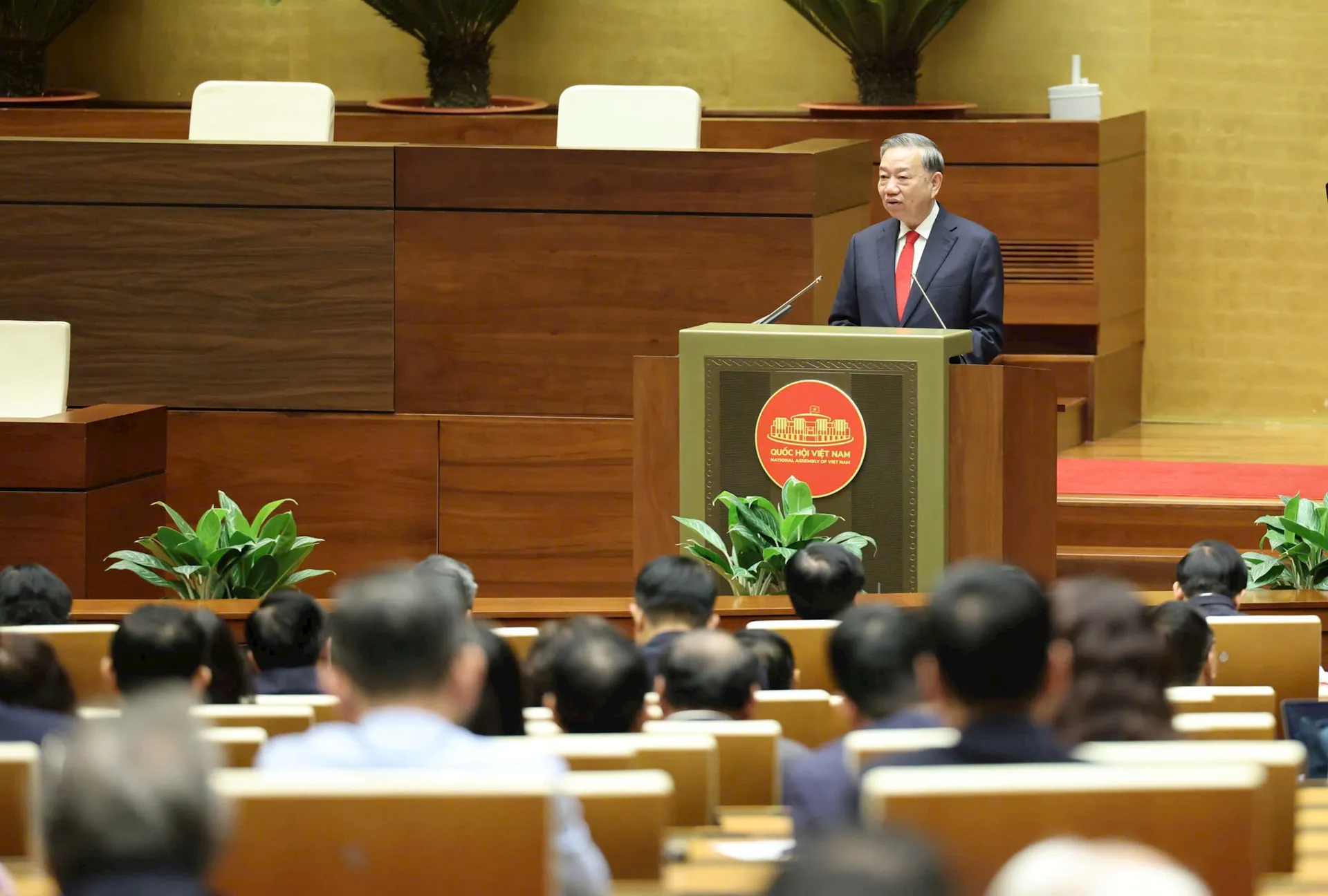
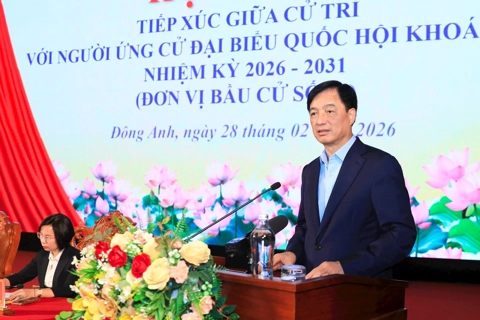
Party Chief To Lam at the conference. Photos: Viet Thanh/The Hanoi Times
Lam was speaking at a national conference to study and implement Resolution No. 79-NQ/TW on developing the state economy and Resolution No. 80-NQ/TW on developing Vietnamese culture, both issued by the Politburo in early January.
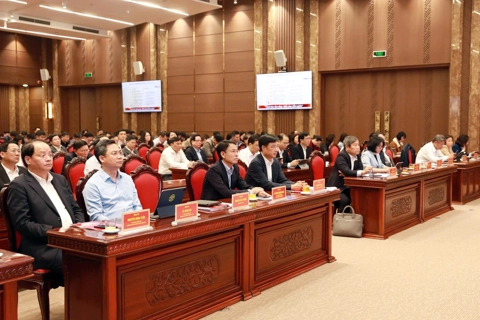
The conference was held on February 25 in a hybrid format, linking the main venue at the Dien Hong Hall of the National Assembly with 27,284 sites nationwide, drawing more than two million delegates.
According to the Party chief, the two newly-issued resolutions represent major strategic decisions of the Party, formed through a thorough review of practice and theoretical development as Vietnam enters a new stage of growth.
“They aim to simultaneously strengthen the country’s ‘material strength’ and reinforce its ‘intangible strength,’” he added.
The resolutions reaffirm the determination to build an independent, self-reliant, dynamic and efficient economy closely linked with deep international integration, alongside an advanced Vietnamese culture rich in national identity.
“The state economy must truly command the strategic heights of the economy, play the leading role and become a national anchor in the new era,” Lam said.
In recent years, the state sector and the private sector have become two key pillars of the socialist-oriented market economy.
The private sector has grown more dynamic and made significant contributions to growth, with many firms integrating deeper into regional and global value chains.
At the same time, the state sector has maintained major economic balances, stabilized the macroeconomy and carried out medium- and long-term strategic tasks in energy, finance, telecommunications and critical infrastructure.
To truly command the economy’s strategic heights, Lam said the state sector must undergo strong restructuring.
He added that it should focus on key industries, strategic areas and sectors with high spillover effects.
“Its leading role must be demonstrated through efficiency, governance capacity and substantive contributions to macro stability and long-term development,” he stated.
He stressed that the state must firmly retain control of sectors vital to sovereignty and stability, while creating mechanisms for private-sector participation where appropriate.
Inefficient areas, he said, must be reorganized under market principles with transparency and strict safeguards against vested interests and policy profiteering.
In the new phase, Lam outlined five major “anchors” for the state economy: safeguarding economic security and sovereignty, stabilizing markets and enhancing resilience, leading and supporting private sector development, mastering core technologies and innovation and setting high standards for governance integrity in state-owned enterprises.
He warned that without concrete action programs, clear targets and accountability mechanisms, the leading role of the state economy would remain a slogan, costing the country competitiveness and public trust.
Culture lights the way for the nation
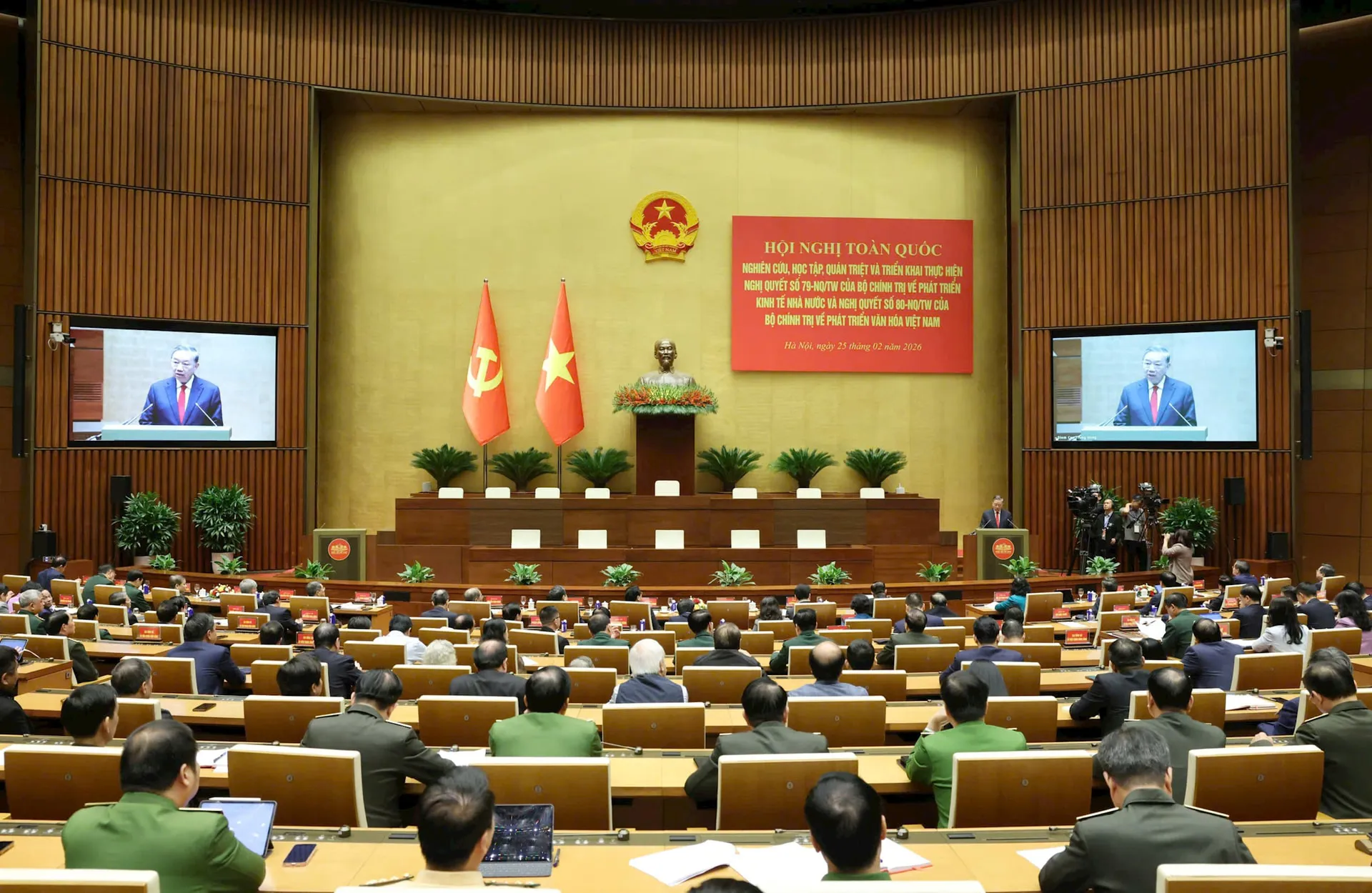
Overview of the event.
Alongside economic reform, Lam emphasized cultural development as a decisive factor for national strength.
“Culture must light the way for the nation,” he said, quoting President Ho Chi Minh.
He said culture forms the spiritual foundation and internal strength of the country. While the economy determines how fast the country can move, culture determines how far it can go. If economic growth creates material wealth, culture builds resilience, discipline, trust and the will to overcome challenges.
He warned that the greatest challenge facing culture today is not only limited resources but also the erosion of values, distorted behavior, misinformation and harmful influences in cyberspace.
Rapid growth without cultural renewal could weaken long-term foundations.He said building culture within the Party and state apparatus is essential to restoring public trust.
Officials must lead by example, uphold discipline and act with responsibility and integrity.
“Public trust begins with service attitude and accountability,” he continued.
The General Secretary said the Resolution No. 79 on developing the state economy and Resolution No. 80 on developing Vietnamese culture are not parallel tasks but parts of a unified development structure. The first builds material strength while the second strengthens spiritual resilience.
Implementation is decisive, he noted.
“Studying the resolutions is to act. Action must create real change that people can feel in daily life,” Lam said, calling on all Party committees, ministries and localities to immediately develop concrete action plans with clear responsibilities.
He expressed confidence that with strong political determination, coordinated efforts across the political system and social consensus, the two resolutions will quickly translate into tangible results, helping Vietnam achieve rapid, sustainable and self-reliant development in the new stage.