Resolution 79 positions state-owned economy as strategic pillar for Vietnam’s sustainable growth
As Vietnam refines its development model, the state-owned economy is being repositioned to ensure stability, guide investment and support private sector growth.
THE HANOI TIMES — Issued in early January 2026, the Politburo’s Resolution No. 79-NQ/TW seeks to reinforce the state-owned sector as a strategic pillar and growth engine of Vietnam’s socialist-oriented market economy. Prof. Hoang Van Cuong, a National Assembly deputy and member of the Prime Minister’s Policy Advisory Council, shared insights with Cong Thuong (Industry and Trade) Newspaper on the resolution’s implications for sustainable growth.

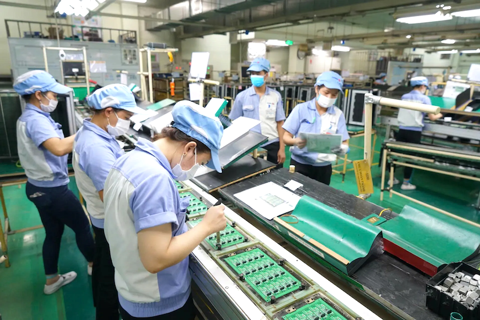
Workers of Petrolimex Petrochemical (PLC). Photo: Hai Linh/The Hanoi Times
How do you assess the role and contribution of the state-owned economic sector in maintaining macroeconomic stability and promoting socio-economic development?
Politburo Resolution No. 79 has a broad scope that extends beyond the traditional view of state-owned enterprises (SOEs). It encompasses the full range of state-owned resources, including SOEs, public service units, natural resources, land, the state budget and development investment funds.
Within this framework, SOEs occupy a particularly important position. The resolution sets a clear objective to build state-owned corporations with sufficient scale and competitiveness to rank among leading regional and global players. This goal reflects strong confidence and high expectations for SOEs to assume a leading role in the new development phase.
In recent years, major SOEs have demonstrated this role in practice.
In telecommunications, Vietnam has built modern domestic infrastructure and expanded into international markets, helping enhance the country’s global standing.
In the energy sector, state-owned groups have overcome major challenges and achieved steady progress, laying a firm foundation for energy security while expanding overseas investments.
These examples confirm that SOEs have affirmed their role and made meaningful contributions to macroeconomic stability and socio-economic development. They will therefore continue to serve as strategic pillars of the economy in the coming period.
The Resolution emphasizes that the state-owned economy should lead and support other economic sectors. How should this leadership be expressed in concrete mechanisms to avoid “crowding out” or monopolistic behavior?
Leadership by the state-owned economy does not mean the State replaces the market or assumes the role of other sectors. Leadership here means building development foundations and, on that basis, encouraging other economic sectors to participate.
The core task lies in identifying priority industries and long-term objectives. The State defines these strategic directions, while SOEs exercise leadership through operations, policy tools and state budget investment in infrastructure, technology and other foundational areas.
When the State acts as a facilitator and strategist, focusing on key segments while allowing the market to allocate resources, clear development paths will emerge. These paths enable private enterprises and other sectors to participate with confidence.
With this approach, the state-owned economy will not crowd out or unfairly compete with other sectors. Instead, it will create a broad, open and sustainable development space for the entire economy.
The Resolution sets a target of having three Vietnamese enterprises among the world’s top 500 companies by 2030. What strategic changes are needed to make this goal achievable in global competition?
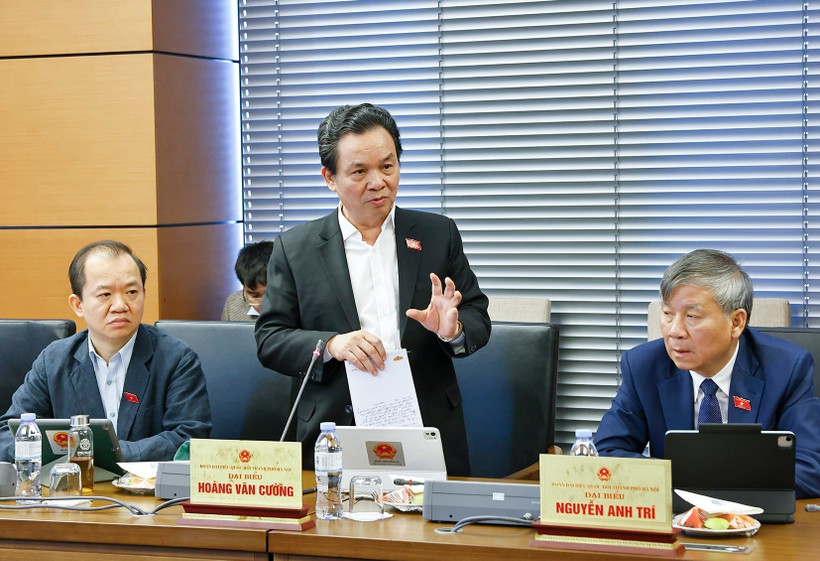
Prof. Hoang Van Cuong, National Assembly deputy and member of the Prime Minister’s Policy Advisory Council (center). Photo: Vietnam News Agency
Vietnam already has several state-owned enterprises operating at regional and international scale with growing competitiveness. These strengths stem from internal capacity as well as strong backing from the State’s economic resources and long-term strategy.
The key challenge now lies in strategic clarity. Vietnam must clearly define which sectors, industries and market segments it aims to master and where it seeks a global presence.
Once these priorities are clear, the State should assign missions to enterprises with sufficient capacity and design appropriate support mechanisms, ranging from policy-based investment capital to tools that help secure markets.
The initial priority should be to build a strong and sufficiently large domestic market to serve as a launchpad for growth. From there, enterprises can expand abroad, scale operations, strengthen competitiveness and form corporations with genuine standing on the global economic map.
In your view, which development spaces should the state-owned economy focus on to fulfill its leadership role while avoiding overlap with the private sector?
At this stage, the state-owned economy should operate within clearly defined development spaces to avoid overlap with the private sector. SOEs should take on major missions, large-scale tasks and sectors with long-term and foundational significance.
In information technology and telecommunications, SOEs have already played an effective leading role. The next step is to clearly define the strategic responsibilities they hold.
Based on this clarity, the State can set strong orientations that attract private enterprises through linkages, satellite models and specialization at different stages of the value chain.
In emerging areas such as the low-altitude economy, Vietnam holds advantages derived from technological and equipment platforms linked to national defense and security. The challenge lies in converting these capabilities into dual-use models that combine defense and civilian applications.
In these areas, SOEs can lead, while capable private enterprises participate through investment and partnerships to form supply chains for equipment and services.
Similarly, in infrastructure-intensive and long-term sectors such as maritime industries, seaborne transport and railways, the State should focus on orientation and investment in foundational segments. The private sector can then take on specific tasks aligned with its strengths.
This approach allows the State to maintain leadership while enabling the private sector to fully leverage its capabilities. The result is complementarity rather than crowding out, creating a more balanced and efficient economic structure.
Thank you for your time!