Young generation steps up to power climate action
As climate risks intensify across Southeast Asia, young people are being called upon to move from awareness to action, harnessing technology, creativity and policy engagement to accelerate environmental solutions.
THE HANOI TIMES — Young people, equipped with new knowledge, creativity and strong influence in digital spaces, can drive climate action through steps ranging from cutting plastic use and saving energy to joining community campaigns and advocating for policy reform.
Speakers made the call at the February 26 seminar titled “Youth Joining Hands for Climate Action and Environmental Protection”, hosted by the Hanoi College of Industrial Economics, ActionAid International Vietnam, the Aid for Social Protection Program Foundation Vietnam (AFV), the Academy of Journalism and Communication and the Hanoi Media Group.
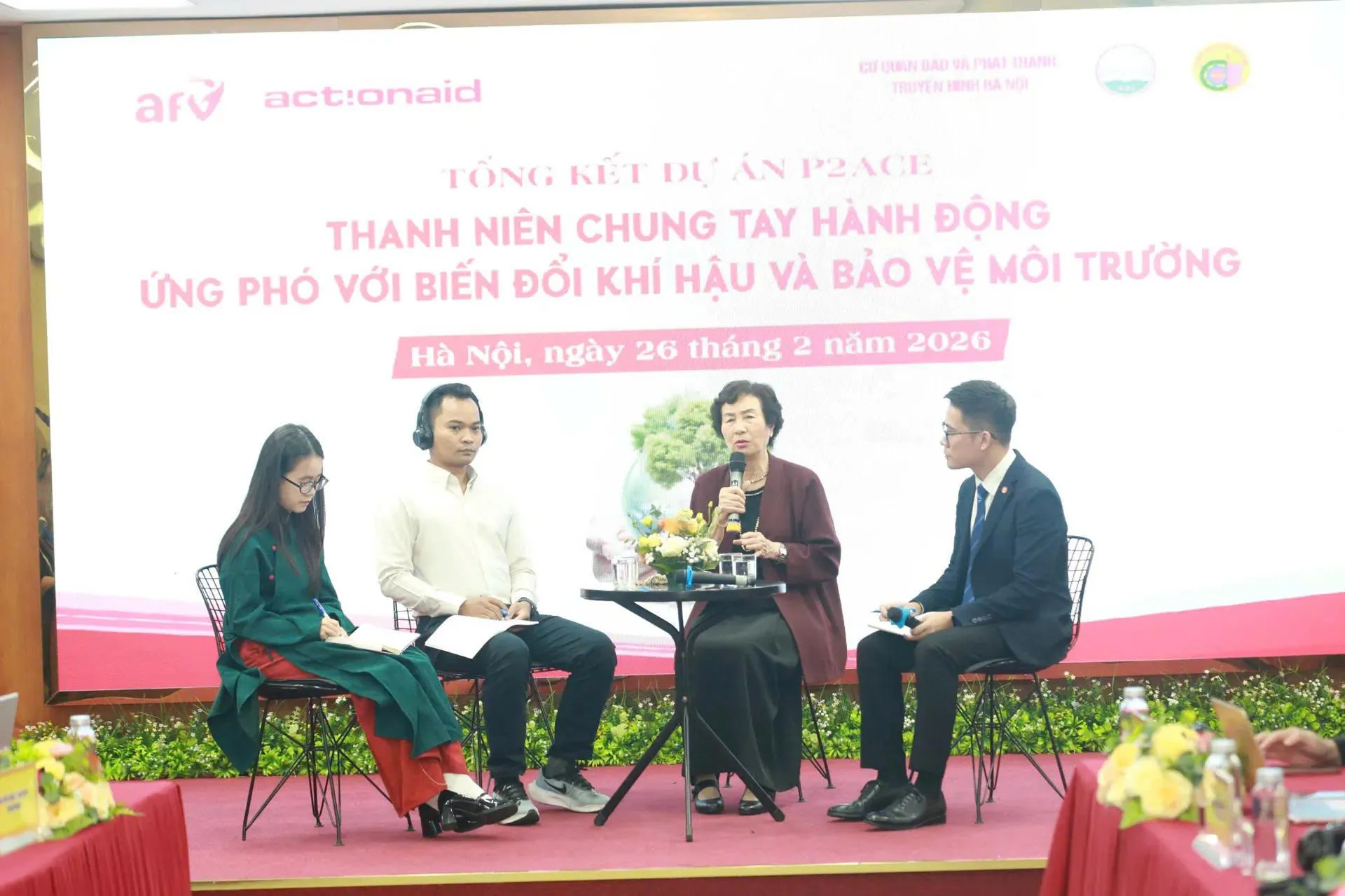
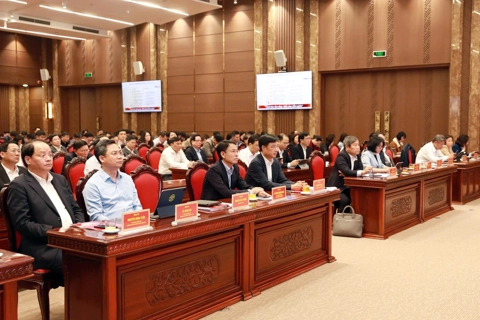
Guest participants share insights and exchange views at the seminar. Photos: Pham Hung/The Hanoi Times
Bui Thi An, Director of the Institute of Natural Resources, Environment and Community Development, said public awareness of environmental protection has improved markedly in recent years.
Young people have helped spread green practices through tree planting, waste collection, recycling, community programs and policy consultations, she said.
However, youth engagement often remains reactive and limited to responding to calls for participation rather than leading initiatives, An noted.
She urged students and young people to take greater ownership of designing and implementing environmental projects to generate stronger community impact.
“In every critical period, youth have led the way. Today, their voices still hold a powerful influence,” she said.
Tran Bich Hanh of AFV said community programs have equipped thousands of young people with skills and knowledge on sustainable development while strengthening ASEAN youth links.
Drawing on implementation experience, she called for youth involvement across the full policy cycle, from drafting to monitoring and evaluation.
“Young people must engage throughout the policy process,” she said, urging expanded regional cooperation to amplify collective action.
Ly Nhac Linh, Project Manager at ActionAid International in Vietnam, said Southeast Asia ranks among the regions most exposed to climate risks, with large populations living in vulnerable coastal and low-lying areas.
Youth account for about one-third of ASEAN’s population and represent a powerful driver of change. Education programs have reached tens of thousands of young people and supported youth-led initiatives in climate adaptation, renewable energy and waste management.
From a communications angle, Luong Nhat Linh, a youth union leader at the Academy of Journalism and Communication, stressed the need for practical, relatable messages.
The real test, she said, lies in whether people change daily habits after receiving environmental messages.
Many campaigns achieve wide visibility yet fail to sustain long-term behavioral change.
Students at the academy therefore prioritize concrete actions such as cutting plastic bag use, carrying reusable bottles and following daily green checklists.
“Effective communication must show people what they can do immediately,” she said.
To sustain engagement, campaigns include commitment pledges and progress tracking so participants can log daily actions and see measurable results. This approach turns awareness into routine behavior.

Vanna Bona, a representative of the Cambodian Youth Network Association, speaks at the seminar.
Programs such as exchanging plastic bottles for trees or the “Seven Days of Green Living” challenge demonstrate that visible outcomes make environmental action more accessible and sustainable for students.
Linh highlighted the opportunity for ASEAN youth to leverage digital tools to build cross-border information networks on climate adaptation and environmental initiatives.
She proposed transparent data-sharing systems to strengthen early warning mechanisms and help countries with similar vulnerabilities learn from one another’s disaster response experience.
Lessons from neighboring countries
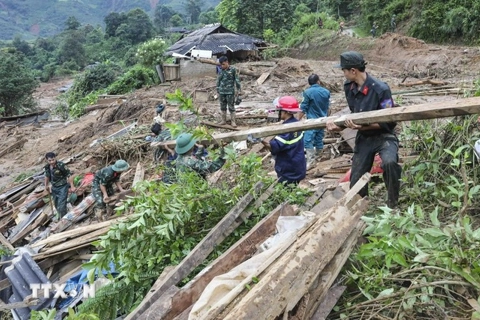
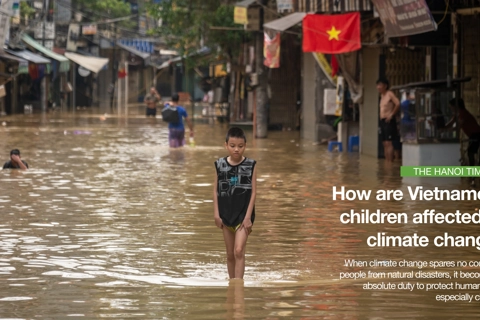
Recent events underscore that climate change poses an immediate threat. Vietnam and the Philippines have faced severe impacts in recent years.
Both countries have endured prolonged heavy rains, widespread flooding and unusually intense storms, some of which have broken historical records.
These disasters caused significant human and economic losses, strained social stability and exposed weaknesses in early warning systems, reinforcing the need for broad societal engagement.
Schools and universities nationwide increasingly integrate environmental education into extracurricular and volunteer activities.
Thousands of students have enrolled in online courses on climate change, climate justice and sustainable development, strengthening awareness and youth participation in green initiatives.
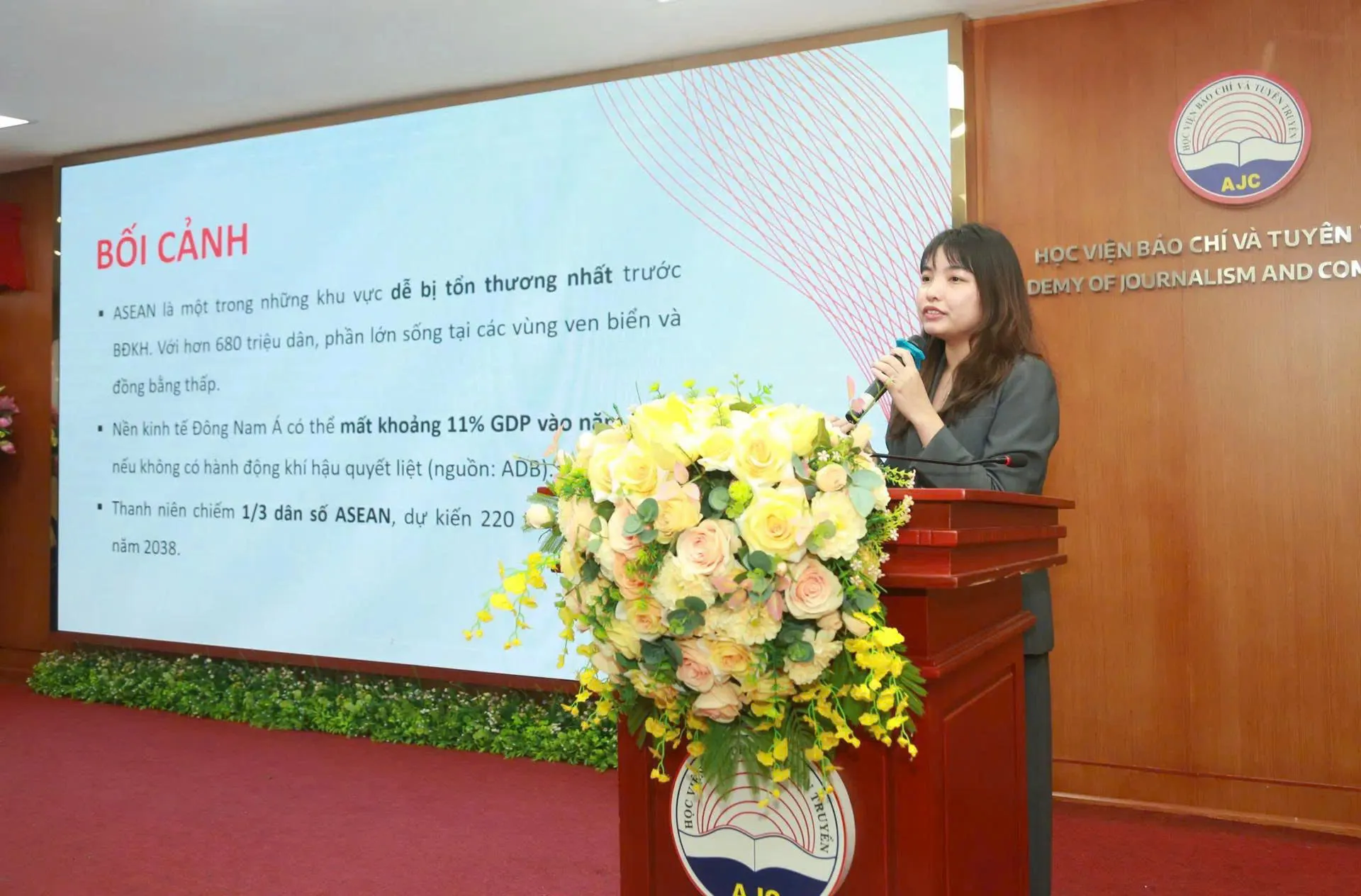
Ly Nhac Linh, Project Manager at ActionAid International in Vietnam, speaks at the event.
Vanna Bona of the Cambodian Youth Network Association said Cambodian youth are actively engaged in climate action through multi-stakeholder projects.
An ActionAid-backed program has connected young people across around 50 schools to promote environmental education, he said.
Youth also cooperate with government agencies to organize workshops and policy dialogues, thus raising awareness, contributing to policy discussions and driving changes, Bona said.
He added that Cambodian youth have taken part in ASEAN forums on climate and environmental policy while advancing cooperation in clean energy transition, water security and plastic waste reduction in the Mekong basin.
However, sustaining activities remains difficult due to limited funding and technical capacity, the Cambodian delegate said.
Mary Angelo Macaraeg of the Philippines’ Pambansang Kongreso ng Kababaihan sa Kanayunan (PKKK), a coalition of about 300 rural women’s groups, shared lessons from the P2ACE youth climate project implemented from April 2023 to January 2026.
The project trained young participants through modules on climate justice, sustainable development and digital transformation tailored to local realities.
After training, the youth launched community initiatives on disaster risk reduction and climate adaptation, incorporating cultural awareness and gender perspectives.
She encouraged Vietnamese youth to strengthen digital communication, promote inclusiveness and sustain engagement even when resources remain limited.