Tet at the mission: Peach blossoms bloom in Africa
Under the dry winds and red dust of Abyei and Bentiu, mission compounds glow with paper blossoms and steaming banh chung, as each square rice cake carries from Vietnam to Africa a message of solidarity, compassion and enduring cultural identity.
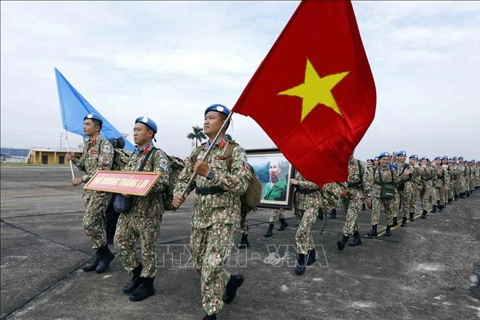
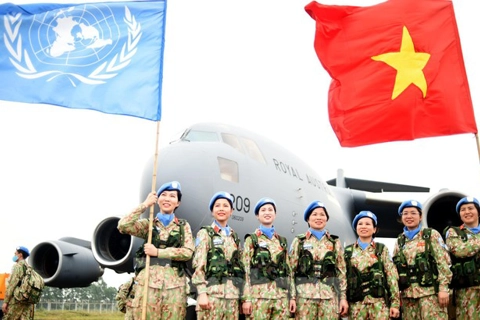
THE HANOI TIMES — Vietnamese peacekeepers are marking the Lunar New Year in Abyei and Bentiu under blistering heat and swirling red dust, sustaining Tet traditions thousands of kilometers from home while continuing their United Nations duties in some of Africa’s most challenging environments.
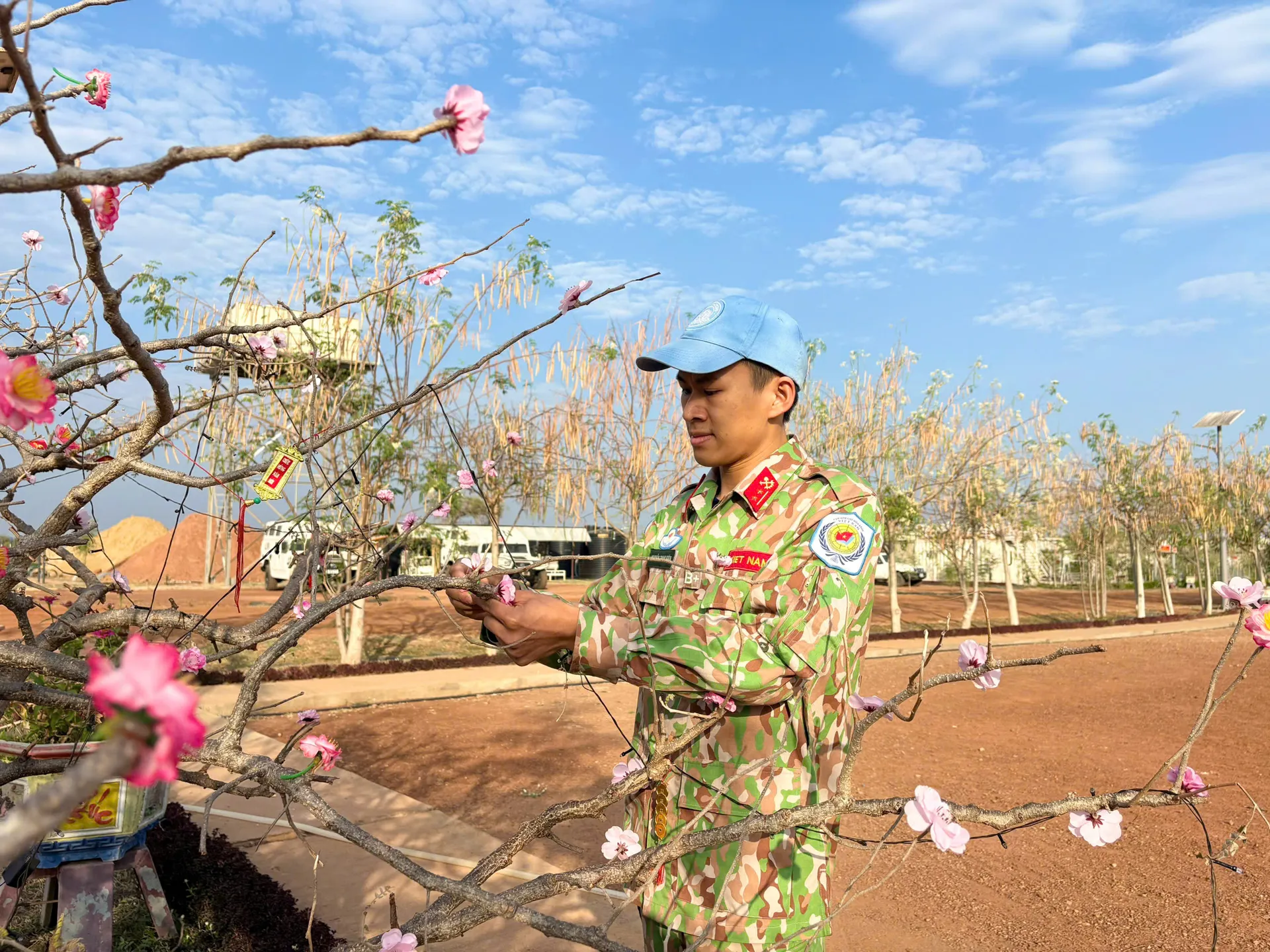
Vietnamese peach blossoms - the symbole of Tet (the Lunar New Year) remains bright in blistering heat and swirling red dust in Africa. Photos: Vietnam's Department of Peacekeeping Operations
At bases in Abyei, the disputed area between Sudan and South Sudan, administered by the United Nations Interim Security Force for Abyei (UNISFA), and in Bentiu under the United Nations Mission in South Sudan, paper peach blossoms brighten rows of prefabricated barracks.
At the same time, soldiers prepare banh chung (Vietnamese sticky rice cake) and five-fruit trays despite dry-season temperatures that frequently exceed 40°C. In these conditions, Tet is not simply remembered but carefully recreated and shared among Vietnamese personnel and international colleagues alike.
According to Vietnam’s Department of Peacekeeping Operations, a central feature of the celebration is the making of banh chung, which soldiers wrap in wild banana leaves sourced locally in the absence of traditional dong leaves.
Although the materials differ, the ingredients remain unchanged, with glutinous rice, pork and mung beans folded with the same precision and symbolism observed in Vietnam.
Over time, the activity has come to be known among the contingent as “banh chung diplomacy,” reflecting its role in strengthening morale within the unit while also serving as a cultural bridge.
In Bentiu, personnel from Level 2 Field Hospital No. 7 and Engineering Unit Rotation 4 have invited UN staff and peacekeepers from other countries to join the wrapping process, taste the cakes and learn about the customs associated with Tet.
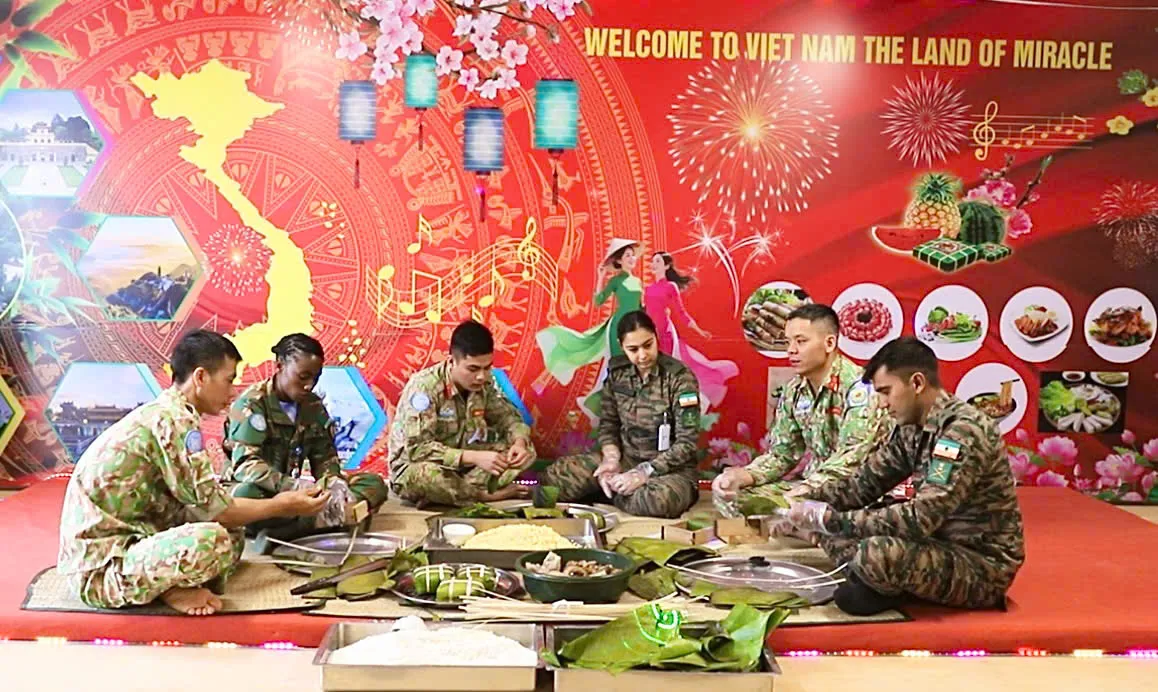
Banh chung (Vietnamese sticky rice cake normally made in Tet) becomes popular among international friends.
Through these exchanges, what begins as a culinary activity gradually becomes a cultural introduction. Khalid Hassan, a South Sudanese humanitarian worker at the mission, said that participating in the preparation helped him understand the festival on a deeper level.
Having previously heard about Tet, he noted that making banh chung alongside Vietnamese soldiers and listening to their stories about family reunions allowed him to appreciate the holiday’s emphasis on togetherness and renewal.
According to Lieutenant Colonel Nguyen Van Nam, Head of Task Group No. 5 at the UN Mission in South Sudan, such outreach forms an integral part of the Vietnamese contingent’s presence.
Beyond preparing traditional food, the unit organizes cultural briefings and explains the meaning behind Tet rituals so that international colleagues can better understand the values embedded in the celebration.
As fellow peacekeepers learn to wrap the square cakes and inquire about ancestral offerings or New Year wishes, cultural exchange naturally reinforces mutual respect and solidarity within the multinational mission.
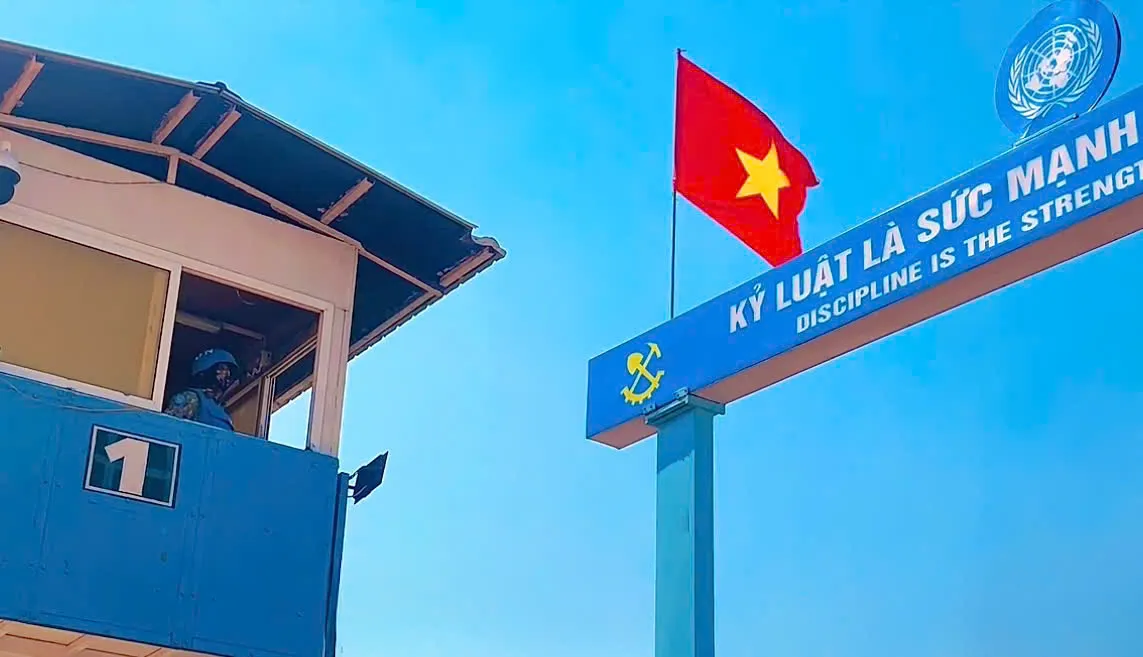
While Tet activities provide warmth and familiarity, operational responsibilities remain paramount, particularly in Abyei.
While Tet activities provide warmth and familiarity, operational responsibilities remain paramount, particularly in Abyei, where Engineering Unit Rotation 4 continues to focus on restoring and upgrading critical transport infrastructure.
Roads in the vast and isolated territory function as lifelines for both local communities and peacekeeping operations, and since deployment, the Vietnamese engineers have prioritized repairing key routes to ensure mobility and safety.
Among the most significant projects has been the reinforcement and repair of Banton Bridge, a vital connection point in the area.
In parallel, damaged community roads have been reopened ahead of the Lunar New Year, with all works implemented in line with United Nations technical standards. These upgrades not only facilitate military logistics but also help revive daily economic and social activities for residents who depend on reliable access to markets, schools and health services.
Colonel Alexander De Lima, Chief of Staff of the UNISFA military force, has commended the Vietnamese contingent for improving living and working conditions across the mission area, describing them as disciplined and professional while maintaining a strong sense of community engagement.
Behind each completed project lie long days of labor under relentless sun, with red dust coating machinery and uniforms as soldiers balance construction schedules with security requirements.
As infrastructure gradually improves, its humanitarian significance becomes increasingly visible. In areas where clean water is scarce, restored roads enable water trucks to reach remote communities more consistently, thereby supporting basic needs and public health.
Lieutenant Colonel Trinh Van Cuong, commander of Engineering Unit Rotation 4, said the most meaningful reward comes from witnessing local children run after the vehicles, calling out “Vietnam! Vietnam!” as convoys pass through newly repaired routes.
In addition to large-scale infrastructure works, the unit has extended support to Abyei High School by leveling playgrounds and improving access to classrooms during intervals between major assignments.
Heavy road rollers typically deployed for strategic transport routes have been used to smooth school grounds, reducing dust and enhancing safety for students. Kon Maneit Matiok, Minister of Physical Infrastructure and Public Utilities in the Abyei Administrative Area, described the assistance as a valuable contribution that offers tangible benefits to the next generation.
Even as Tet approaches, the contingent maintains full combat readiness in accordance with mission requirements. Construction equipment is cleaned and serviced, patrols and briefings continue as scheduled, and security protocols remain strictly observed.
Within this disciplined framework, however, moments are set aside for year-end meals, spring songs and quiet reflection on families awaiting news from home.
For younger officers such as Second Lieutenant Nguyen Trung Kien, shaping paper peach blossoms by hand under the African sun symbolizes both homesickness and resilience.
Although distance from family is keenly felt, shared responsibilities and collective celebration reinforce a sense of pride in representing Vietnam abroad.
Ultimately, by combining infrastructure development with cultural outreach, Vietnamese peacekeepers present an image of a nation rooted in tradition yet committed to international cooperation and peace.
Under the dry wind and red dust of Abyei and Bentiu, paper blossoms and steaming rice cakes illuminate mission compounds, and each banh chung offered carries a message of solidarity, compassion and enduring cultural identity from Vietnam to Africa.