Craft villages across Hanoi reinvent tourism through heritage, creativity and community-led experiences
Artisans are opening their homes, redesigning workshops and turning everyday skills into immersive experiences that pull visitors into the heart of rural Vietnamese culture. What once lived quietly behind wooden doors now thrives as part of Hanoi’s most promising tourism frontier.
THE HANOI TIMES — In Chuong Village of Thanh Oai Commune, about 30 kilometers from central Hanoi, the workshop of artisan Nguyen Thi Le greets visitors with the earthy scent of palm leaves warmed over fire.
A ceiling fan hums softly above her, blending with the rhythmic sound of needles sliding through thread.
Rows of traditional white “poem conical hats” line the wooden shelves. Beside them sit modern versions made for tourists: lighter, smaller and painted with scenes from the Son Tay–Doai region.
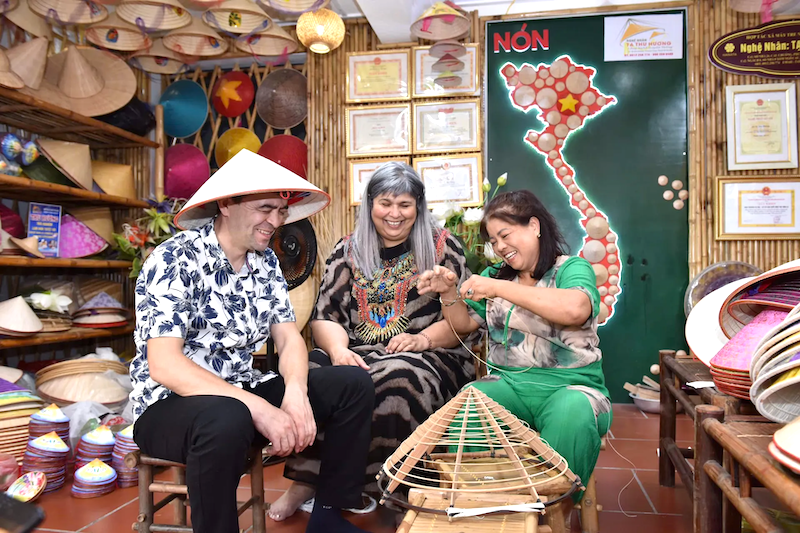
Foreign visitors to Chuong Village, Hanoi's Thanh Oai Commune, love to learn about the craft. Photo: The Hanoi Times
Each hat carries a quiet story of the village’s past and an invitation to experience its future.
As she stitches the rim of a hat, Le laughs: “Visitors want to see how a conical hat takes shape. They want to thread the nylon and form the frame with their own hands.”
She adds: “Doing the craft today means creating memories. Selling only the product makes it hard to grow.”
Her words reflect a shift sweeping through craft villages across Hanoi.
Artisans once known for working silently behind their benches now stand confidently beside their craft tables, excited to guide visitors through the steps that shaped their lives.
New bilingual signs mark the village entrance. Several homes display “Open Craft Space – Welcome” plaques, placing small stools outside so guests can rest and wander freely.
This transformation contrasts sharply with the scene five years ago, when most production stayed hidden in backyards and the villages barely registered on tourist itineraries. And the shift does not stop in Thanh Oai.
In Dong Anh Commune, woodcarving workshops now feature dedicated exhibition corners showing each step of creating traditional wooden statues, from carving the first curve to polishing the final surface.
In Ha Dong Ward’s Da Sy Village, the once-quiet blacksmith workshops now glow into the night.
Sparks crackle as artisans fire metal pieces for curious visitors eager to swing a hammer and try shaping steel.
Tourism and craftsmanship may have seemed like an unlikely pairing years ago, but the combination has sparked a wave of renewal.
Villages now reorganize workspaces, rethink product design and reshape how they tell the stories handed down through generations.
Across Hanoi’s outskirts, vibrant flower fields and cultural spaces intertwine with ancient crafts, creating a fresh landscape of rural tourism.
With a renewed focus on experience-led routes that highlight tradition, creativity and community life, Hanoi’s suburban communes are fast becoming destinations rich in identity and full of untapped potential.
Visitors traveling these rural roads can feel the change instantly. Craft villages no longer hide behind quiet façades. Workshops now open their doors, inviting travelers to see, listen and participate.
Craft villages energized by supportive city policies
This momentum is no accident. It reflects Hanoi’s strong push to elevate suburban tourism and position craft villages as valuable cultural assets.
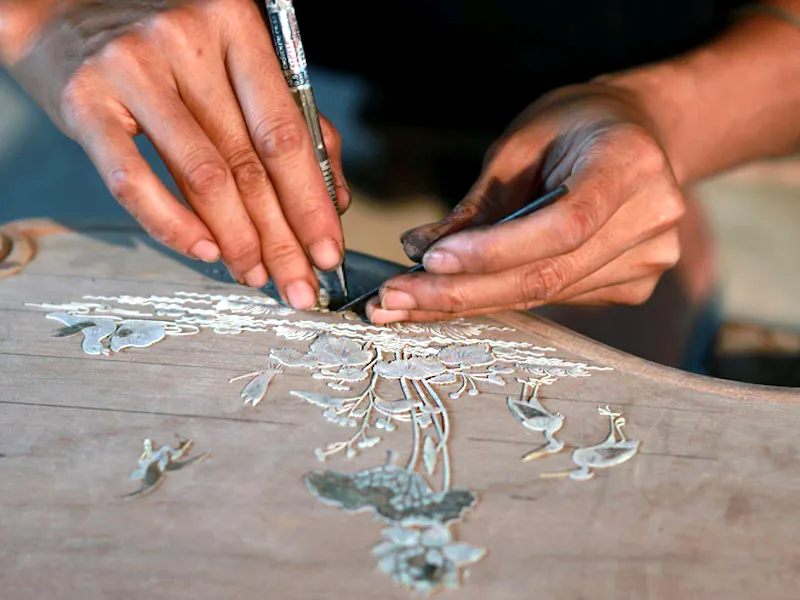
A product made by a craftsman of Phu Xuyen Commune's Chuyen My mother-of-pearl inlay village. Photo: Congthuong Newspaper
Tran Trung Hieu, Deputy Director of the Hanoi Department of Tourism, sees this direction as “natural and sustainable”.
“Visitors travel to experience cultural stories,” he said. “Hanoi has more than 1,300 craft villages which make a treasure unique to the city.”
“The challenge is to present these stories in fresh, modern ways while keeping them real,” he added.
Hieu explained that the department works closely with local authorities to standardize tourist sites, improve roads, install clear signage, support tour operators in scouting new routes and train residents in hospitality.
“When authorities and villagers move toward the same goal, tourism grows on its own,” he added. “Communes like Phu Xuyen, Thanh Oai, Soc Son and Gia Lam have shown the strongest progress.”
Among them, Phu Xuyen stands out. Long known for shell inlay, seal engraving and conical hat making, its craft villages once struggled with small orders and outdated production spaces.
Everything changed in mid-2024 when the commune launched its “Open Craft Village” initiative, creating interconnected routes that link craft spaces with ecological zones and cultural landmarks.
Nguyen Xuan Thanh, Party Secretary of Phu Xuyen Commune, shared: “Changing mindsets is the hardest step. But when villagers saw the income tourism brings, they shifted from quiet production to sharing their craft, redesigning workshops and learning how to welcome visitors.”
“We help residents with product design, digital tools and reorganizing their workspaces. For Phu Xuyen, tourism strengthens both economic growth and cultural preservation.”
The results are already clear. Weekend visitors, especially school groups and families from central Hanoi, are returning in larger numbers.
Each visit becomes an intergenerational exchange: children carve their first wooden stamp or weave their first hat, while artisans step out of their daily routines to proudly share their stories.
Reviving heritage and nurturing pride in traditional culture
In Duong Lam Ancient Village of Son Tay Ward, tourism has breathed life back into centuries-old houses made of ironwood, laterite bricks and terracotta tiles.

Making tuong nep or fermented soybean paste at Son Tay Ward's Duong Lam Ancient Village. Photo: Tuong Nguyen
Artisan Nguyen Tan Phat, who has dedicated 20 years to preserving architecture and traditional products, believes tourism “revives the soul of the village.”
“Visitors used to come only to see old houses,” he said. “Now they stay longer. They want to learn about farming, traditional kitchens and local crafts.”
“We’re designing tours that include ancient homes, village meals and daily-life activities so visitors can understand Duong Lam more deeply.”
A similar transformation shines in Ha Dong Ward’s Van Phuc Village, now a lively silk street filled with color and movement. Shops display fabric in their windows and let travelers try weaving on traditional looms.
Young artisans take design courses to create modern scarves, bags and accessories that carry Hanoi’s cultural soul into contemporary fashion. Youth-driven initiatives play an important role in this revival.
Khuat Van Thang, founder of Doai Creative, organizes craft workshops for children in the western villages of Hanoi.
“In one session, kids understand why their grandparents love the craft,” he said. “That emotional connection is the best way to keep heritage alive.”
These programs blend creativity with tradition, turning craft villages into spaces of learning, discovery and community pride.
As villages welcome more visitors, everyday life grows brighter and more organized. Roads look cleaner, workshops feel tidier and households greet guests with warm hospitality.
This creates a powerful cycle: tourists enjoy richer experiences, villagers earn more stable incomes and the value of cultural heritage deepens.
The examples across Hanoi show that tourism, when planned with care, strengthens cultural identity. As incomes rise, pride grows. The craft thrives.
Hanoi envisions that by 2030, its suburban districts will form green, welcoming communities where every craft village tells a cultural story, every farm doubles as an agritourist site and every heritage landmark becomes a destination filled with meaning.