Spring Fair 2026 draws visitors on Hanoi traditional crafts through hand-on experiences
Hanoi’s Spring Fair 2026 highlights traditional craft villages through interactive experiences, market expansion and digital promotion efforts ahead of Tet.
THE HANOI TIMES — The exhibition area showcasing Hanoi’s craft villages at the Spring Fair 2026 has emerged as a major attraction, offering live demonstrations and hands-on activities, allowing residents and visitors to engage directly with the traditional craftsmanship of the capital.
These interactive experiences help bring heritage crafts to life, strengthening the fair’s promotional impact while allowing visitors to connect with the artisans and production processes behind each product.
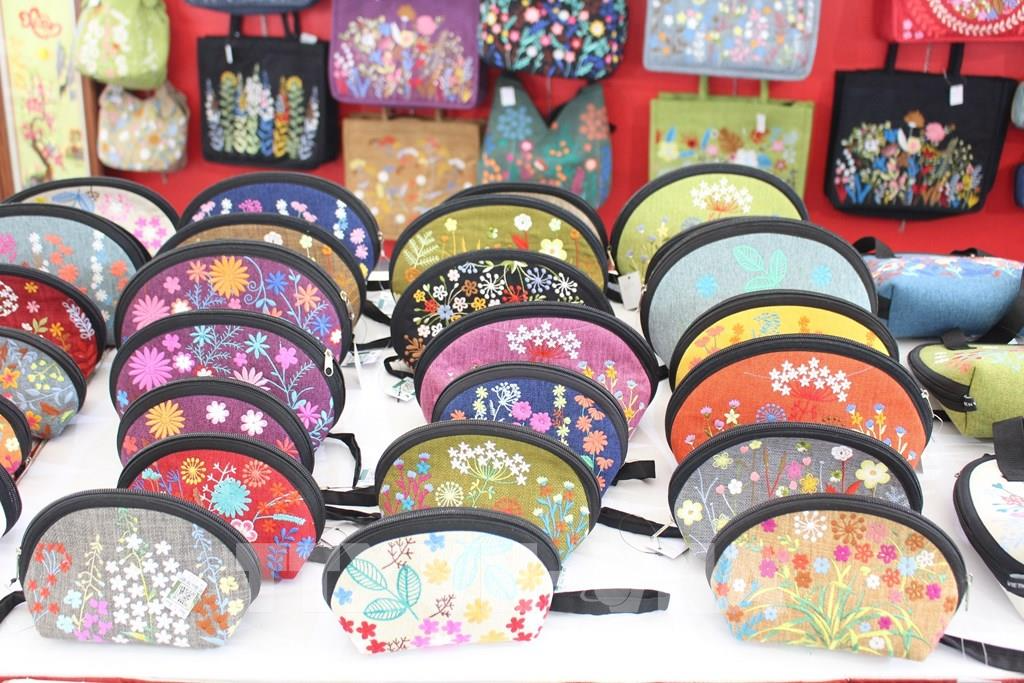
Hand-embroidered products on display at the Hanoi craft village exhibition area during the Spring Fair 2026. Photo: Vietnam News Agency
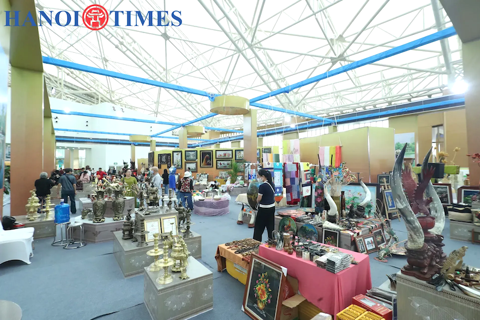
Booths are arranged by craft category, making it easier for visitors to explore, observe production techniques and understand the cultural stories embedded in each item.
Displays range from hand embroidery and ceramics to bamboo and rattan weaving, lacquerware, fine wood carving, conical hats, folk figurines and traditional processed foods, highlighting the diversity and vitality of Vietnam’s artisanal heritage.
Many well-known Hanoi craft villages have introduced their signature products, combining technical skill with creative innovation. Artisans increasingly pair traditional techniques with updated designs and practical features to match modern consumer demand.
Producers are also investing in improved packaging, clearer branding and higher quality standards to strengthen market competitiveness.
For artisan Do Van Cuong, an Outstanding Artisan from Thiet Ung fine wood carving village in Thuy Lam Commune, the “Family Reunion Tet” zone offers a rare chance for craftspeople to tell their stories directly to the public.
He said the greatest value of such events lies in sharing cultural meaning rather than focusing solely on sales.
“Industrial mass production puts pressure on traditional craft villages, but those that stay committed to handmade techniques and distinctive product lines can survive and grow,” Cuong said.
“Large fairs like this expand market access and allowing Vietnamese craft products to reach consumers in a more direct and authentic way,” he added.
At the booth of the Thu Huong Bamboo, Rattan and Conical Hat Cooperative in Thanh Oai Commune, the central area is dedicated to visitor interaction, where guests can paint and decorate plain white conical hats themselves.
The activity has attracted strong interest from visitors of all ages.
Pham Phuong Linh, a secondary school student from Hanoi’s Ngoc Ha Ward, said the experience left a lasting impression.
“It’s my first time decorating a traditional conical hat myself. It feels exciting and meaningful and it makes me proud of our traditional products,” she said.
According to Ta Thu Huong, an artisan from Chuong conical hat village and chairwoman of the cooperative, the interactive layout is a deliberate choice.
“We want visitors, especially children, to connect with traditional crafts through hands-on experiences. This helps them understand the cultural value and labor behind each product,” she said.
“These activities turn craft items into living connections between villages and consumers,” Huong added.
Expanding partnerships, markets for traditional crafts
Beyond cultural promotion, many businesses view the Spring Fair 2026 as a platform to expand commercial partnerships.
Through meetings with distributors, retailers and exporters, craft villages seek long-term partners and more stable sales channels.
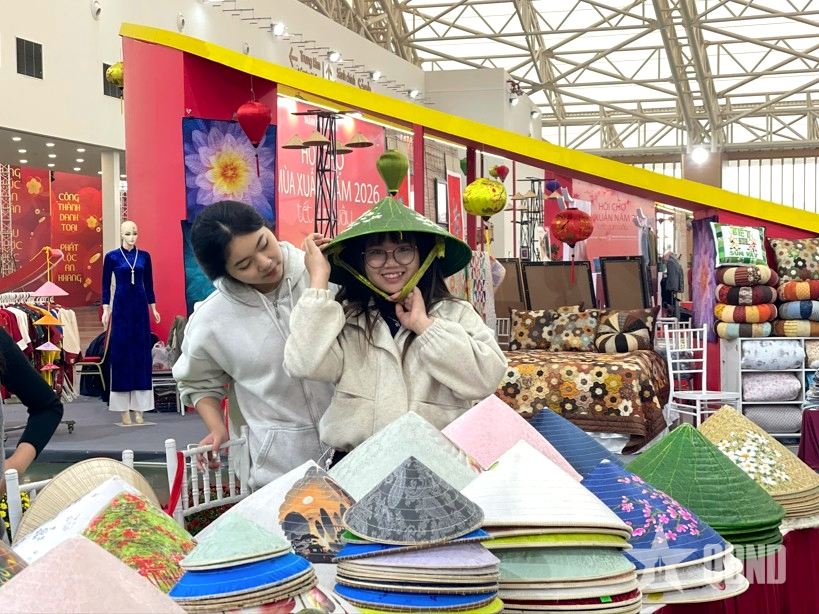
A booth showcasing products from Chuong conical hat village at the fair. Photo: Quan Doi Nhan Dan Newspaper
Le Thi Thuan, Deputy Director of Southeast Asia Handicraft Manufacturing and Import-Export Company in Thuong Tin Commune, said large fairs help producers reach consumers directly while gathering immediate feedback on design, pricing and market demand.
“This feedback helps us adjust production strategies and develop products that better match market trends,” she said.
Alongside traditional displays, many craft villages are adopting digital tools to boost promotion.
QR codes, e-commerce links, online sales platforms and social media channels now appear widely at booths, helping expand customer reach and improve brand visibility.
The strong presence of Hanoi’s craft villages at the Spring Fair reflects their proactive response to changing market conditions and their gradual shift toward more professional promotion and distribution.
Through events of this scale, traditional crafts gain new opportunities to preserve cultural value while adapting to modern economic life.
According to Plan No. 79/KH-SCT issued by the Hanoi Department of Industry and Trade, the Spring Fair serves as a multidimensional trade promotion platform that integrates commerce, culture, tourism and experiential activities.
As host to many key events, Hanoi continues to shape the fair into a space where traditional craftsmanship can thrive, support socio-economic development and reinforce the capital’s cultural identity.