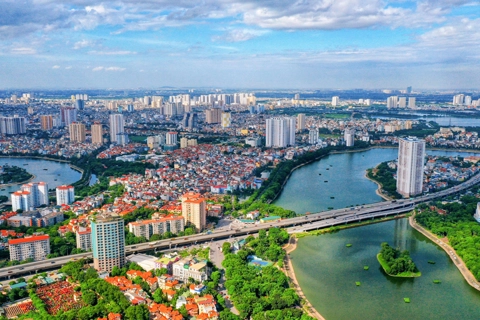
Amended Capital Law to facilitate Hanoi's development
The draft amended Capital Law is being submitted to the National Assembly for consideration.
National Assembly deputies told The Hanoi Times of their support for the draft amended Capital Law, which is currently being submitted to the legislative body for consideration.
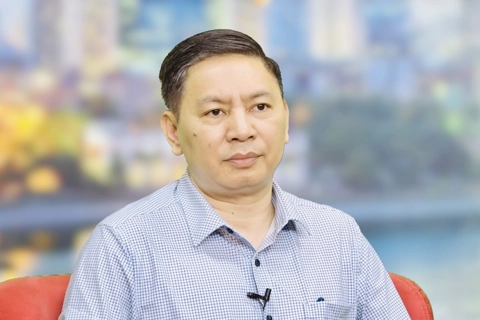
Deputy Pham Van Hoa (Dong Thap Province): Hanoi needs extraordinary policies to attract human talent
| Deputy Pham Van Hoa. |

The Capital Law, enacted in 2012, marked a significant milestone for Hanoi as the only municipality with such legislation among the country's 63 provinces and cities to be governed by a tailor-made law. After a decade of implementation, the law has brought remarkable progress but still exposes several challenges and shortcomings. It calls for timely amendments to adapt to current realities and address evolving development needs.
I endorse the provisions of the draft law on the mechanism for attracting and harnessing talent, which emphasizes the cultivation of high-quality human resources for the capital.
The focus on drawing talent should extend beyond the country's borders, targeting individuals from within and outside the country. This initiative should be inclusive, welcoming individuals from Hanoi and other provinces, cities, and overseas Vietnamese who wish to live and work in the capital.
To ensure a welcoming and progressive urban governance, it is imperative to establish specific mechanisms and policies that cater to all individuals. This approach aims to create an environment where everyone who moves to Hanoi will experience a humane and forward-looking municipal administration.
I am confident that Hanoi will devise clear, tailored incentives in line with its unique circumstances and budget constraints. At the heart of these policies is the provision of remuneration, which is superior to other regions, to empower and encourage talented individuals to flourish and contribute to the construction of a thriving capital city.
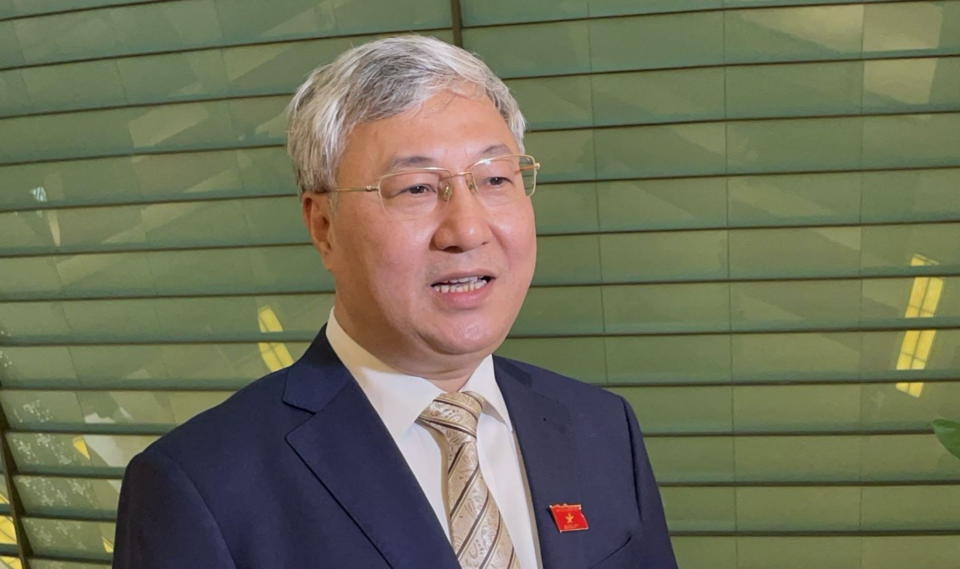
Deputy Tran Van Lam (Bac Giang Province): Cementing Hanoi's role as socio-political-economic hub
| Deputy Tran Van Lam. |
As the nation's capital, Hanoi's pivotal role should be emphasized to build and develop the capital to a level commensurate with its importance.
The development of the capital is a source of pride for the entire nation and is viewed as a barometer of Vietnam's standing among other countries.
To assert Vietnam's position globally, the capital must be able to compete with its counterparts worldwide. Therefore, offering input to refine the draft of the amended Law on the capital is tantamount to contributing to the holistic advancement of the capital, thereby generating a pervasive and propelling force for the development of the entire region and country.
The amendment of the Capital Law presents an opportunity for a thorough and comprehensive assessment of over a decade of the law implementation. This involves a clear identification of limitations and weaknesses, paving the way for the proposal of exhaustive, effective, and feasible solutions.
Hanoi inherently differs from other localities as there is only one capital in the entire country. Consequently, the revised Capital Law must provide specific policies aligned with Hanoi's unique status as the national political and administrative center and a major hub for culture, science, education, business, and international transactions.
This requires the establishment of a legal framework that facilitates swift and efficient development.
In amending the Capital Law, it is crucial to consider the intricate, organic relationship with surrounding localities, the northern region, and the nation as a whole. The draft Law outlines planning measures to meet this requirement.
Capital planning should foster interconnectivity, allowing Hanoi to share development resources with neighboring areas and, in return, receive contributions and support. For instance, relocating certain polluting factories, plants, major hospitals, and universities to surrounding regions can alleviate the burdens on the capital and promote a balanced and sustainable development model.
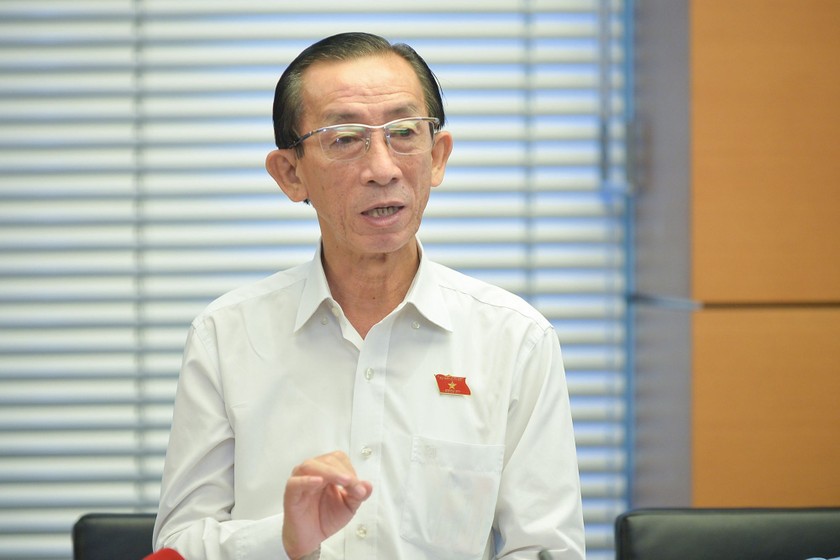
Deputy Tran Hoang Ngan (Ho Chi Minh City): Most favorable conditions for Hanoi
| Deputy Tran Hoang Ngan. |
The submission of the draft amended Capital Law to the National Assembly during the 6th Session of the 15th National Assembly is of immense significance, particularly considering the unique status of Hanoi and Ho Chi Minh City as two special cities in the country. These urban centers play a pivotal role, contributing to 45% of the nation's total budget revenue.
Crucially, Hanoi and Ho Chi Minh City serve as the nation's showcase and gateways for international exchange and integration, with Hanoi being of particular importance. The people nationwide have an enduring belief in and expectation of Hanoi as a leading capital.
However, recent organizational and operational challenges have emerged, requiring the establishment of the most conducive institutional framework and robust decentralization for Hanoi.
Furthermore, the implementation of National Assembly Resolution No. 98/2023/QH15, issued on June 24, 2023, which pilots specific mechanisms and policies for the development of Ho Chi Minh City, highlights numerous aspects that warrant consideration for application to a special municipality. Notably, these aspects have been incorporated into the draft amended Capital Law, addressing issues such as public transport-oriented urban development (TOD), the integration of urban development with transportation, and decentralization in adjusting planning and organizational structures.
Given these considerations, I am confident that the draft Law presented at this session will garner support and approval from the delegates.
Deputy Hoang Van Cuong (Hanoi): More incentive policies to attract investment
| Deputy Hoang Van Cuong. |
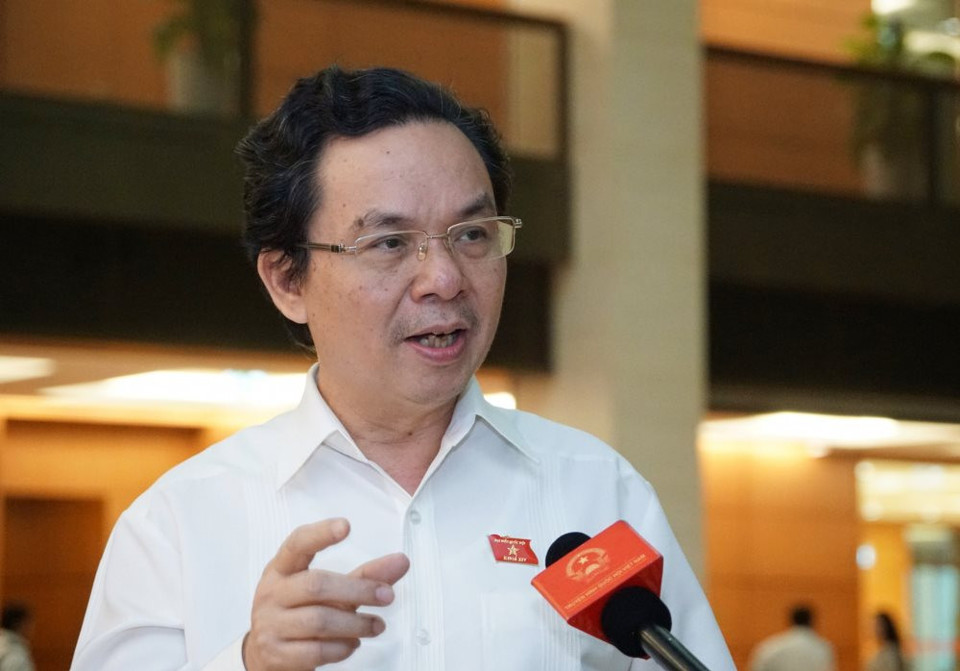
Although the Capital Law came into force in 2012, its practical implementation reveals that the existing legislation has not fully realized its potential to enhance the effectiveness and efficiency of mechanisms and policies for the development of Hanoi, given its pivotal role as the heart of the entire country.
Hanoi, as the nation's capital, occupies a unique position, as the center of attention and represents the ideal of the country.
Consequently, the capital cannot be treated merely as a sub-national administrative division, province, or city. It requires special management and investment mechanisms that distinguish it from other localities.
Therefore, I argue that the amended Capital Law must articulate a genuinely distinctive mechanism, establishing an inclusive legal framework specifically tailored to the capital's unique circumstances. The essence of inclusivity implies that the capital should undergo development at a higher level, adhering to elevated development standards compared to other cities.
Moreover, the legislation should incorporate mechanisms for increased investment and incentives. Particularly, there should be a framework to tap into the inherent potential of the capital, both to generate development resources and attract external investments. If these requirements are met, the amended Capital Law will undoubtedly serve as a legal instrument to carve out development corridors and, simultaneously, function as a tool to draw economic resources to Hanoi.