Amended Capital Law to make Hanoi political and economic hub of Vietnam
Hanoi is expected to lead the Red River Delta and the country's development path.
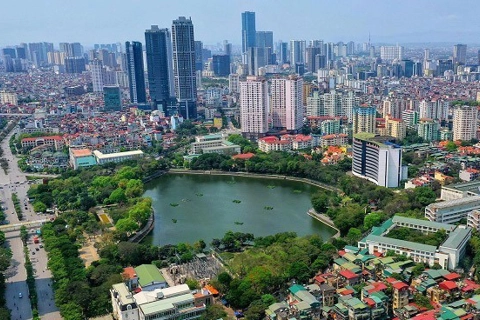
Amending the Capital Law is very important and necessary considering the importance of Hanoi as a special city, the political and economic center of the country, Chairman of the National Assembly Vuong Dinh Hue said at the sixth session of the legislative body on November 10.
"There can be many special cities in a country, but only one capital. Resolution No.15 of the Politburo identified Hanoi as the political and administrative center, an important hub for trade and business, culture, education and training, science and technology, and international integration," Vuong Dinh Hue said.
Special policies for Hanoi
Hanoi is also identified as the showpiece and heart of the whole country, awarded with many international titles. Therefore, according to Hue, the amended Capital Law must institutionalize the Politburo Resolution on Hanoi's role, orientation, and development, so that it can lead the Red River Delta and the country's development path.
| National Assembly Chairman Vuong Dinh Hue and deputies. Photo: National Assembly Media |

He emphasized that the Capital Law is not only for the capital alone but for the whole country in the spirit of "Hanoi for the whole country, together with the whole country".
According to many delegates, the quality of the draft law is quite high compared to the previous drafts of the 2012 Capital Law.
Specifically, the amended Capital Law provides for the creation of two sub-municipal cities, one covering parts of Dong Anh, Me Linh, and Soc Son districts, which would become a logistics and service city in the northern region, and another for education, training, and science in Hanoi West, which would cover Hoa Lac and Xuan Mai cities.
The draft also stipulates the delegation of investment powers, allowing land clearance to be a project independent of public investment projects, and allowing Public-Private-Partnership (PPP) in culture and sports.
The amended Capital Law also creates a legal framework for building Hanoi into a cultural industry hub; the City People's Council is empowered to approve higher than the current permissible level of support for artisans and practitioners of intangible cultural heritage, those who teach, practice and promote the value of intangible cultural heritage.
The Hanoi People's Council will be allowed to decide on budget allocations to reduce poverty, create jobs, and support workers and employees in industrial zones to take loans to purchase social housing.
Hanoi needs an extraordinary mechanism
Deputy Quang Van Huong from the northern province of Son La reiterated that promulgating the Capital Law (Amended) with specific mechanisms is necessary to tap the strength of the nation's capital.
He called for more explicit provisions on social security policies to better serve vulnerable groups (such as people with disabilities, crime victims, the poor, and ethnic minorities).
| Hanoi deputies discuss Amended Capital Law. Photo: National Assembly Media |
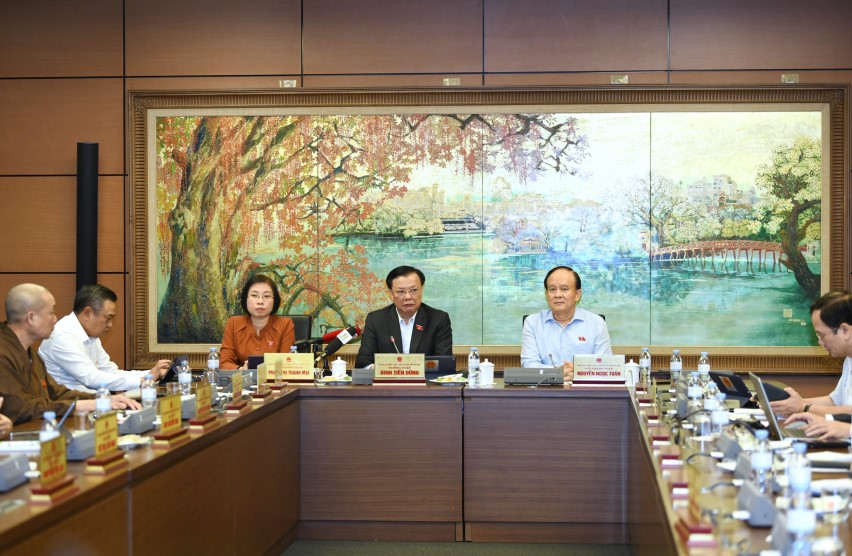
He urged the drafters to further review the policy and make more specific and clear regulations so that this target group is not omitted or neglected, and the capital can comprehensively develop in the spirit of "leaving no one behind".
Danang representative Tran Chi Cuong said Hanoi has many national historical relics and is deeply rooted in the culture of the Vietnamese people, so it is necessary to have specific policies to preserve and promote cultural and historical activities.
According to him, Article 42 of the draft amended law on the commercialization of sports and cultural infrastructure should make a clear distinction between the monuments, cultural works, and cultural facilities under the central government's jurisdiction and those under Hanoi's jurisdiction.
Secretary of the Hanoi Party Committee Dinh Tien Dung said Hanoi is not only the country's capital but also its hub of economy, politics, culture, education, training, innovation, science, and technology. In particular, its development will be a motivation and driving force for the development of the Red River Delta, the northern key economic region, and the whole country.
"Resolution No.15 of the Politburo called for extraordinary mechanisms and strong decentralization of authority for Hanoi," Dung said.
Dung pointed out the need to preserve and promote the cultural values of Hanoi, which has more than 1,300 craft villages.
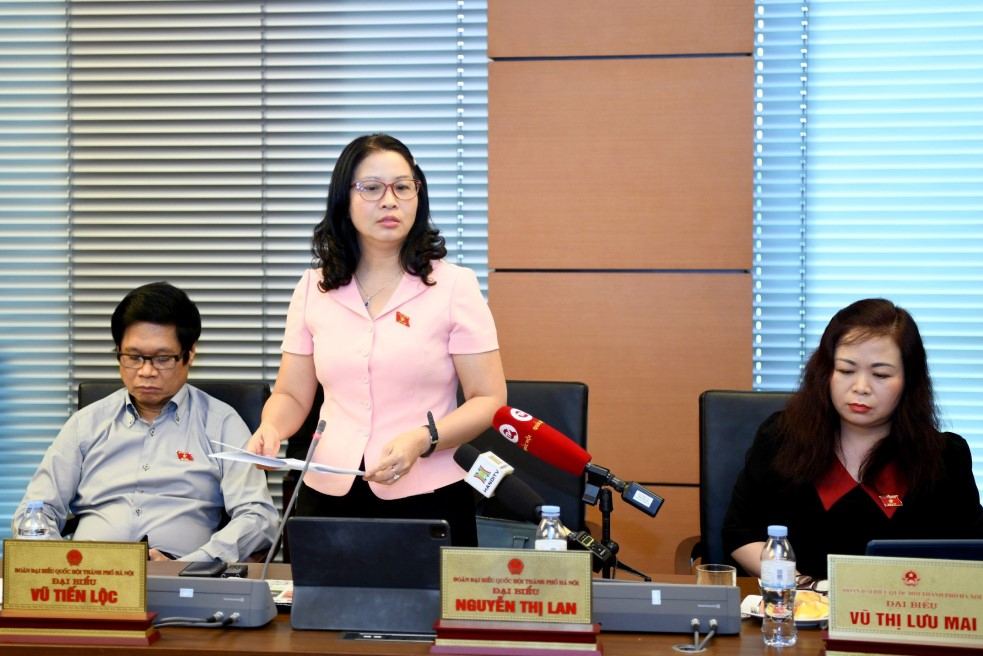
| Deputy Nguyen Thi Lan of Hanoi. Photo: National Assembly Media |
The Hanoi Party chief also pointed out that the development of capital tourism has contributed to increasing people's income, creating livelihoods for local people, and thus increasing the city's revenue.
"No matter how much Hanoi urbanizes, cultural tradition must be maintained. We will not let urbanization undermine rural culture," Dung said.
Hanoi Deputy Nguyen Thi Lan, who contributed to the amended Capital Law, said it's necessary to have policies for socio-economic development, especially agriculture, in a green, clean, and sustainable direction.
According to Deputy Nguyen Thi Lan, Hanoi needs stronger solutions to make a breakthrough and be the driving force for agricultural development in other provinces.
"I hope that the amended Capital Law will be approved soon so that Hanoi can develop to be worthy of being the cultural, political, scientific, and technological center of the country.