Ancient village keeps Dong leaf craft alive each Tet
As Tet approaches, the tranquil countryside on the outskirts of Hanoi takes on a new energy. The harvest season for dong leaves- an essential ingredient of Vietnam’s Lunar New Year- reaches its annual peak.
THE HANOI TIMES — Trang Cat Village in Hanoi’s Thanh Oai Commune has safeguarded dong-leaf cultivation for centuries, with the tradition coming alive each Tet season.
From the start of the 12th lunar month, the village shifts into high gear as families harvest and bundle dong leaves for the holiday market. Nearly every household takes part, turning small gardens and plots into a shared effort to keep the traditional craft alive across generations.
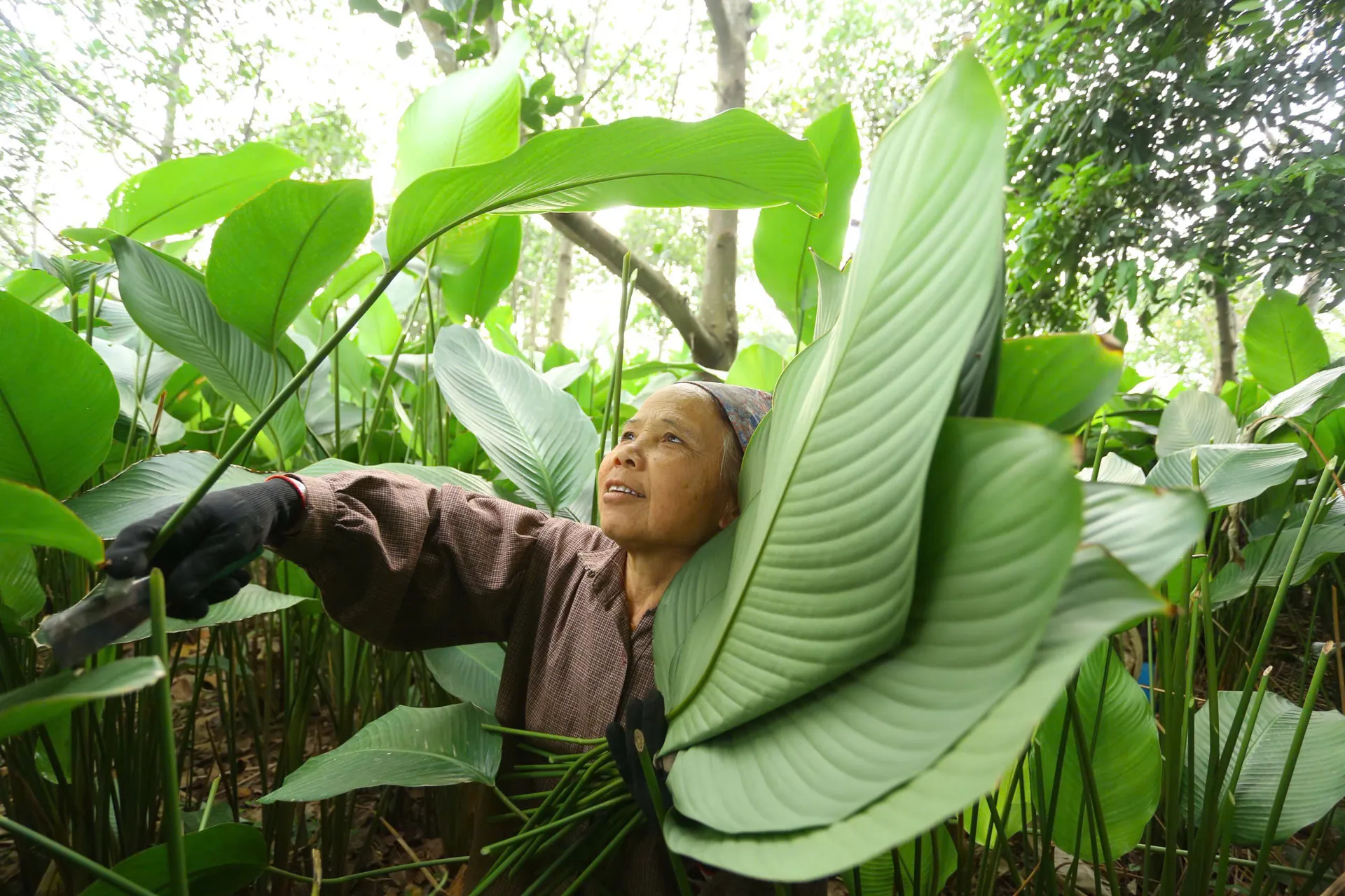
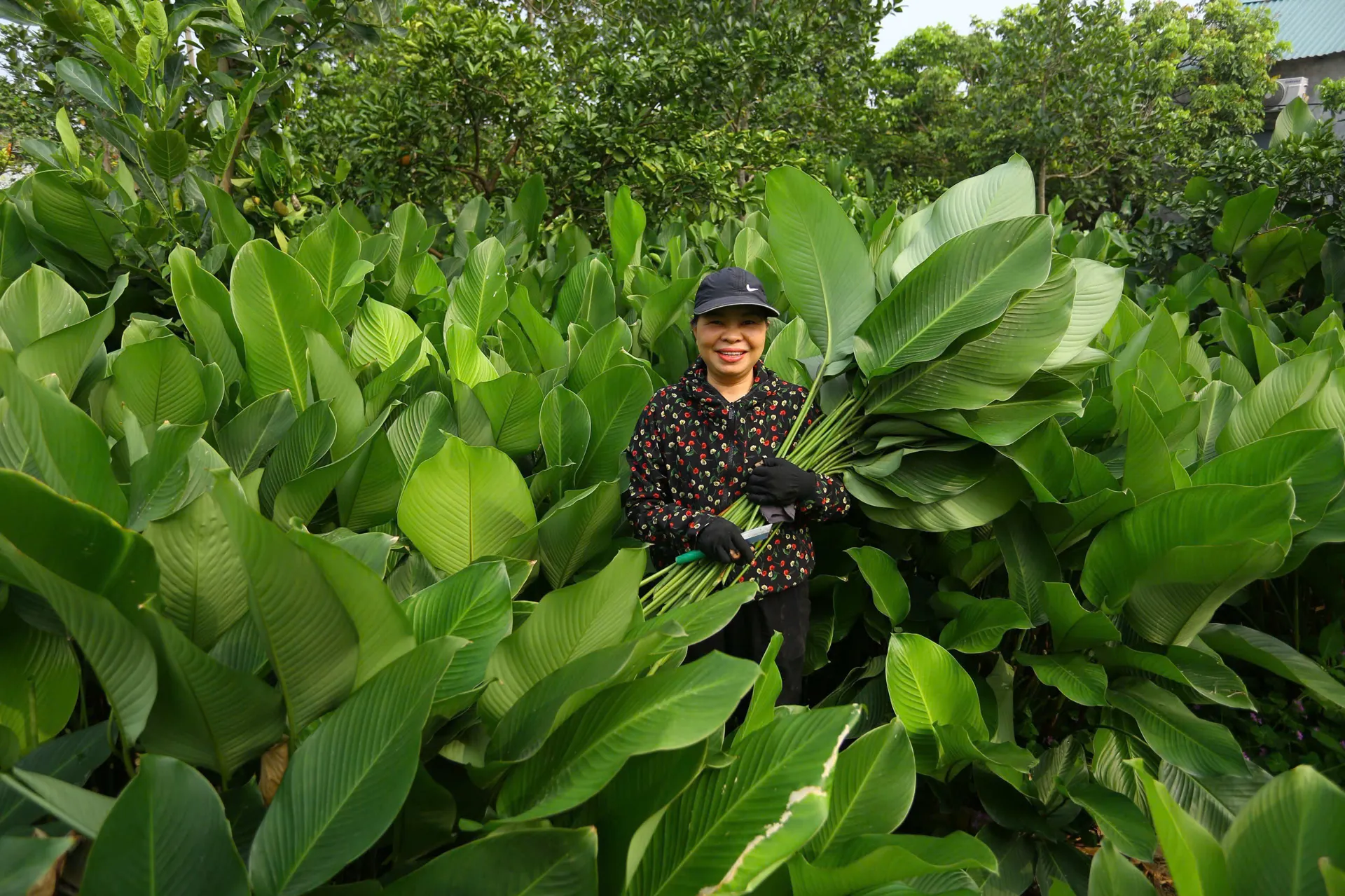
A joyful moment as a farmer in Trang Cat Village, on the outskirts of Hanoi, gathers dong leaves during a bountiful Tet harvest. Photos: Ngoc Tu/ The Hanoi Times
Dong leaves may be a supplementary ingredient, but they are indispensable to Tet's flavor and identity. Used to wrap banh chung (traditional sticky rice cake), the leaves impart a distinctive aroma and texture that no substitute can replicate. Without them, the holiday table would feel incomplete.
Trang Cat is one of northern Vietnam’s largest dong leaf growing areas, with a tradition dating back hundreds of years. The village supplies Hanoi year-round, with demand peaking during Tet.
Almost every household cultivates dong leaves, from small garden plots to larger fields, and as the Lunar New Year approaches, village roads turn deep green with freshly cut bundles.
Dong leaf farming is less labor-intensive than rice cultivation. With regular care and shaded, humid conditions, the plants grow steadily and can be harvested throughout the year, often beneath tall trees rather than in open fields.
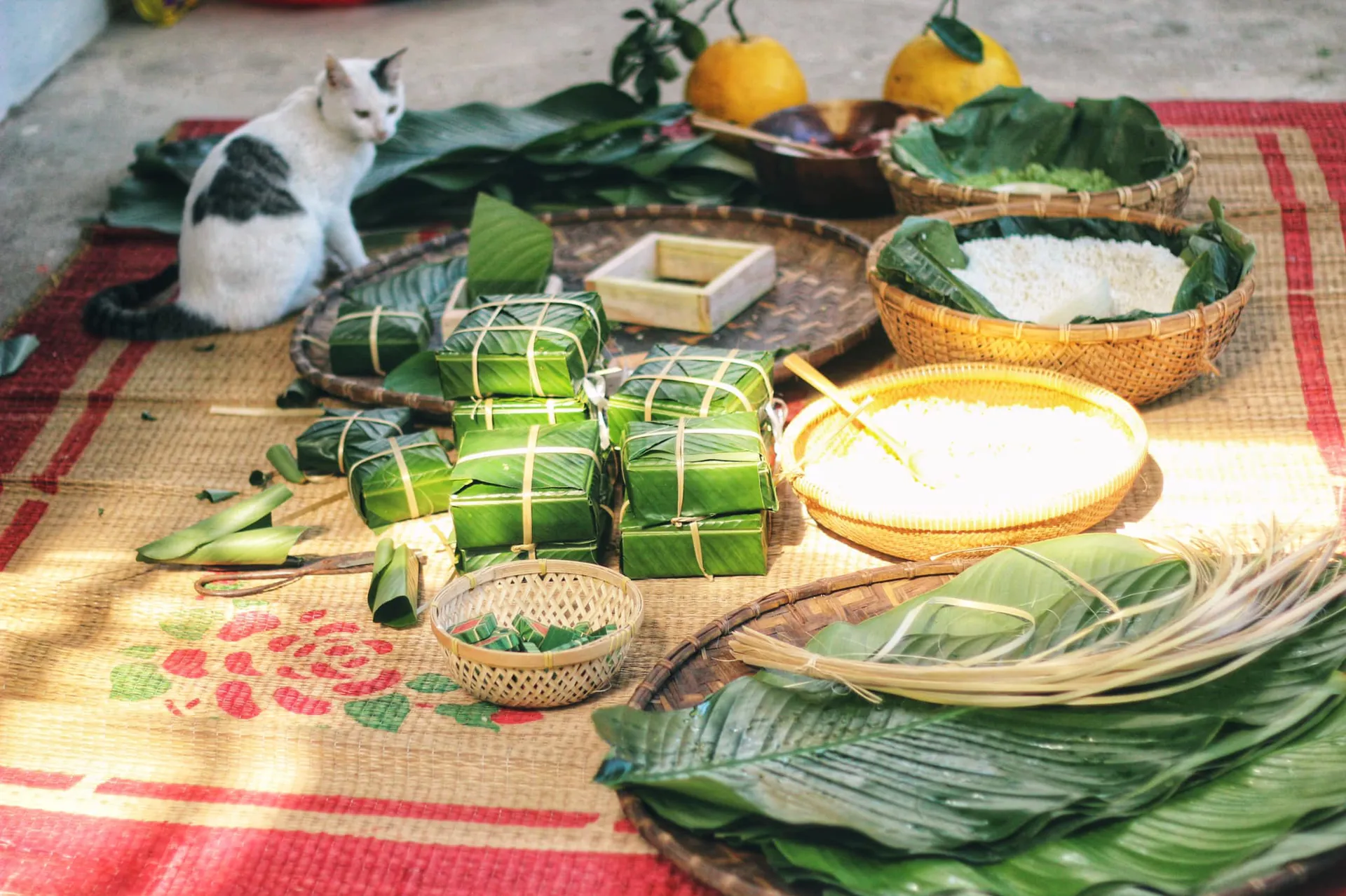
Used to wrap banh chung, Vietnam’s traditional sticky rice cake, dong leaves give the dish its signature flavor.
Dong leaves can be harvested several times a year, but most farmers focus on a single year-end crop, when demand peaks and larger, more flexible leaves are produced for Tet.
Trang Cat now has about 450 households cultivating dong leaves across some 30 hectares. This season, prices have risen from last year, with high-quality bundles selling at strong rates, giving farmers renewed confidence.
Beyond meeting domestic demand, the village’s dong leaves are also exported, helping overseas Vietnamese maintain traditional Tet customs far from home.
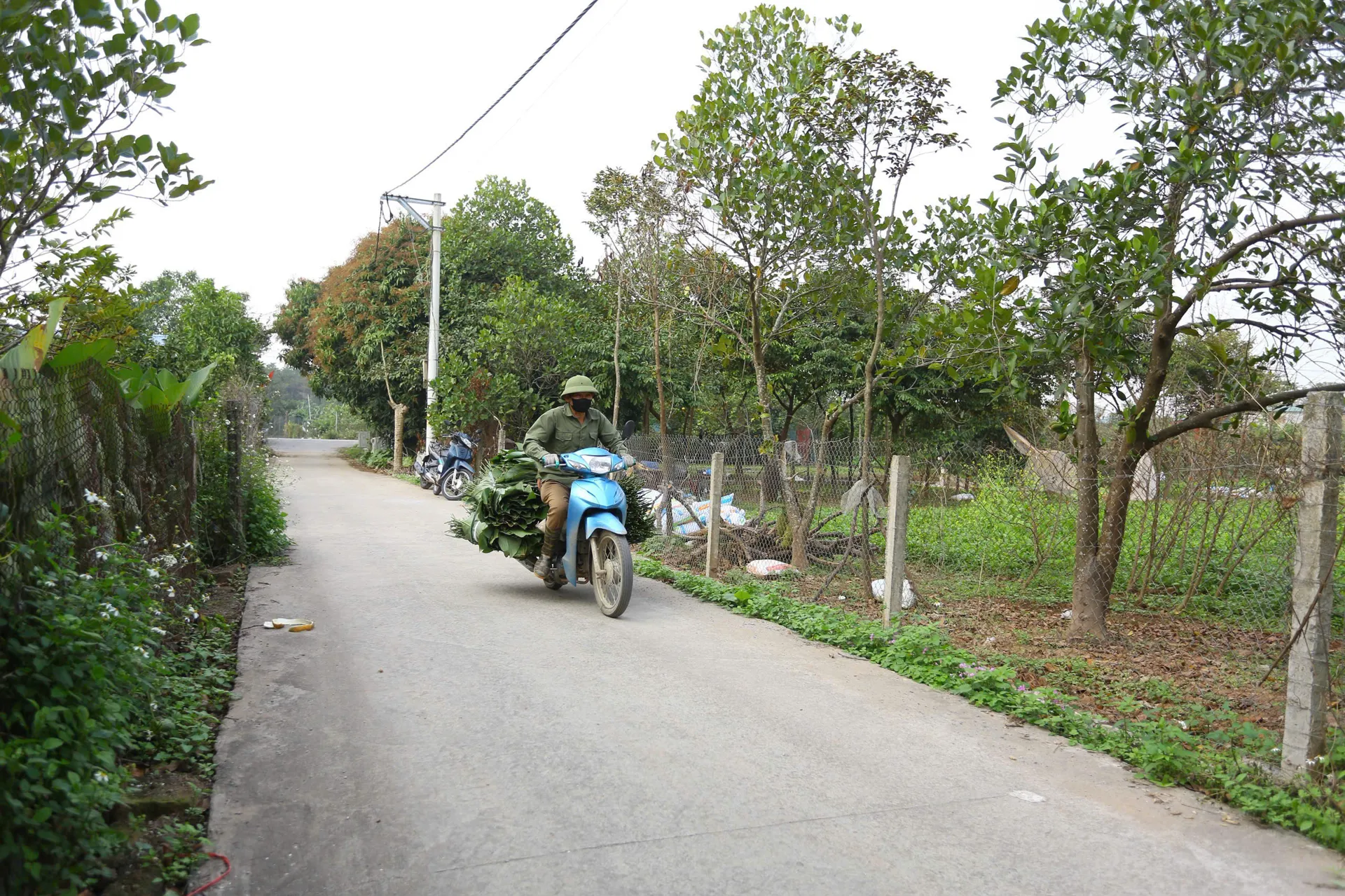
In the days leading up to Tet, farmers race against time, cutting, sorting and delivering dong leaves across the country.
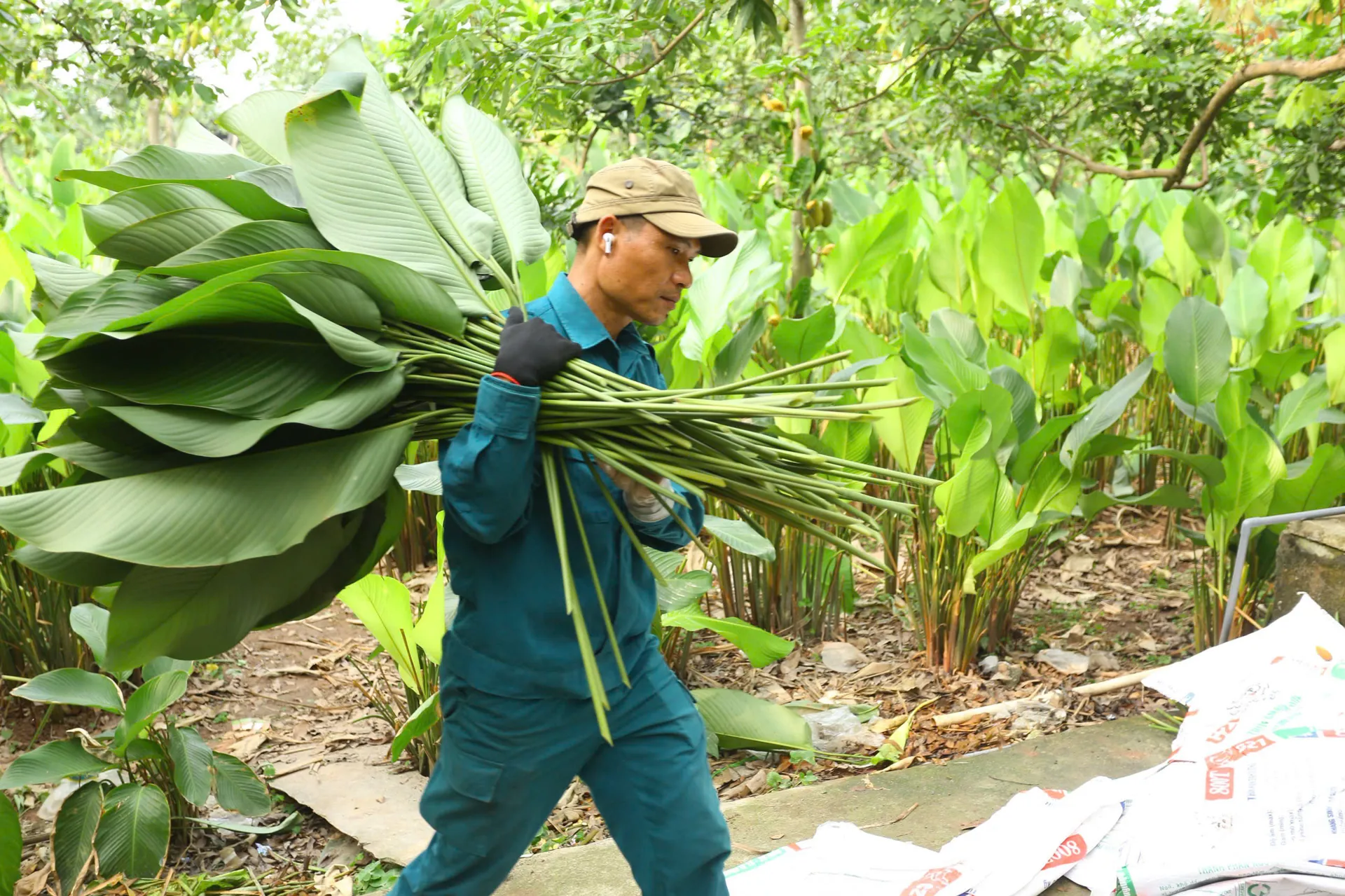
They carried home the fruits of their labor after months of patient care.
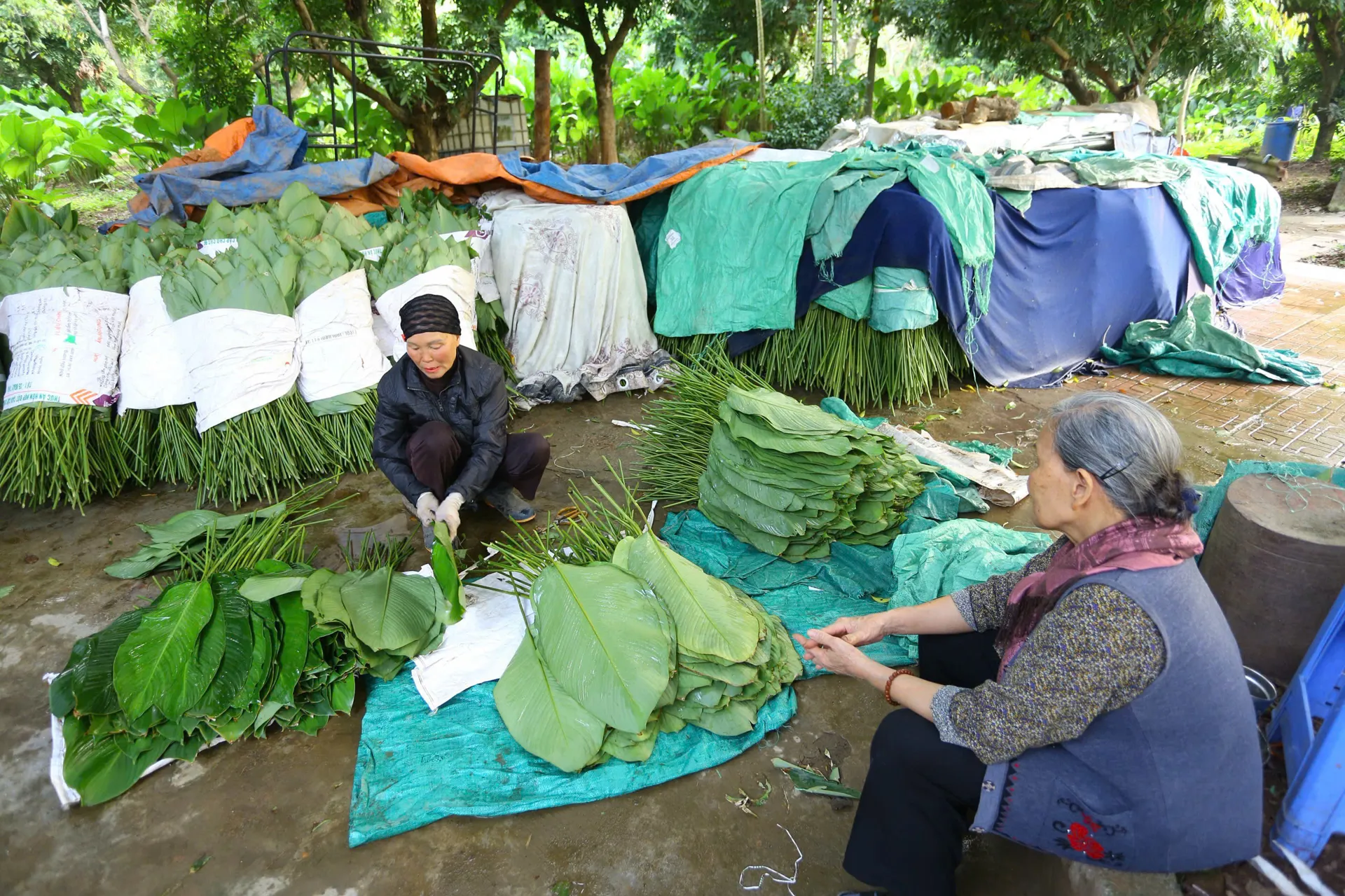
After harvesting, the leaves are carefully sorted by size for traders.
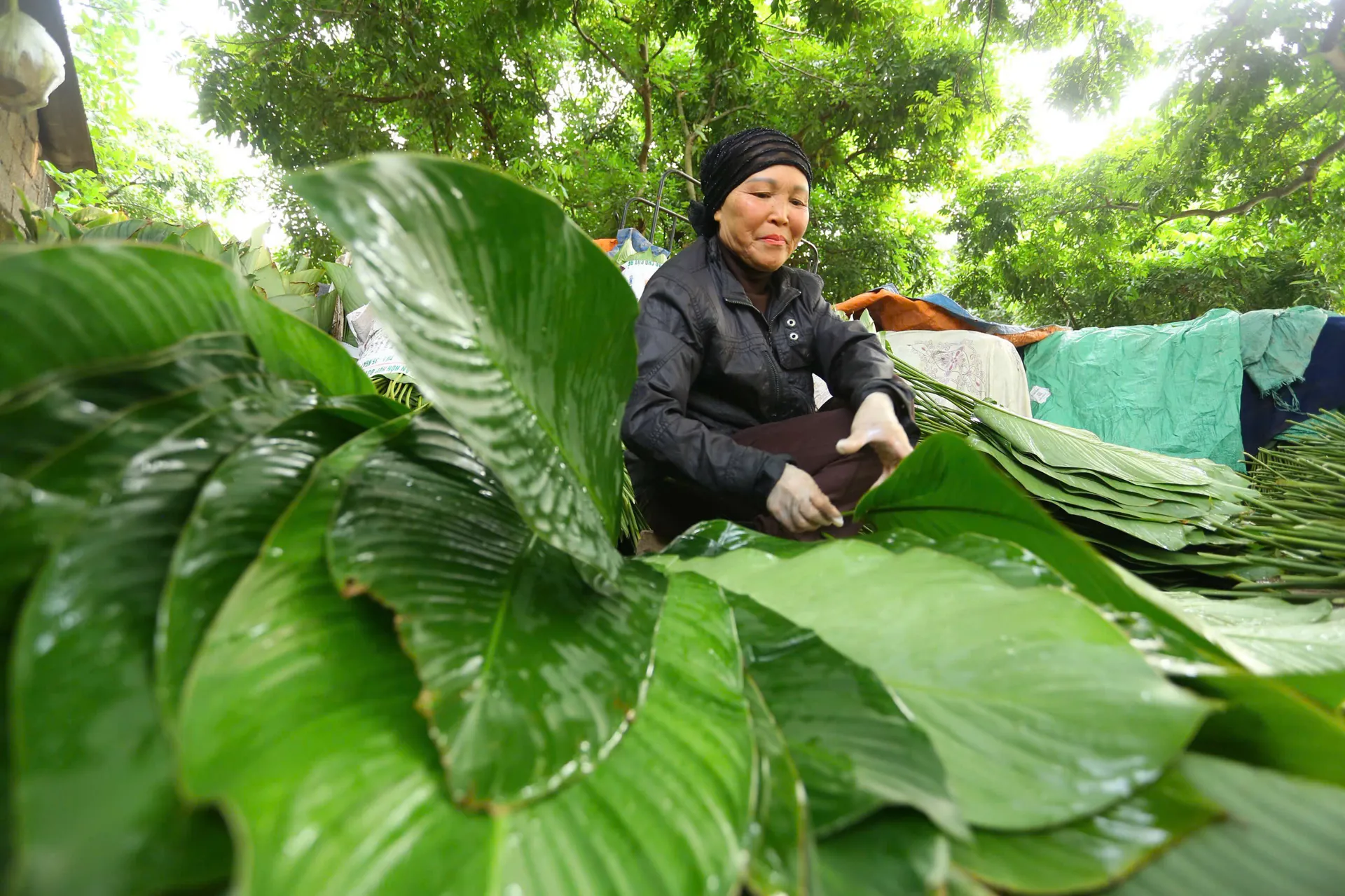
The fertile alluvial soil along the Day River gives Trang Cat’s leaves a reputation for superior quality.
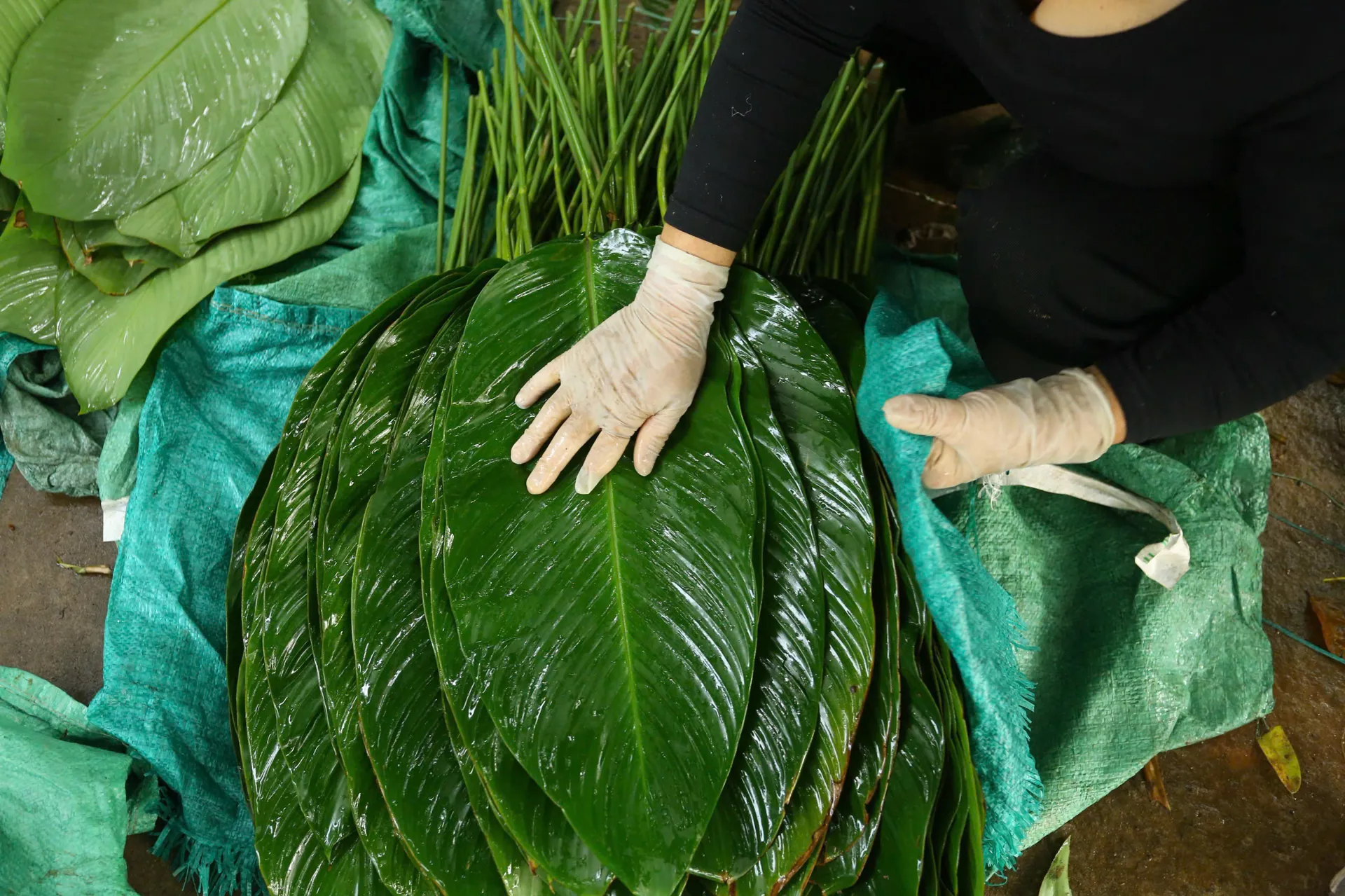
Even after hours of boiling to cook banh chung, the leaves retain their vibrant green color.
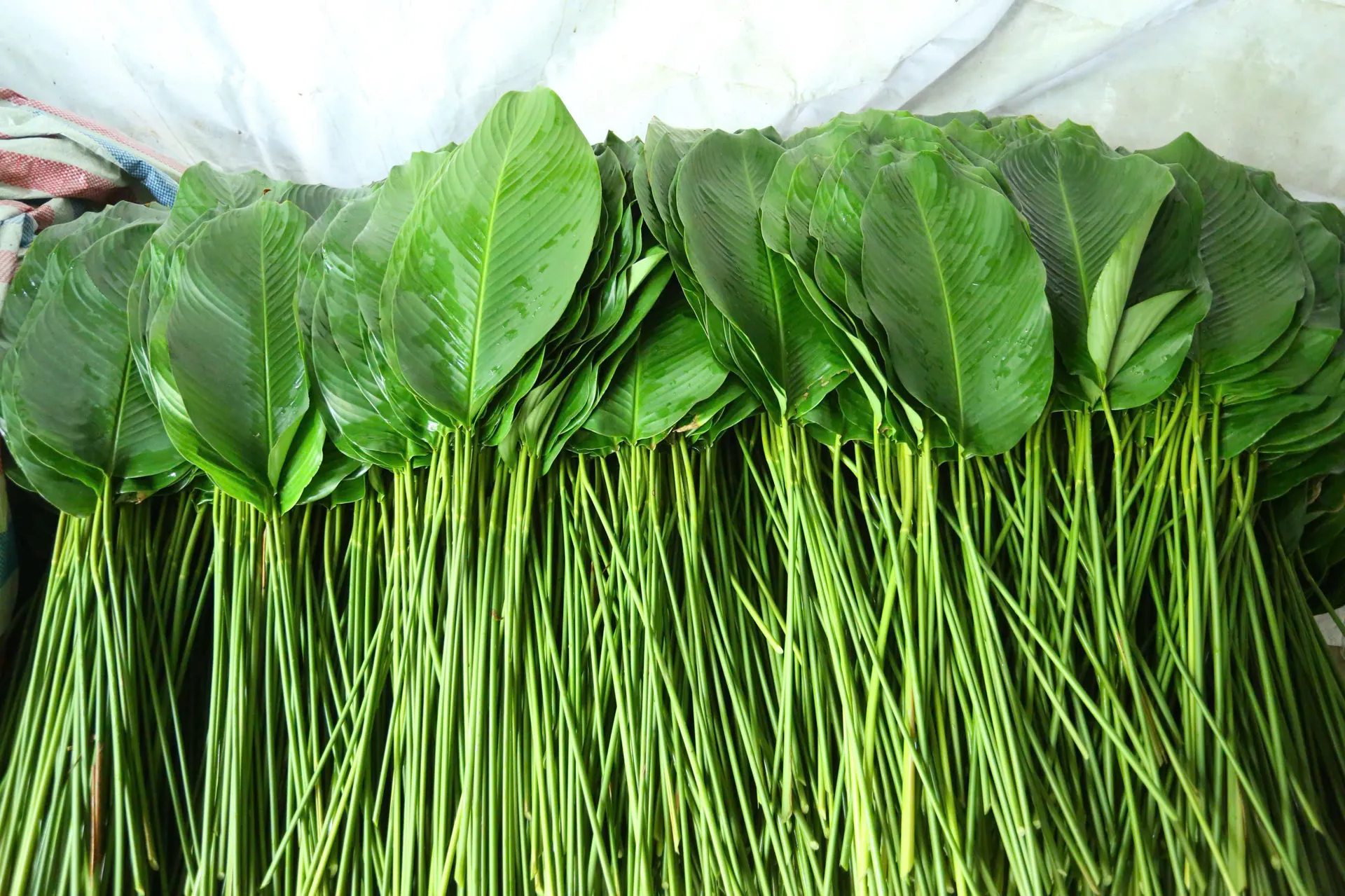
Villagers keep them fresh by watering, stacking, and storing upright in humid conditions.
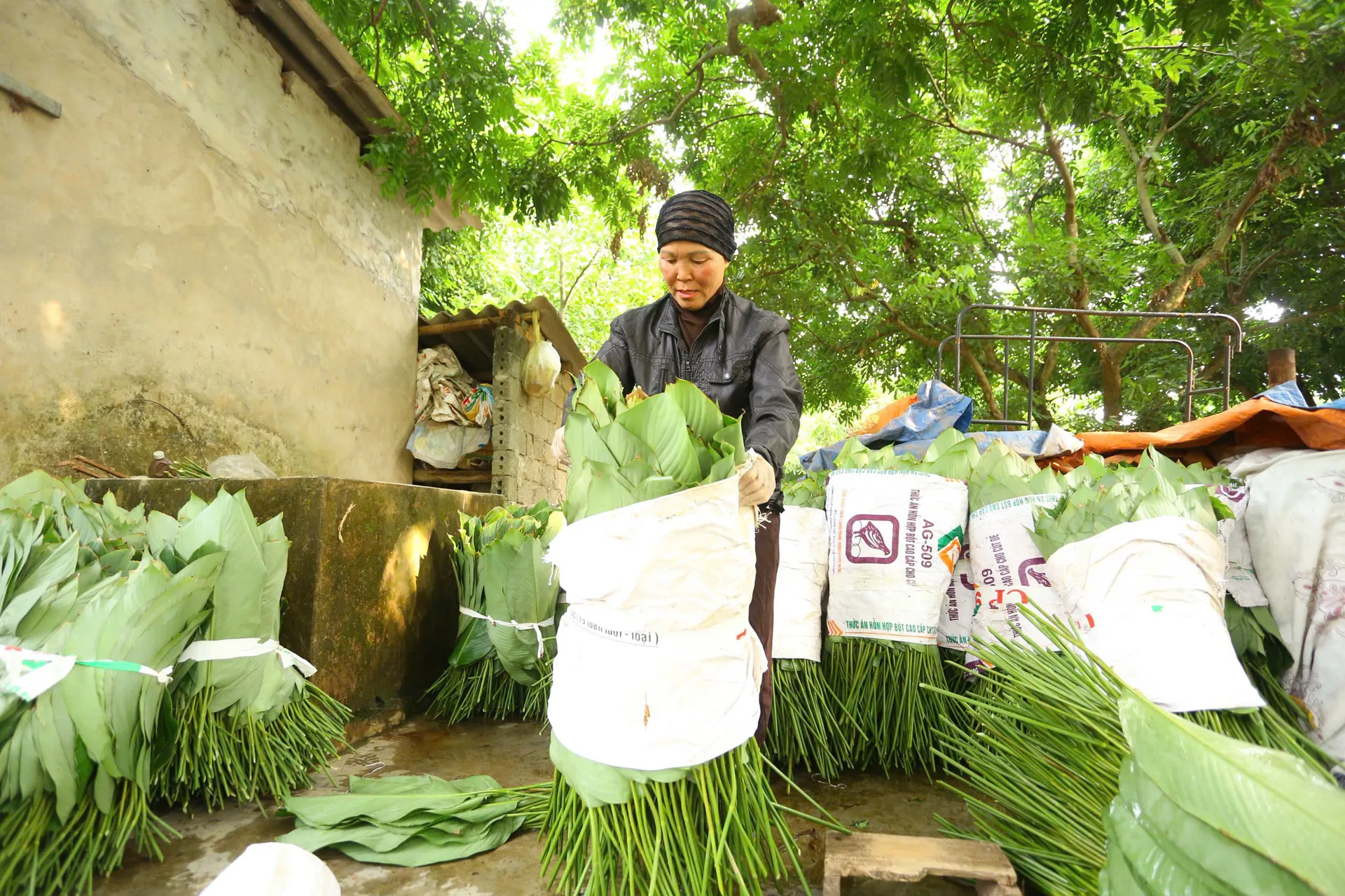
The leaves are then arranged into neat bundles, typically 50 or 100 leaves each, ready for sale.
Amid the rush of the season, the village offers a quieter contrast to urban life.
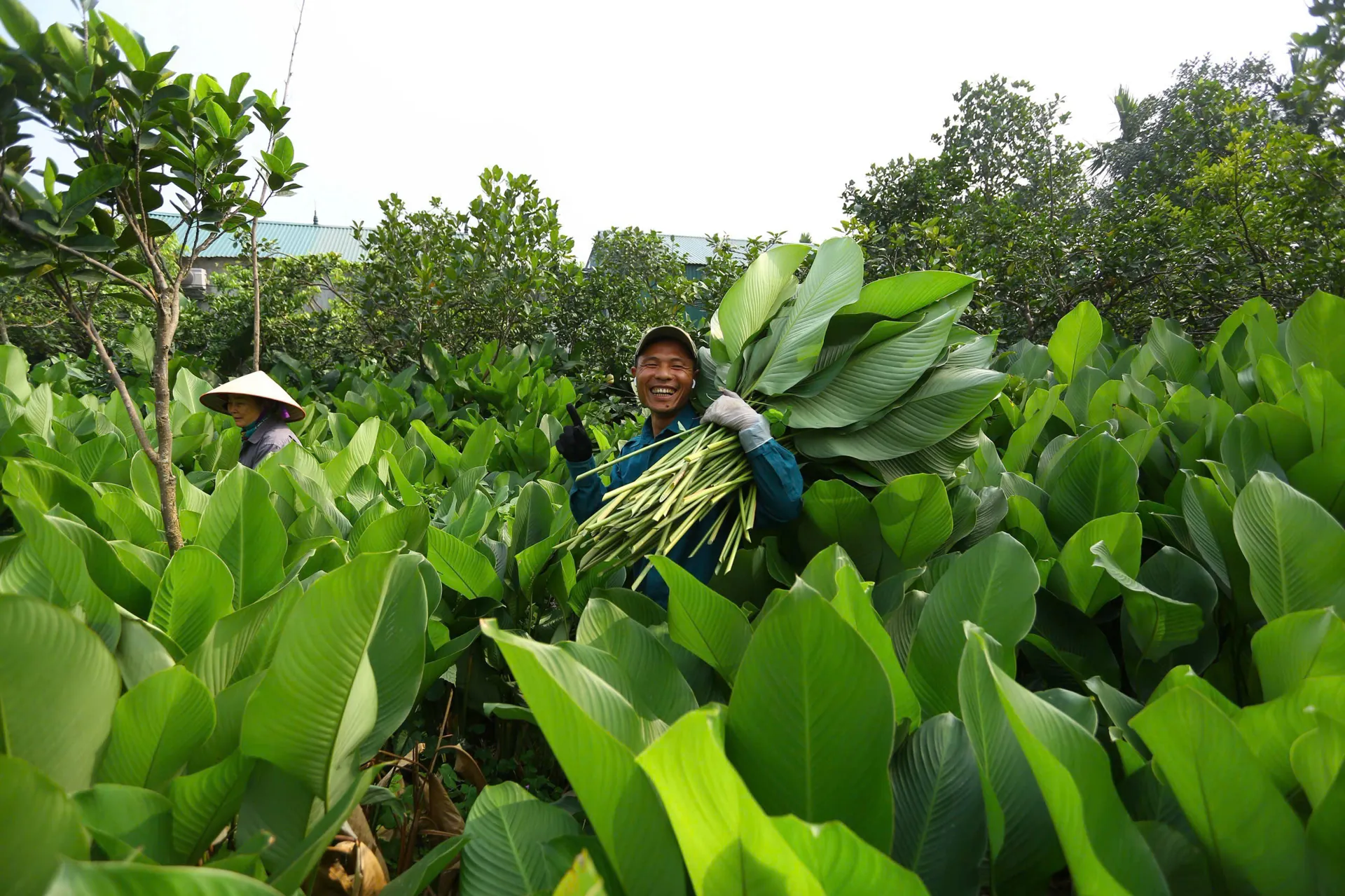
The fresh green of the leaves and the steady smiles of the farmers slow the pace.
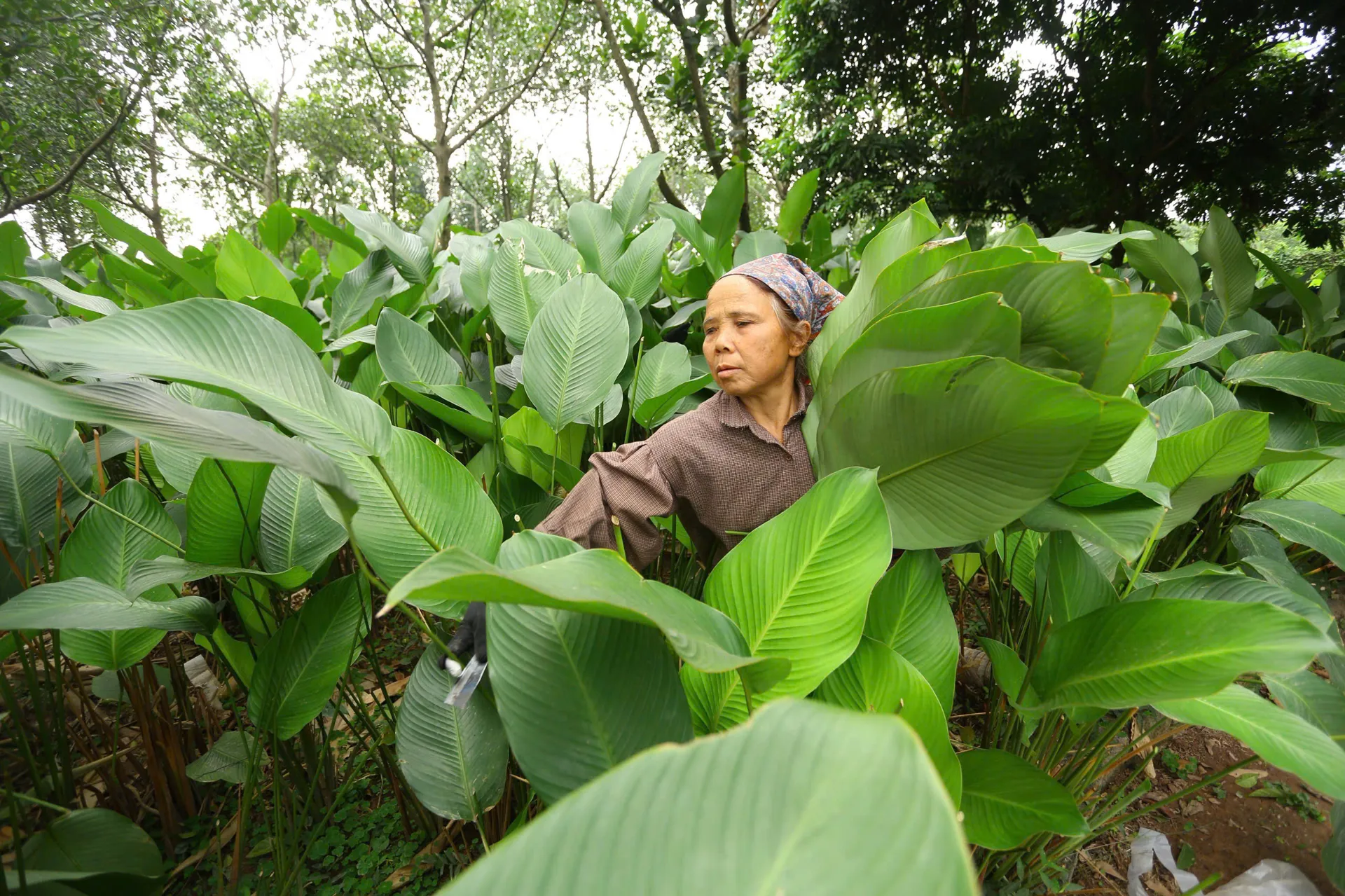
Hanoi farmers keep Tet traditions alive, passing the green wrapping from generation to generation.