Breakthrough ideas needed to redevelop Red River’s alluvial islet
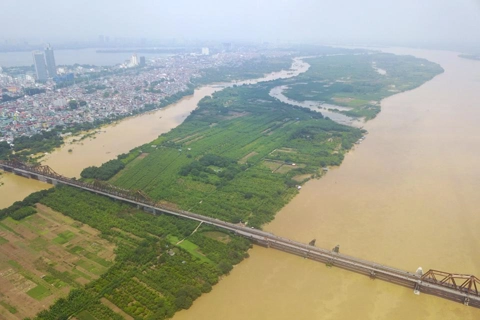
The alluvial islet of the Red River is economically valuable and rich in natural ecosystems.
To implement the Red River Zoning Plan, Hanoi's authorities within the planning boundaries, which include the four districts of Hoan Kiem, Ba Dinh, Tay Ho, and Long Bien, have joined forces to organize a competition for the "Conceptual Planning of a Multifunctional Cultural Park on the Red River’s alluvial islet."
The main goal is to select the best ideas and solutions from the competition to be incorporated into the detailed waterfront zoning plans for the riverbank areas that the districts will implement in the near future.
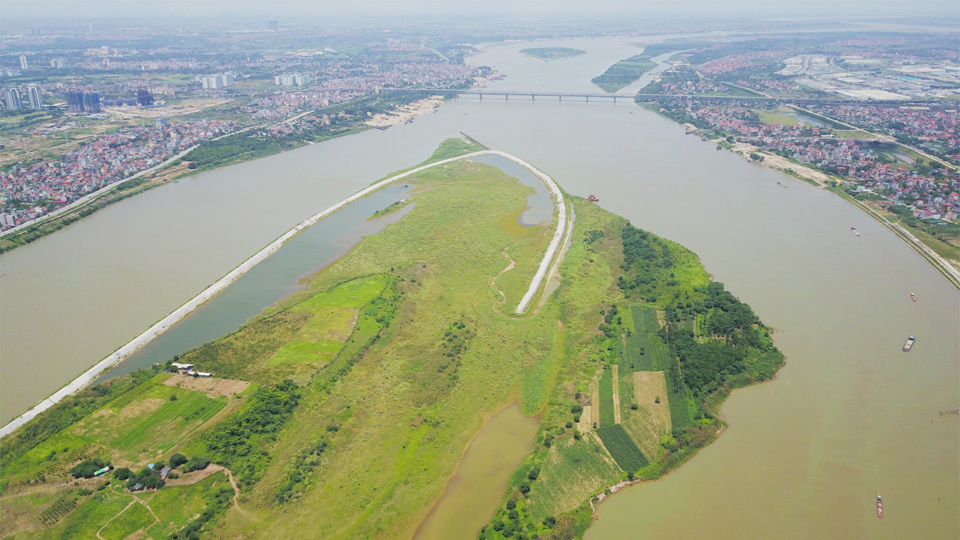
| The Red River's alluvial islet. Photo: Hai Linh/The Hanoi Times |
Therefore, the reclamation of the land outside the Red River dike represents a significant opportunity for the district to undertake urban renewal and create a cultural and creative space, ultimately establishing a creative hub for the capital, he noted.
This approach aims to develop the mid-river and riverside areas of the Red River into a cultural park, leveraging the natural landscape, water bodies, greenery, and existing flora and fauna to create sustainable development solutions.
"With clear requirements and comprehensive data, we hope that participants will thoroughly research and propose high-quality solutions that local authorities can use to formulate detailed zoning plans from the ideas raised in the competition," Long expressed.
According to Dr. Dao Ngoc Nghiem, Vice Chairman of the Vietnam Urban Planning and Development Association, the Red River’s alluvial islet has been of interest since the French colonial period. Since the inception of the Renewal process in 1986, central authorities, especially Hanoi, have paid attention to the exploitation of the landscape and land reserve along the river. Several major international consulting firms have proposed ideas for developing this area, but none have been realized due to challenges related to river flow, riverbanks, and water levels.
"Hanoi is now in a new development phase, focusing on building a modern capital city and enhancing cultural and civilized elements, particularly improving residents' quality of life. Therefore, this competition seeks innovative solutions to address planning and development issues in the mid-river islets, to enhance living standards and meet the recreational needs of Hanoi's residents," said Nghiem.
Recognizing the importance of this space for the future development of the capital, Hanoi has initiated a project to develop the alluvial islet and riparian areas of the Red River into a multifunctional cultural park, led by the Hoan Kiem District People's Committee.
The project requires clearly defined objectives, scope, boundaries, research areas, approval procedures, land use management, investment mechanisms, and specific infrastructure components.
It must comply with the Urban Planning Law, the Law on Dykes, and the Law on Natural Disaster Prevention and be in line with the adjustment of the Hanoi Master Plan up to 2045 and vision to 2065, and other approved plans.
To ensure the feasibility of the project, Hanoi has instructed the four districts to organize a competition for ideas for the multifunctional cultural park in the alluvial islet and riparian areas of the Red River.
Experts suggest that a feasible planning proposal must take into account the area's topography, hydrology, population, and socio-cultural characteristics.
Dr. Nguyen Manh Ha, Director of the Center for Nature Conservation and Development (CCD), highlighted that the alluvial islet of the Red River is not only economically valuable but also rich in natural ecosystems, hosting 209 species of higher plants and serving as a bird sanctuary on the East Asia-Oceania migration route. It is also a habitat for several globally endangered species.
In particular, the area is currently home to a diverse population engaged in agriculture, livestock, hospitality, ecotourism, and various other activities.
Given these characteristics, urban expert Le Quoc Binh, coordinator of the network “For a Livable Hanoi”, proposed that the alluvial islet area should be planned, managed, and sustainably developed, taking into account both environmental and social factors.
"Reclamation of the alluvial islet area should focus on the conservation of wildlife, plants, and nature-based educational activities. Agricultural practices should be integrated with cultural and tourism activities, considering changes in livelihoods and incorporating existing community activities into the city's development plans," suggested Binh.