Brighter FDI attraction prospects forecast for Vietnam in 2018
Vietnam will continuously see a rising foreign direct investment inflow next year, especially in real estate sectors and M&A market space, experts have said.
Phan Huu Thang, former director of the Ministry of Planning and Investment's Foreign Investment Agency and deputy chairman of the Vietnam Association of Foreign Invested Enterprises, believed that Vietnam can be optimistic about foreign investment capital inflows in 2018 as well as the subsequent years after successfully hosting the APEC Summit last November.
Thang explained that the APEC’s role in record high foreign investment and FDI inflows cannot be denied. It is sure that the APEC will position Vietnam as a desirable destination for an increasing number of investors. Thanks to hosting the APEC 2017, Vietnam has become better known among foreign investors, reaching those who had yet to consider investing in Vietnam. Besides, being named among the world’s leading economies, such as the US, Japan, South Korea, Russia, Singapore or China has improved Vietnam’s position tremendously.

“Besides, back in 2006-2008 after Vietnam hosted the APEC for the first time, we saw a massive wave of foreign investment, setting an FDI record in 2008 with $71.7 billion. On this basis, Vietnam can be optimistic about foreign investment capital inflows in 2018 as well as the subsequent years,” Thang said.
It needs to be added that 2017 marked the 30th year that Vietnam opened its doors to FDI. During these three decades, Vietnam has gradually affirmed its position in the international arena, producing constant growth that has become one of the major factors attracting foreign investment capital, he said.
According to experts, the government has asked the Ministry of Planning and Investment to co-ordinate with relevant agencies and the provincial authorities of Quang Ninh, Khanh Hoa, and Kien Giang to quickly draw up the Law on Special Administrative-Economic Zones. Despite the heated debate about the contents of the draft law, it will contribute to attracting FDI next year once it is approved by the National Assembly.
Thang said: “Property will remain the top foreign investment channels in 2018. On the other hand, we are looking at increased capital inflows in the M&A market space.”
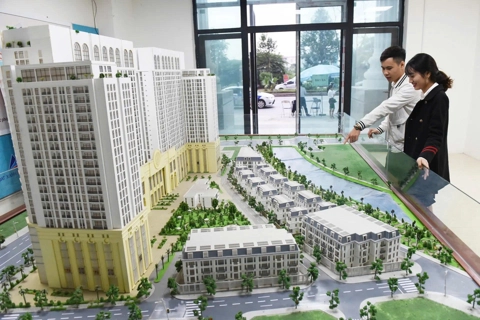
Savills Vietnam also expects to see a considerable amount of inbound investment into Vietnam’s real estate in 2018, following a very active 2017. Interest remains strong from Japan, Korea, Singapore and increasingly China.
However, Savills said, it remains challenging for foreign investors to identify quality real estate investments with clear ownership, and transactions involving operating assets will remain scarce. The majority of transactions will involve development projects, with many foreign developers seeking to secure long term partnerships with local developers.
According to Thang, Vietnam has so far planned for FDI attraction next year with a focus on high-tech and environmentally friendly projects. Notably, Vietnam will stimulate investment in renewable energy projects, high-tech agriculture, as well as smart cities, among others.
Besides, he said, the country will build solutions to create balance in FDI attraction, instead of focusing on Hanoi, Haiphong, Bac Ninh, Binh Duong, Ho Chi Minh City and Thanh Hoa.
It will try to attract FDI while keeping the national identity and safeguarding the environment, Thang said.
Reports from the Foreign Investment Agency under the Ministry of Planning and Investment showed that Vietnam has remained an attractive destination for foreign investors in 2017 with total FDI capital registered in the country hitting a record high of US$35.88 billion, up 44.4 per cent against last year.
In 2017, FDI disbursement also saw a record setting, as it increased 10.8 per cent to $17.5 billion. In the previous years, the capital influx reached only some $11-12 billion.
These sweet fruits show that government has been very successful in creating a favorable investment environment for foreign investors, as committed, Thang concluded.