Econ
Conference of Vietnamese Businessmen held in Hungary
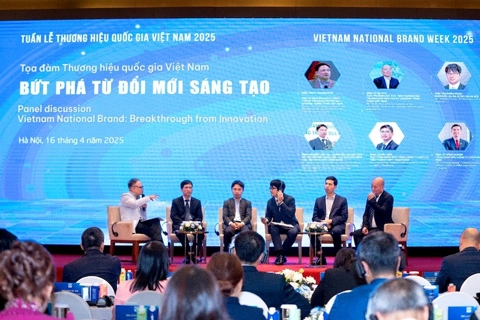
The 10th Conference of Vietnamese Businessmen in Europe has been taking place in Budapest, Hungary on September 18 with the focus on the EU-Vietnam Free Trade Agreement (EVFTA).
The organising board
|
The conference is the biggest event of the Vietnamese entrepreneur community in Europe. Held annually since 2006, it has brought together leading Vietnamese enterprises operating in Europe.
This year’s event saw the first-time presence of the European Vietnamese Youth Business Alliance.
The free trade agreement between Vietnam and the Europe Union (EVFTA), once ratified, will open up more cooperation opportunities for both sides as their economies supplement each other.
Meanwhile, with the population of 90 million, Vietnam is a newly-emerging market with dynamic growth and an abundant workforce, which is attracting much attention from other countries.
Vietnam is located in Asia-Pacific – a region with an important geographical and geo-economic position, where the EU is focusing on seeking cooperative partners. The stability of the country is also a factor appreciated by the EU.
Once it becomes effective, the agreement will bring huge economic benefits for Vietnam. However, the ratification process is quite complicated for both sides, as this is a new-generation agreement with numerous new binding issues for Vietnam, such as labour, environmental protection and intellectual property. The EU is one of the top trade partners of Vietnam.
Trade value between Vietnam and the European Union (EU) in the first half of 2016 has gained a year-on-year growth of 9.05 percent to 21.2 billion USD.
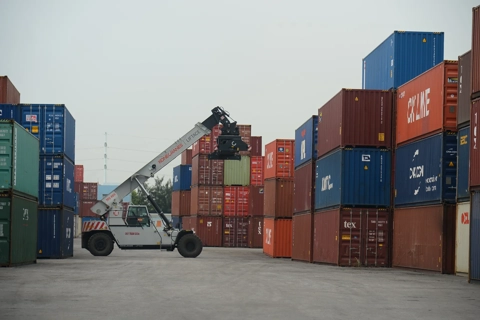
According to the Ministry of Industry and Trade’s European Market Department, during the period, export value from Vietnam to the EU increased by 8.68 percent to 16.2 billion USD and import value to Vietnam from the EU surged by 10.28 percent to 5 billion USD.
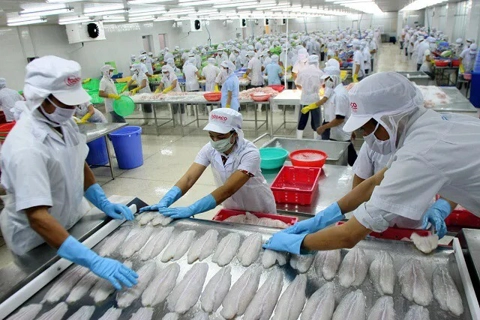
Vietnam mainly exported traditional products to the EU, including textile, garment, footwear, and coffee, in addition to seafood and computer. In the first six months, Vietnam mainly imported from most of EU member countries products that the nation had not produced, or which they lacked, such as machines, equipment, tools and pharmaceutical products, in addition to milk and milk products.