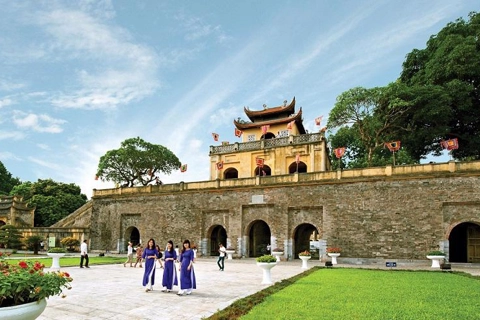
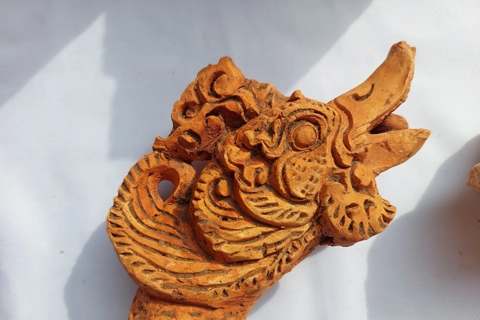
Cultural heritage to propel Hanoi’s future development
Hanoi aims to become the leading locality in the development of cultural creative space.
The various cultural heritages that exist in Hanoi have significant potential, serving as a foundation and resource for Hanoi's socio-economic growth, particularly in cultural tourism development.
| Overview of the conference. Photos: Lai Tan/The Hanoi Times |
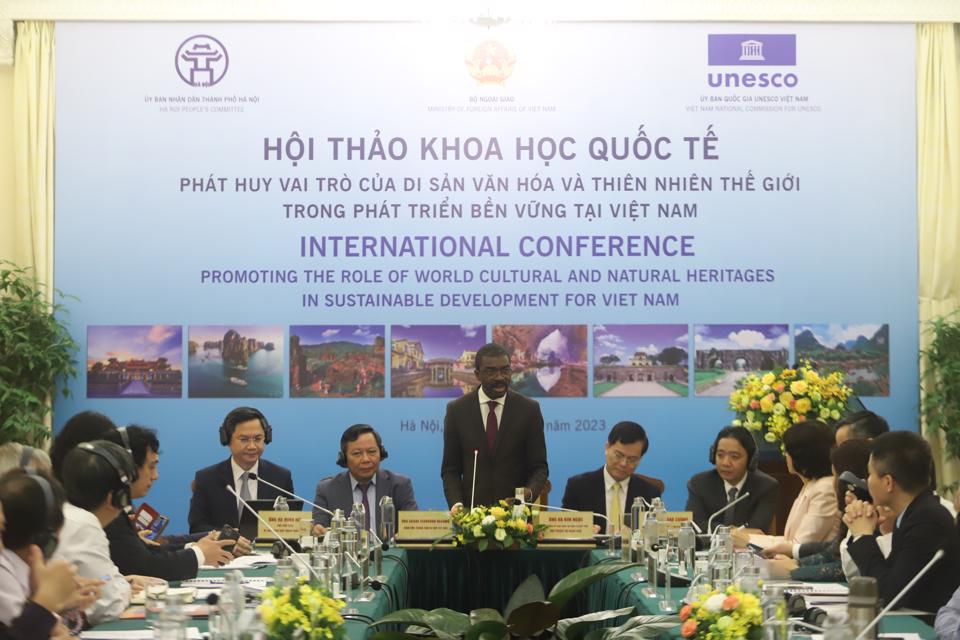
Vice Chairman of the Hanoi People’s Committee Ha Minh Hai gave the remarks at an international conference titled “Promoting the role of world cultural and natural heritages in sustainable development for Hanoi” today [March 24].
Cultural heritages as invaluable assets
According to Hai, Hanoi is positioned as the political-administrative center of Vietnam and is a significant center for culture, science, education, economy, communication, and international trade.
Hanoi is also known as the "Heritage City" and is the leading locality in terms of the number of monuments, he said.
“The city’s cultural heritage fund is exceptionally rich and has contributed to the unique appearance and living environment of Thang Long - Hanoi through various historical periods,” he said, expecting such resources to aid socio-economic growth, particularly in cultural tourism development.
Hai said since UNESCO recognized the Imperial Citadel of Thang Long as a world cultural heritage site in 2010, the Vietnamese Government, the Hanoi People's Committee, and relevant ministries and agencies have been dedicated to preserving, enhancing, and promoting its historical, cultural, architectural, technical, and fine arts values.
| Vice Chairman of the Hanoi People's Committee Ha Minh Hai. |

"The goal is to showcase the outstanding global values of the heritage site, save it for future generations, and attract more visitors," he added.
In this regard, the city has been focusing on raising public awareness and promoting the value of the heritage site through displays and exhibitions, which have been successful in drawing a large number of visitors. In the first three months of 2023, over 210,000 people visited the site, with 20% being international visitors, and over 21,000 students participated in learning about the heritage.
Hai said that with Hanoi officially becoming a member of UNESCO's Creative Cities Network, the Imperial Citadel of Thang Long - Hanoi is set to be the leading locality in developing creative cultural space.
He expected the move to promote contemporary art and culture and connect the heritage with the community and young people, which are aligned with the goals set out in Resolution 09-NQ/TU of the Hanoi Party Committee, focusing on developing the cultural industry in the capital until 2030, with a vision to 2045.
To develop Hanoi's cultural industry and promote the value of its cultural heritage, Hai said the city would adopt a range of complementary solutions. These include increasing awareness, promoting the connection between cultural heritage, and developing the cultural industry at all Hanoi's levels, branches, and sectors.
Additionally, the city will enhance international cooperation and seek to acquire knowledge, experience, and advanced conservation methods that can help integrate cultural heritage preservation with socio-economic development initiatives.
Vice Minister of Foreign Affairs and Chairman of the Vietnam National Commission for UNESCO Ha Kim Ngoc added Vietnam became a signatory to the 1972 Convention for the Protection of World Cultural and Natural Heritage in 1987. Since then, the country has had eight of its cultural and natural heritages recognized by UNESCO, which has played a significant role in the socio-economic development and improvement of the lives of local communities.
"These heritages are not only a valuable asset for Vietnam but also for humanity, contributing to the diversity and richness of the world's cultural and natural heritage. As a responsible and active member of the 1972 Convention, Vietnam has made and will continue to make significant contributions to the protection, conservation, promotion, and education of future generations about these heritage values," Ngoc said.
Harmonizing traditional values with contemporary issues
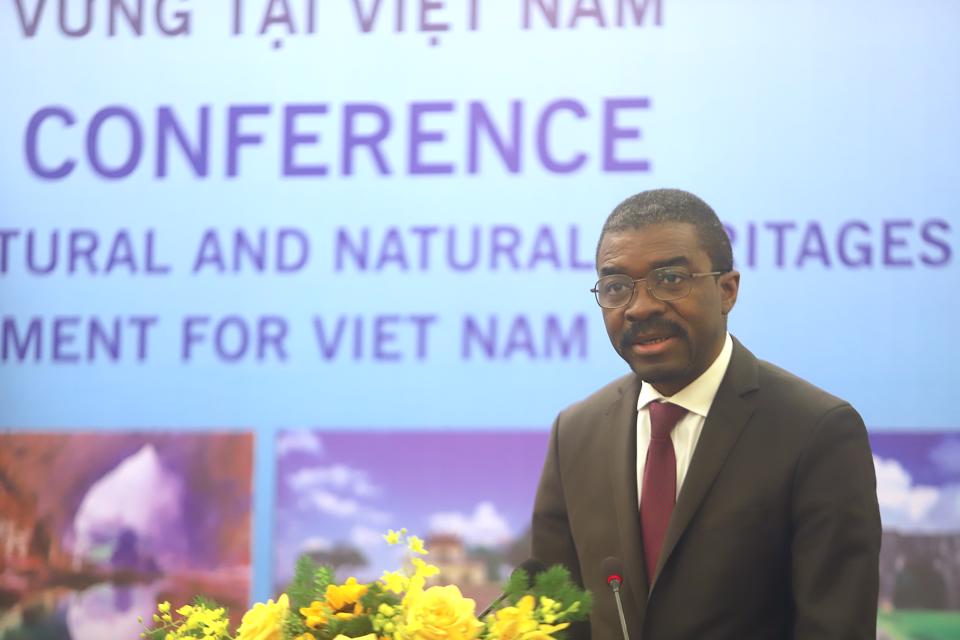
During the conference, Director of the World Heritage Center Lazare Eloundou Assomo highlighted the need for a multifaceted approach to conserving and promoting heritage values.
Assomo noted that this approach must go beyond the mere preservation of tangible and intangible values, as it should consider integrating traditional values with contemporary issues. He said that with a comprehensive vision, cultural legacies avoid becoming mere extensions of the past.
Hoi An City People's Committee Chairman Nguyen Van Son shared his experience in promoting world heritage values for local socio-economic development from the perspective of state management and heritage ownership. He highlighted that after 20 years of being known as a "retirement" place, Hoi An had become a renowned tourist destination that welcomed 5.5 million visitors in 2019, including over three million international arrivals.
Son also pointed out that most of the monuments in Hoi An belong to the people and are used for business purposes, which has led to the heritage's expansion, renovation, and deformation. Moreover, the "bleeding" of heritage is also occurring as many old houses are being sold to be divided among family members. Therefore, conservation policies are crucial in preserving the soul of the heritage, Son said.
Based on the opinions of the representatives of the localities owning the heritage and the scientists, experts at the conference suggested several recommendations for heritage management. These include improving the legal basis for heritage management, raising awareness among the community about their role and participation in heritage ownership, strengthening environmental protection and sustainable use of resources, promoting sustainable tourism development, and enhancing international cooperation in heritage conservation and promotion.
They also stressed the importance of providing training to improve the capacity of heritage managers and to apply information technology and digital transformation in heritage management, conservation, and promotion.