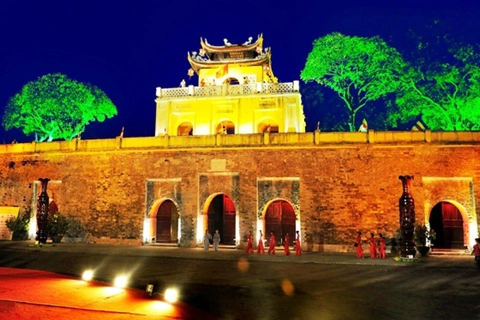
Expert digs out Thang Long Imperial Citadel to affirm value of UNESCO heritage site
In the middle of the excavation pit at Thang Long Imperial Citadel, experts have recently found artifacts and valuable findings related to Kinh Thien Palace, a sacred symbol of Thang Long-Hanoi's millennia-old history.
On the occasion of Vietnam Cultural Heritage Day (November 23), Associate Professor Dr. Tong Trung Tin shared with The Hanoi Times about solutions to promote the value of this UNESCO-recognised heritage.
Associate Professor-Dr. Tong Trung Tin, Chairman of the Vietnam Archaeological Association, stands at the excavation site. Photos: Tra My |
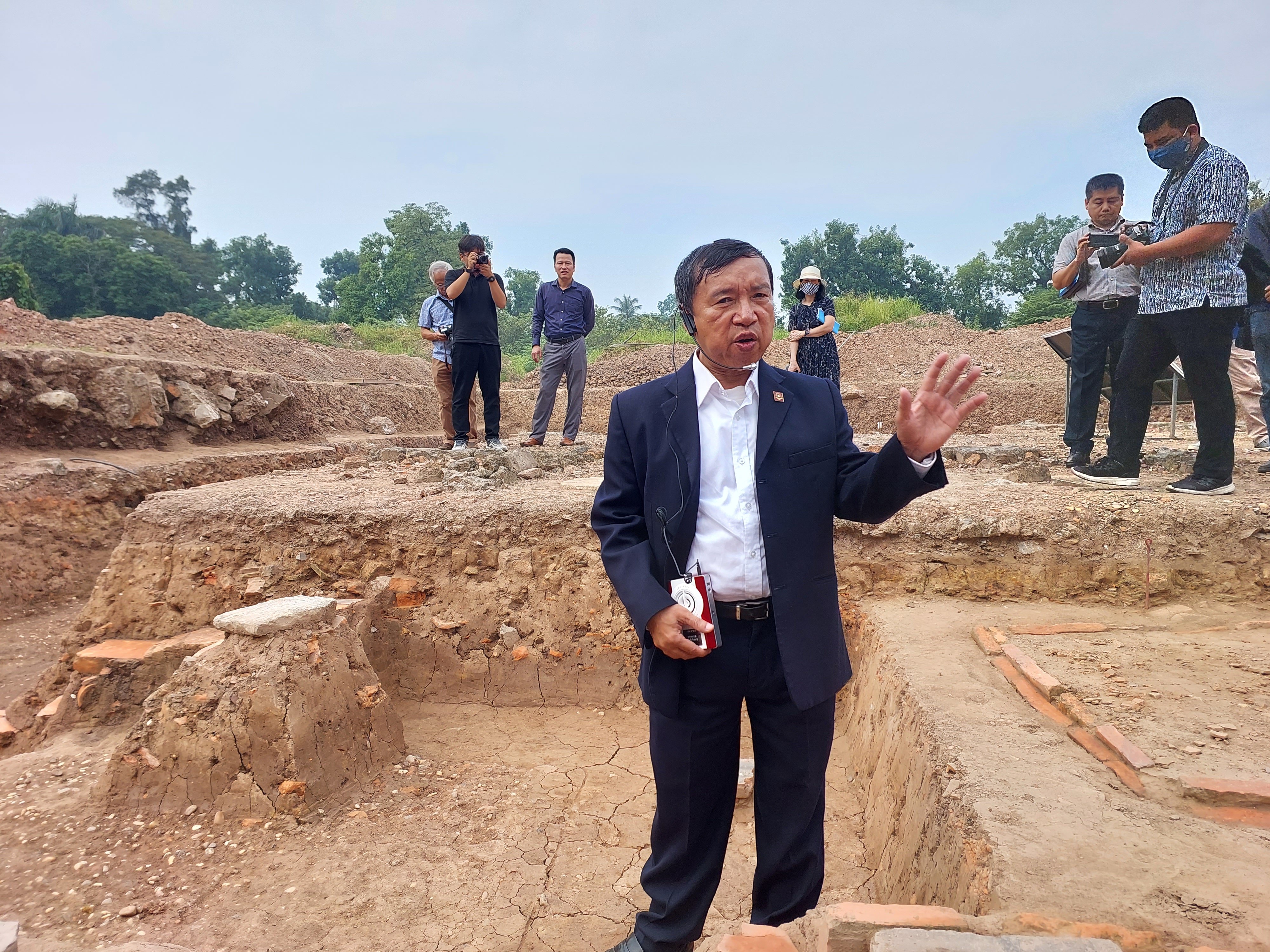
This year, our excavation work was affected by the Covid-19 pandemic, which slowed down the process a bit. When the pandemic was under control, the team of experts accelerated the progress to promptly complete the preliminary research and publish the excavation results on the occasion of Vietnam Cultural Heritage Day. This is very meaningful in raising people's awareness about heritage conservation.
Since 2011, the Thang Long-Hanoi Heritage Conservation Centre, in collaboration with the Institute of Archeology, has conducted excavations and research in the core area of the heritage site, covering 8,440 sq.m. Excavations have yielded significant results in helping to understand the values of the Thang Long Imperial Citadel heritage site. At the same time, many new and very authentic artifacts have been obtained, contributing to the research and restoration of Kinh Thien Palace. The city's government has always made it easy for us to do routine excavations and investigations.
Meanwhile, the biggest challenge is protecting entangled structures in the ground or ancient trees at the site. The second comes from complicated relics, great depth, and strong groundwater currents affecting excavation operations. At that time, we had to make the most of manual drainage for excavation.
Could you tell us about the outstanding findings of the excavation in 2022?
At the excavation pits near the Ministry of Defense building, for the first time, we discovered that Ngu Dao (the king's path crossing the Dan Tri courtyard) was paved with bricks in the early Le Dynasty (981-1009).
The architectural vestiges of the Ly and Tran dynasties continued to be uncovered, such as the vestige of a large wall running in the East-West direction with many extensive renovations. This wall probably surrounds a relatively large area with many important architectures inside. Therefore, the ancient people opened many sewers through the wall to pour water into the ditch. Interestingly, the bottom of the sewer is made of slate with 2 square holes perforated, which can be used to install an iron net to prevent crooks from entering the palace through this sewer system.
In addition, we also found the trace of a column with a stone base in the shape of a 16-petal lotus which is quite intact. Notably, this is the only stone lotus found. Therefore, we assume this is perhaps a corner column. If the excavation is wider, another stone lotus will be found at a symmetrical angle.
Are there any findings that change the assumptions or contradict the previous excavations?
There is no contradiction with previous hypotheses, only that the square brick line of Ngu Dao shows that the structure of the Dan Tri courtyard is not as simple as perceived. The overall structure of Dan Tri and the 35,000m2 vast space of the Imperial Citadel will probably have many more exciting things that we cannot know right away.
Most of the scale and structure of the architecture of the Ly Dynasty have not been clarified. The ground and relics of the Tran Dynasty are more complicated to understand, even the most confusing in this area and in the overall heritage. Indeed, the more we walked, the more we saw the road, the more we dug, and the more obvious the appearance of the forbidden city was.
How do you evaluate the significance of these archaeological findings in preserving the heritage of the Imperial Citadel of Thang Long?
The excavation in 2022 has thrown out many very new artifacts, helping us to understand more deeply the archaeological relics in the core area. The findings clarified many values of the World Heritage Site of the Imperial Citadel of Thang Long, providing more accurate data to restore Kinh Thien Palace.
Regarding the plan to restore Kinh Thien Palace, many experts have proposed to vacate the Ministry of National Defence building (built with French architecture) and lower its height, which is also part of the heritage site. What is your opinion?
The core area of Thang Long Imperial Citadel is a very special world heritage. It is an archaeological heritage in the heart of the city, which is buried underground, so it's difficult to research. In addition, the above-ground heritage is interwoven with many works with or without global value according to UNESCO criteria.
In the process of preserving and promoting heritage values, we must determine priorities for preservation because it is impossible to keep everything. Removing the French architecture buildings or not is a problem of balancing conservation and development. Of course, we will have to evaluate carefully.
In your opinion, what should we do to promote the huge heritage of the Imperial Citadel of Thang Long?
I am very interested in the opinion of Associate Professor Dr. Dang Van Bai, a National Council of Cultural Heritage member, that we need to dig out more to understand the relics. It is necessary to learn to the very end to assess the value of the heritage.
In addition, experts and managers must build tourism products based on the findings at the heritage site and, at the same time, strengthen heritage education and raise public awareness of heritage value, especially among young people.
Solutions for conservation, research and promotion of values need to be developed comprehensively according to long-term, medium-term, and short-term plans with special attention of management agencies and stakeholders in coordination with domestic and foreign conservation and museums experts.
Thank you very much for the conversation!
Associate Professor-Dr. Tong Trung Tin, Chairman of the Vietnam Archaeological Association (right) shows experts the 16-petal stone lotus that may be the platform of a column. |

| A newly found artifact was collected from the excavations during the year 2022. |
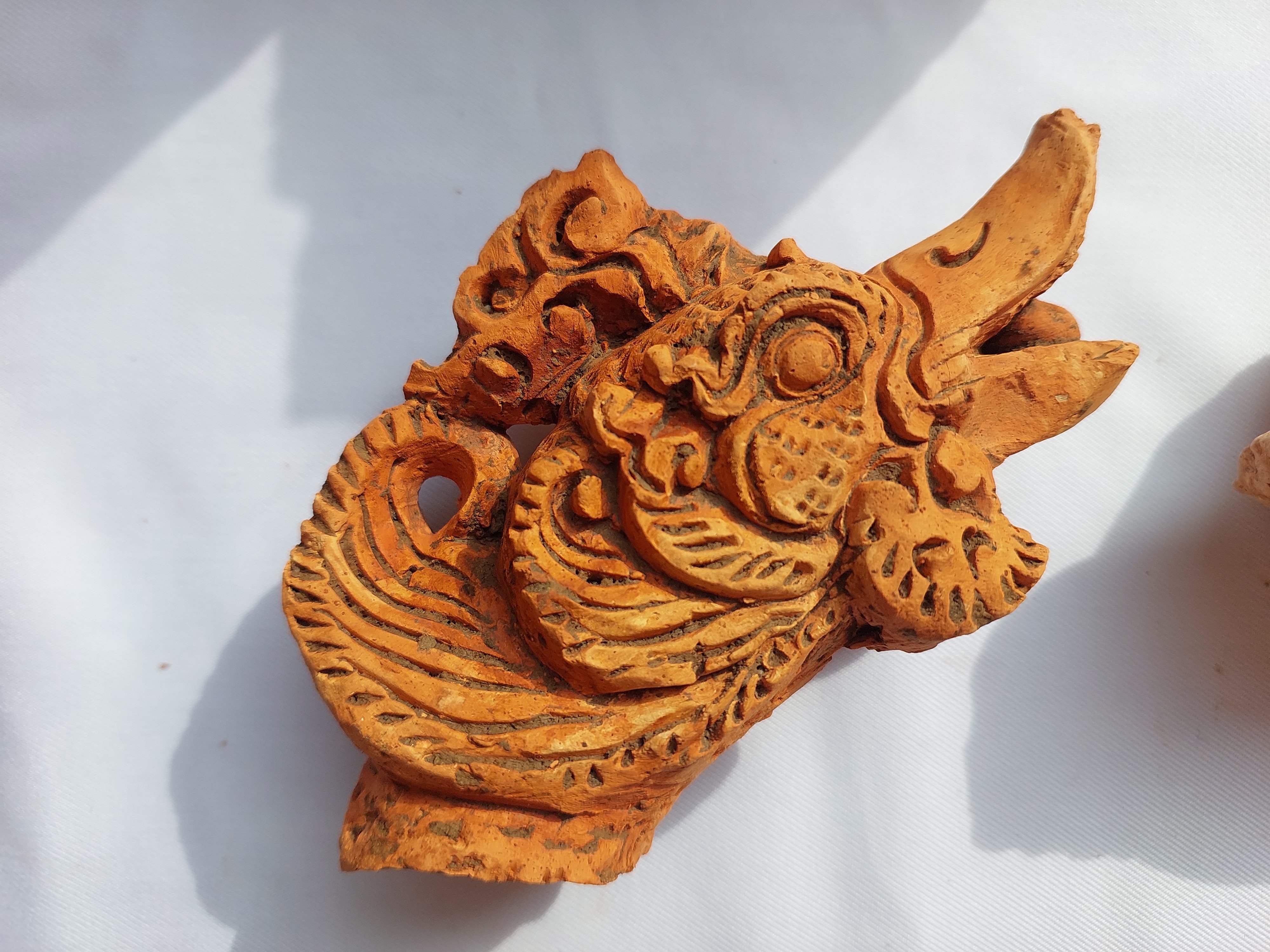
| Some newly found artifacts dating from the early Le Dynasty (981-1009). |