Kinh Thien Palace’s restoration may take 10 years: specialists
Recent archaeological findings at the Imperial Citadel of Thang Long in Hanoi may help restore the Kinh Thien Palace, the main building in the central sector of the citadel.
The restoration of Kinh Thien Palace at the Imperial Citadel of Thang Long may take at least 10 years, experts said at a two-day workshop in Hanoi on September 8.
| The main area of the Imperial Citadel of Thang Long at night. Photos: The Hanoi Times |
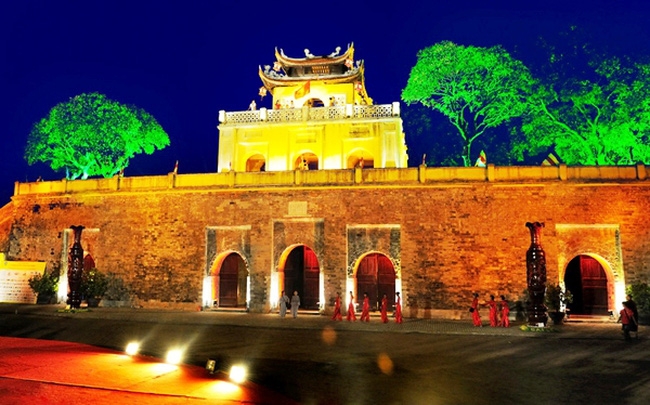
Dr. Nguyen Van Son from the Hanoi History Association said Kinh Thien Palace housing the throne hall is the central structure of the Imperial Citadel of Thang Long, representing the supreme power of the kings of the Ly, Tran, and Later Le Dynasties.
“The restoration of Kinh Thien Palace at the Imperial Citadel of Thang Long would create immense natural and cultural values for the whole nation and the city of Hanoi,” Son said.
“We need to further study a host of interrelated fields, including archaeology, history, architecture, and design, among others. Firstly, we have to determine the precise scale of the palace and further study the details of the ancient construction, including the design, materials, techniques, and spirit,” he added.
“If the studies are carried out for the next 3-5 years, hopefully, we will be able to fully restore the palace in 10 years,” the expert said.
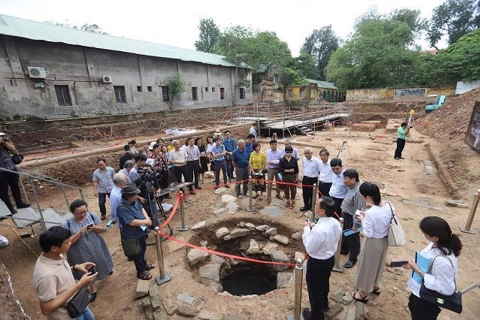
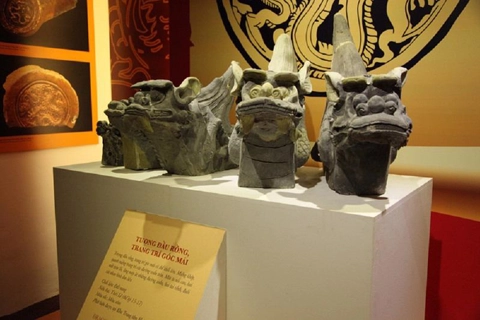
Dr. Tong Trung Tin from the Vietnam Archaeology Association said the association and the Thang Long Heritage Conservation Center Hanoi have found new materials, artifacts, and information on the citadel, which may be good add-ups to the rebuilding of Kinh Thien Palace. An area of a total of 8,440m2 has been excavated so far.
Tin said these researches have brought valuable outcomes for the conservation of the existing archaeology sites, the heritage, and the restoration of Kinh Thien Palace, as well as promoting cultural values of intangible heritage sites in Hanoi.
At the meeting, Prof. Ueno Kunikazu of Nara Women’s University Japan introduced some buildings that have been restored fully from the ashes, saying that the authorities have to accurately draw 70-80% of the ancient building on a scale of 1/100 to 1/50.
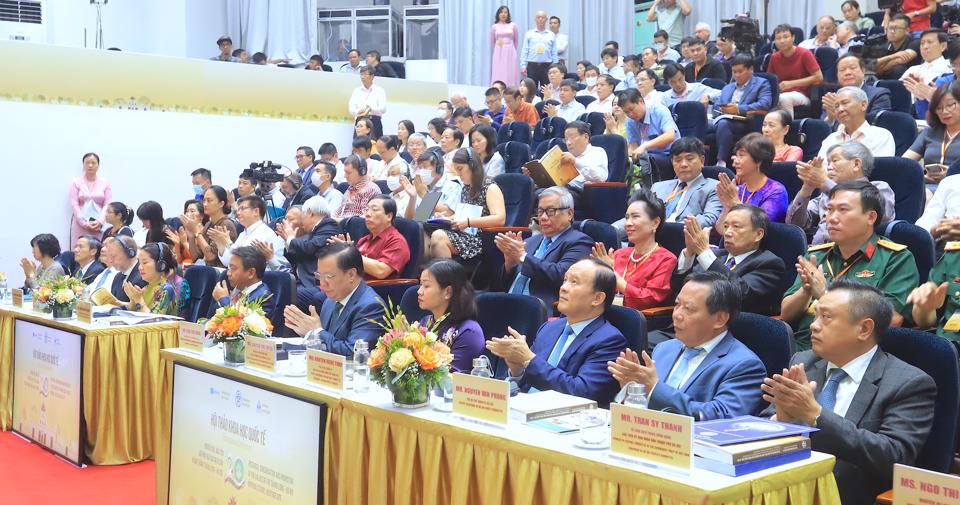
| Chairman of the Hanoi People’s Committee Tran Sy Thanh speaks at the workshop. |
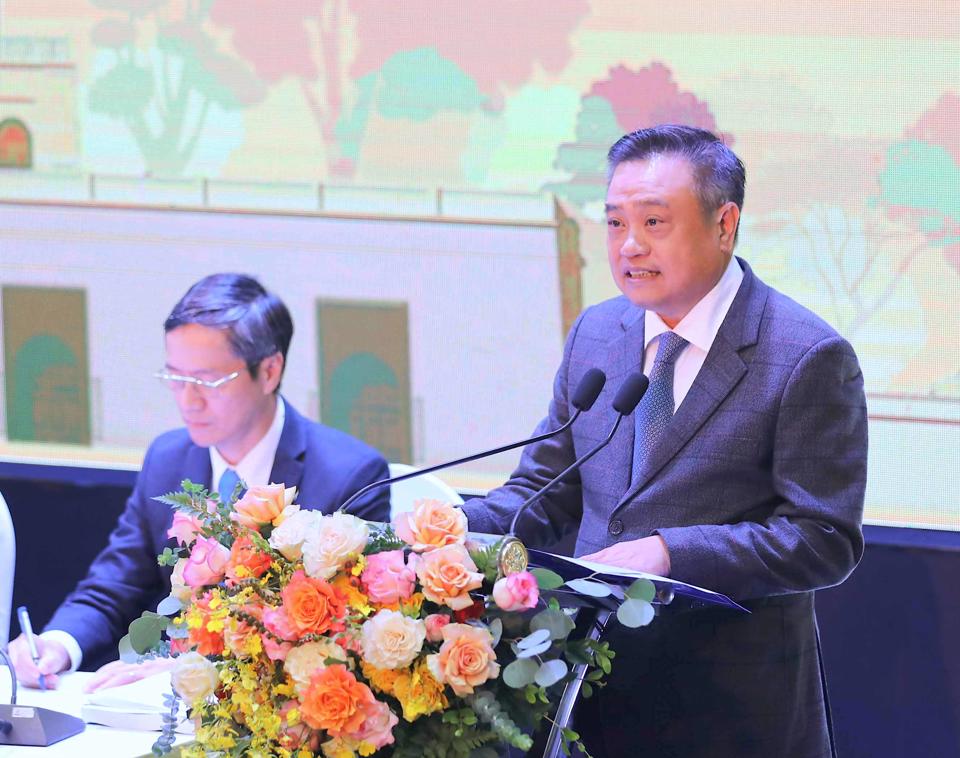
Speaking at the workshop, Chairman of the Hanoi People’s Committee Tran Sy Thanh said that Hanoi has been Vietnam’s political-economic-social hub for centuries and the city has had a huge impact on Vietnamese historical development.
He said the archaeological exploration of the Imperial Citadel of Thang Long is one of the biggest conducted so far in Vietnam that has retrieved valuable artifacts and information.
“The citadel is the collection of cultural, artistic, and historical values, showing the quintessence of techniques and proving the combination of cultural values between Vietnam and other countries in the region,” Thanh said.
There are still plenty of artifacts waiting to be unearthed, UNESCO representative in Vietnam Christian Manhart said, adding the study and conservation of the heritage require a detailed plan that prioritizes strategic actions.
He said the inscription of the citadel in UNESCO’s World Heritage List means stakeholders have to make the best efforts to accomplish their missions, enhance their cooperation, and strengthen educational and training activities about the conservation of the heritage among the staff and people.
The two-day workshop, running between September 8 and 9, is an opportunity for both international and domestic experts to share their 20-year experiences of researching and preserving the Imperial Citadel and discuss future solutions to better conserve the heritage site, as well as other relics in the country.
The workshop is co-hosted by the Hanoi People’s Committee, the Vietnam Association of Historical Sciences and the UNESCO Office in Hanoi. More than 31 reports will be presented at the workshop to help the Thang Long Heritage Conservation Center Hanoi build up its plan for the conservation of the citadel by 2045.
| Many domestic and international experts attended the workshop to share their 20-year experiences of researching and preserving the Imperial Citadel and discuss future solutions to better conserve the heritage site. |
About the Imperial Citadel of Thang Long The Imperial Citadel of Thang Long was first built in the early 11th century under Ly Dynasty when Thang Long (ancient name of Hanoi) was chosen as the capital of Dai Viet (ancient name of Vietnam). The citadel had remained the kings’ palace and the center of power in Vietnam until the late 19th century. From the late 19th century to 1945, Thang Long - Hanoi was the center of the North as kings chose Thua Thien Hue as their new capital. After the August Revolution in 1945, Hanoi has officially become the capital of the country. During its more than 1,000 years of development, the imperial city experienced a lot of historical events, damages, and construction and it was almost destroyed completely in the middle of the 20th century during the wars. Now the palaces only appear on the ground in some sections of the walls. In 2002, the first archaeological excavations in the center of the imperial city unveiled monuments, relics, and artifacts that show the constant development of history and dynasties in Vietnam. With its distinguished historical, cultural, and scientific values, the Vietnamese Government in 2009 recognized the Imperial Citadel of Thang Long as the National Historical Site. The heritage was named in UNESCO’s World Heritage Listed in 2010. Since then, the site has become one of the must-visit places for visitors in Hanoi. |