Factors unlocking Vietnam’s potential in FDI attraction: HSBC
The strategy to attract more FDI should begin with understanding and assessing the competitive landscape between Vietnam and other Southeast Asian countries.
Labor quality, logistics, and legal environment stand as the three key challenges in attracting foreign direct investment (FDI) to Vietnam, according to the CEO of HSBC Vietnam Tim Evans.
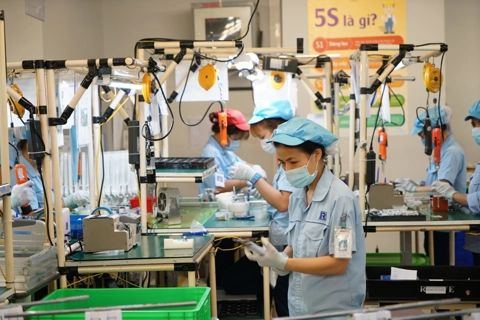
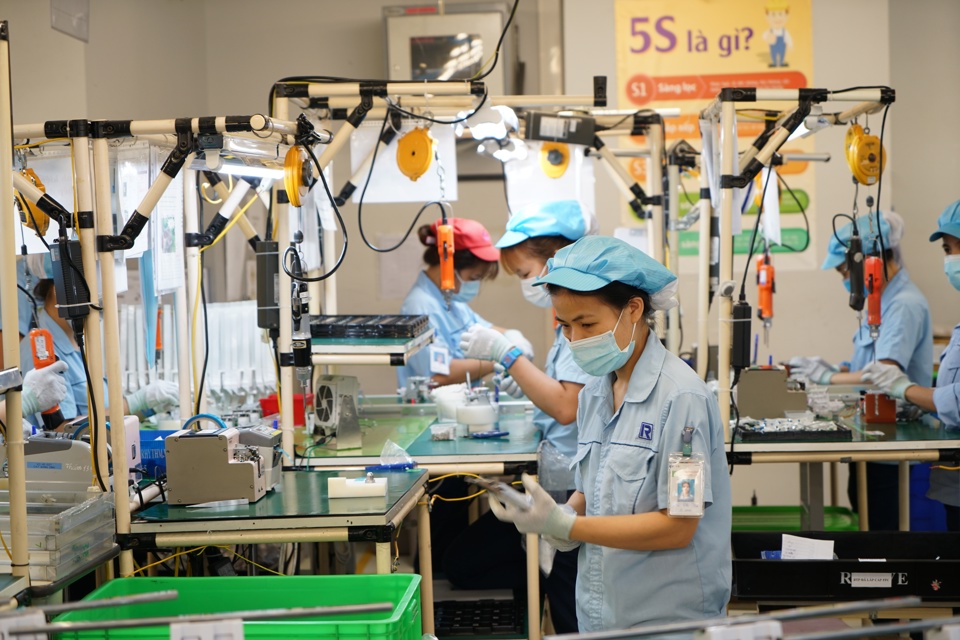
| Electronics production at Rhythm Precision Vietnam at Noi Bai Industrial Park, Hanoi. Photo: Pham Hung/The Hanoi Times |
In 2023, Vietnam attracted US$36.61 billion in FDI, marking a remarkable 32% increase compared to 2022 and ranking as the third-highest in the past 15 years, data from the Ministry of Planning and Investment showed, which also noted that the disbursed FDI reached a record high of around $23.18 billion.
Looking ahead to 2024, foreign capital continues to flow actively into Vietnam, reaching nearly $4.29 billion in the first two months, a 38.6% increase from the same period last year.
In addition to the Government’s efforts in promoting investment and improving the business environment, Vietnam also benefits from the expansion of investment in Southeast Asia under the "China + 1" strategy.
According to a survey by the American Chamber of Commerce (AmCham) in China, 40% of US companies are seeking to increase investment to strengthen their supply chains, with over 50% seeing Southeast Asia as a top destination.
The European Chamber of Commerce (EuroCham) notes that its members continue to review their supply chain strategies in this region.
Anticipating these prospects, Tim Evans believes that Vietnam needs to identify obstacles from the perspective of foreign investors to overcome them.
First and foremost, Tim says, is the quality and accessibility of the workforce.
Vietnam needs to continually improve productivity as it lags behind larger regional economies, with labor productivity per hour relatively low, he noted.
Data from the Asian Productivity Organization (APO) showed that in 2020, the value of output per hour for Vietnamese labor was only $6.4, compared to $14.8 in Thailand and $68.5 in Singapore. Total Factor Productivity (TFP) at the enterprise level grew by less than 2% during the 2014-2018 period, lower than many East Asian economies, according to IMF data in 2022.
TFP is an indicator that reflects production results through improved capital and labor efficiency, technological innovation, management improvements, and skill upgrading.
The latest survey by EuroCham found that 32% of respondents believe the workforce has a fairly good level of education but needs improvement in terms of skills and specialization. 50% rate the availability of the workforce at a moderate level, reflecting challenges in finding candidates who meet standards.
The HSBC Vietnam CEO also notes that Vietnam's logistics efficiency index lags behind China, Malaysia, and Thailand, with shortcomings in logistics capacity, delivery time, and traceability.
"Logistics infrastructure currently falls short of meeting the expected international standards, with road transport accounting for 74% of total transport, while demand is skewed towards sea transport and port space, which supports the export story from Vietnam," he noted.
A recent survey by the Japan External Trade Organization (Jetro) also praised Vietnam's improvements in infrastructure but suggested that the country's competitiveness in this area was not high compared to its neighbors.
Japanese businesses believe that Malaysia has the best electricity and road infrastructure, while Singapore leads in port and telecommunications infrastructure. "Vietnam is trailing behind other Southeast Asian countries in infrastructure," said Nobuyuki Matsumoto, Jetro's Chief Representative in Ho Chi Minh City.
Another issue pointed out by Tim Evans is the challenge posed by the legal environment. The HSBC Global Connection survey shows that regulatory change is one of the top two challenges for foreign businesses operating in Vietnam, with 30% of companies struggling to adapt to rapidly changing policies and regulations.
This view was also echoed in Jetro's survey, which highlights risks for Japanese investors in Vietnam, including the complexity of administrative procedures, an incomplete legal system, and less streamlined operations, which are higher than the Southeast Asian average.
Meanwhile, EuroCham found that 52% of entities surveyed cited "administrative burdens and the inefficiency of the system." Additionally, 34% of businesses point to unclear and differently interpreted rules and regulations as significant challenges.
Understand competitive landscape between Vietnam and others
In addition to addressing these three bottlenecks, Tim suggests that the strategy to attract more FDI should begin with understanding and assessing the competitive landscape between Vietnam and other Southeast Asian countries, as well as evaluating countries like India and Mexico.
Currently, Singapore and Malaysia lead the semiconductor ecosystem. Singapore focuses on semiconductor wafer production and manufacturing equipment, while Malaysia serves as a hub for packaging and testing. Thailand holds a specific place in the automotive supply chain in general and electric vehicles in particular. Indonesia aims to develop an electric vehicle ecosystem due to abundant nickel resources and a vast domestic market.
Meanwhile, Vietnam maintains its momentum in attracting major electronics manufacturers, thanks to competitive prices, stable and consistent government support, numerous FTAs, and the positive work attitude of its workforce. The country is gradually entering the electric vehicle and semiconductor markets, he noted.
Other experts also caution Vietnam to remain vigilant. Gabor Fluit, President of EuroCham, emphasizes the need to simplify administrative procedures, invest in infrastructure to reduce post-investment costs, and enhance the skills of the workforce. He expects this will help the country maintain its competitiveness and a growth trajectory.
Alex Crane, CEO of real estate consultancy Knight Frank Vietnam, points out that Vietnam's ever-comparative costs are leading investors to look elsewhere after a thorough cost assessment.