Hanoi, HCMC to submit metro plans to National Assembly in February: Deputy PM
The resolution aims to speed up the development of the urban railways in Hanoi and Ho Chi Minh City.
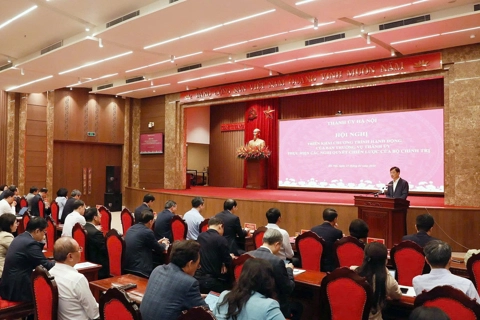
Hanoi and Ho Chi Minh City must submit a draft resolution on the development of urban railway to the National Assembly in February, Deputy Prime Minister Tran Hong Ha said on January 20.
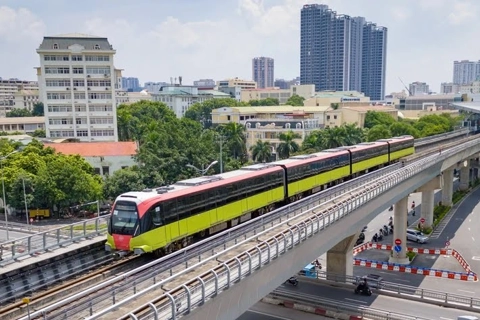
| The elevated section of the Nhon - Train Station metro line in Hanoi. Photo: Hai Linh/The Hanoi Times |
The resolution would be made up of provisions that apply to both cities and those tailored to each city, he said.
The Deputy Prime Minister urged the two cities to provide details on the procedures by which investment policies, projects, capital and urban development plan adjustments are authorized and approved.
"This will ensure a streamlined process for project preparation and implementation and accelerate construction," he said.
According to leaders from both cities, they are drafting clauses on 13 areas, such as mobilizing capital, speeding up and shaping the city through the Transit-Oriented Development (TOD) model, developing and mastering industrial railway technologies, training human resources and other related policies, among others.
Nguyen Trong Dong, Deputy Chairman of the Hanoi People's Committee, suggested bypassing procedures for formulating, evaluating, and approving investment intentions for urban rail projects.
He also suggested that land acquisition could be carried out simultaneously with investment preparation, and that there should be no need to adjust related plans when determining routes, structures, and TOD areas in project planning.
Bui Xuan Cuong, Deputy Chairman of the Ho Chi Minh City People's Committee, recommended shortening the process for the National Assembly to draft and approve the resolution by 5 to 6 months.
He also called for decentralizing authority that enables the city to prepare pre-feasibility reports and decide on investment policies for urban railway projects.
He also called for decentralization of authority to allow the city to prepare pre-feasibility reports and decide on investment policies for urban rail projects.
Deputy Minister of Transport Nguyen Danh Huy said the two cities' draft lacked the opinions of relevant agencies and did not fully incorporate recent legal documents, he added.
Huy also pointed out significant differences in legal policies, practical conditions, and strategies for mobilizing investment resources between the two cities.
Hanoi and Ho Chi Minh City need to review and coordinate their overall policy proposals, he said.
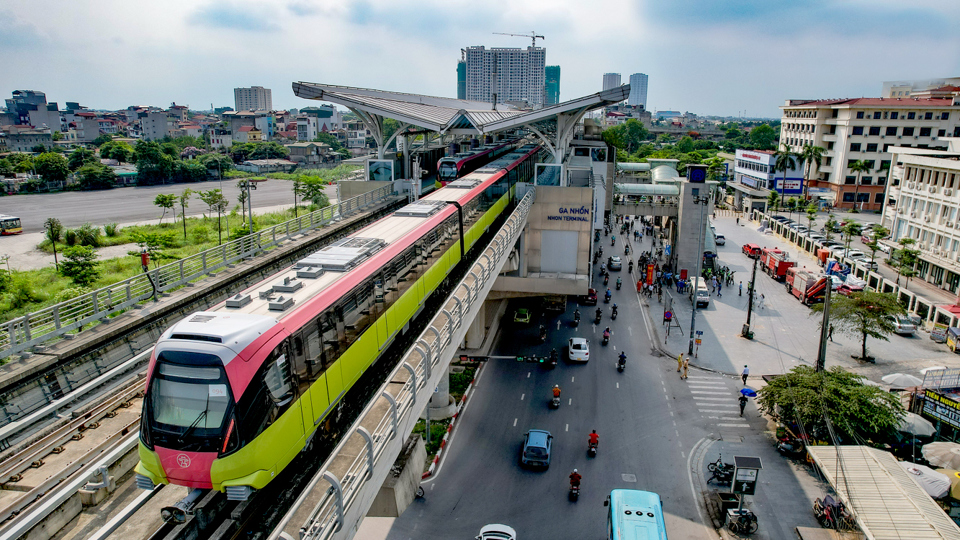
Hanoi and Ho Chi Minh City now have three urban railway lines: The Cat Linh-Ha Dong line (12 km) and the elevated section of the Nhon-Hanoi Station line (8.5 km) in Hanoi, and the Ben Thanh-Suoi Tien line (20 km) in Ho Chi Minh City.
Hanoi plans to develop 15 metro lines totaling 617 km by 2045, with 10 lines (418 km) expected to be operational by 2035. This includes the two lines mentioned above.
Ho Chi Minh City projects to build seven metro lines with a total length of 355 km by 2035, including the Ben Thanh-Suoi Tien line.