Hanoi strives to become a major logistics hub
Hanoi needs a complex or a logistics center to handle the collection and delivery of goods in the metropolitan area.
If Hanoi wants to become a major logistics hub of the country and Southeast Asia, it is necessary for the city to complete the logistics infrastructure system, including the last-mile delivery, according to local experts.
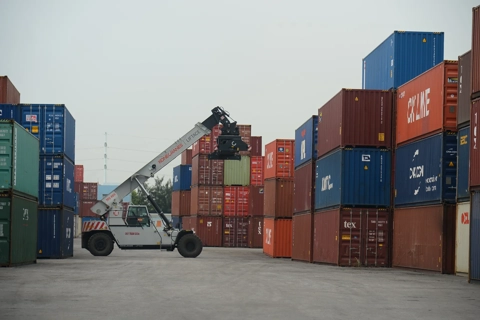
| The My Dinh ICD, one of the two current ones in Hanoi. HNT Photo: Tuan The |
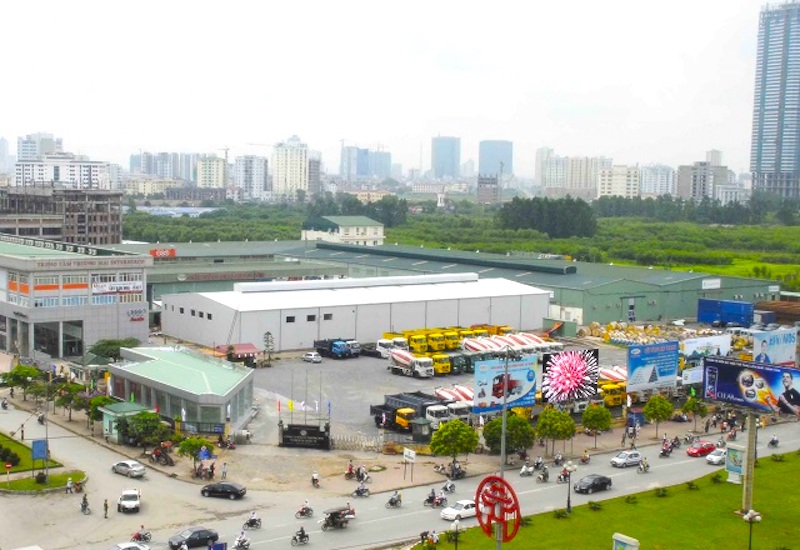
Under the latest plan for logistics development in Hanoi, the city is continuing to provide incentive policies to attract major logistics providers so that the city would gradually turn into a logistics hub in the north.
By 2025, the logistics sector is expected to contribute 9-11% of the GRDP with an average growth rate of 17-21%, while logistics costs are expected to go down to 14-17% of the GRDP. The rate of logistics outsourcing would be reduced to 50-60%.
However, there are still many barriers ahead for the sector to reach the goal set by the city.
Speaking at a conference "Forecasting urban logistics trends to adapt to the new context" this month in Hanoi, Nguyen Thi Binh from the Foreign Trade University in Hanoi said despite a number of infrastructures such as Hateco Logistics Centre in Long Bien District’s Sai Dong B Industrial Park, and Yen Vien Railway Logistics Centre in Gia Lam District, the city’s logistics system needs better synchronization to meet the demand and harness its potential.
Being of the same mind, Pham Hoai Chung, Deputy Director of the Transport Strategy and Development Institute of the Ministry of Transport, stressed that Hanoi still lacks planning and development guidance for an urban logistics center, such as the automation of some last-mile processes.
Binh added data on transport routes is available, but road transport could not be optimized on a larger scale. “In fact, optimization in transportation is of foremost importance in the logistics field,” she underlined.
Analyzing challenges about last-mile logistics in the city, Chung said, delivery means in big cities like Hanoi or Ho Chi Minh City are mainly motorbikes, while in developed cities worldwide, they are trucks or pickup trucks.
He added the advantage of motorbikes is convenience and quick access to customers who reside in alleys, which are not accessible by bigger means of transport. But the motorbike's weak point is the low delivery capacity and high cost.
Moreover, consumers frequently use cash to shop. They prefer cash on delivery (COD) due to a lack of confidence in sellers. More than 90% of e-commerce transactions are carried out through COD.
Another challenges, according to Chung, are the legal framework and administrative procedures, as well as the capacity of technology infrastructure to handle orders on e-commerce platforms of human resources and delivery.
In order for urban logistics to develop, Chung suggested Hanoi needs to have an optimal solution for the last-mile logistics system in accordance with the urban characteristics of the city.
“It will improve the management mechanism and develop logistics activities, build infrastructure to optimize the supply chain of logistics services, apply technology in optimizing last-mile delivery, improve the investment environment and business capacity as well as service quality,” he said.
Drawing on the experience of urban logistics models from Singapore, Australia, the UK, and Germany, Binh recommended Hanoi build a complex or logistics center to handle the collection and delivery of goods in the metropolitan area. The city needs also to build a database of freight carrier routes.
She also believed it is necessary to encourage cooperation among private transport enterprises, which builds an active support mechanism for them to deploy environmentally friendly freight and promote the public-private partnership (PPP) model.
“In particular, it is necessary to apply synchronously and flexibly macro management policies such as: limiting time for vehicles in and out of the city and regulations on vehicle size and load," she said.