Log in
Hanoi

Hanoi to create new urban clusters, and satellite towns until 2030

The city would closely oversee the construction of sky-scrapers and population growth in the co area.

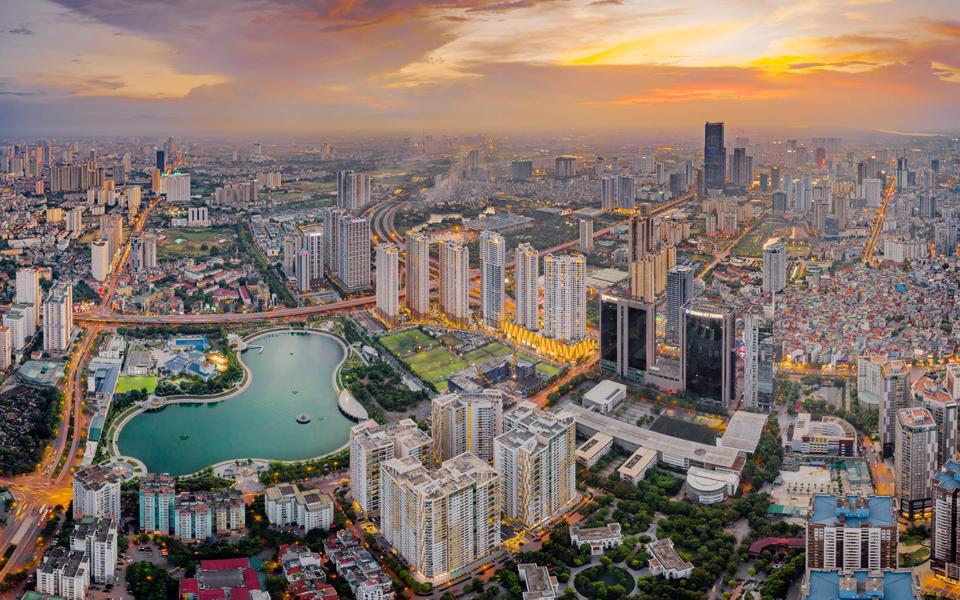
Hanoi is planning to establish several new centers of economic growth, urban clusters, and satellite towns until 2030.

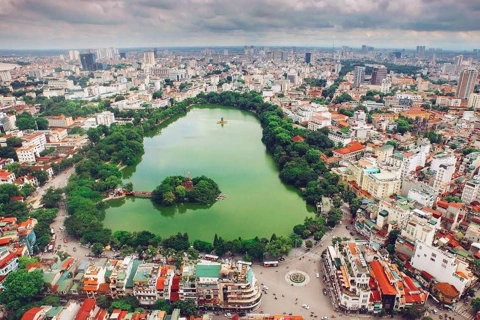
 Hanoi from above. Photo: Huu Thang/The Hanoi Times

This was part of an action plan of Hanoi’s Department of Construction to realize resolution No.15 of the Politburo on promoting Hanoi’s development until 2030, with a vision to 2045.

According to the plan, Hanoi also intends to implement a traffic-oriented urban development (TOD) model, while closely overseeing high-rise construction and population growth within the core area.

The Department of Construction is responsible for counselling the municipal authorities on smart and ecological urban development, with a focus on developing towns and peri-urban areas to support rural growth.

The city also aims to prioritize the construction of community living, entertainment, and green areas that meet specific criteria during the urban development process.

Other objectives include a minimum housing area of 29.5 square meters per person by 2025 and about 31 square meters per person by 2030.

The goal is that by 2025, 90% of housing development projects in urban areas will be apartment buildings and that in the same year 30% of investment projects in new social housing will be for rental purposes.

Under Politburo’s resolution No.15 on the objectives for Hanoi’s development until 2030, with a vision to 2045, Hanoi is considered a key economic zone in the northern region and the country.

By 2030, Hanoi should achieve a level of development comparable to that of the capitals of developed Asian countries, ensuring high competitiveness in the region and globally. The resolution also sets a goal for Hanoi to become a modern, intellectual, and cultural center, driving the country's growth.

To achieve these goals, the resolution targets an average annual GRDP growth rate of 7.5% - 8.0% from 2021 to 2025 and around 8.0% - 8.5% per year from 2026 to 2030. By 2025, Hanoi aims to achieve a GRDP per capita of US$8,300 - $8,500, rising to $12,000 - $13,000 by 2030.

The urbanization rate is targeted to reach 60% - 62% by 2025 and 75% by 2030, with a corresponding increase in the treatment rate of urban waste to 50% - 55% by 2025 and 100% by 2030.

By 2045, Hanoi aims to become a globally connected city with a high standard of living and quality of life, achieving a GRDP per capita of $36,000, and a balanced development of the economy, culture, and society. The resolution envisages that Hanoi will by then reach a level of development comparable to that of the capitals of developed countries in the region and the world.
Reactions:
Share:
Trending
Most Viewed
Related news
Hanoi set for special measures to unlock mega projects

Hanoi set for special measures to unlock mega projects

Such a move would help Hanoi launch major infrastructure projects and advance the city’s long-term development.

Hong Van Commune rises as Hanoi’s emerging model for community-based tourism

Hong Van Commune rises as Hanoi’s emerging model for community-based tourism

Blessed with natural beauty, strengthened by deep cultural heritage and supported by its residents, Hong Van Village is emerging as one of Hanoi’s most distinctive tourism destinations. From ecology and agriculture to handicrafts and festivals, this Red River village is shaping a dynamic vision of sustainable community tourism for the capital.

Hanoi unveils digital heritage journeys to connect tradition with modern urban life

Hanoi unveils digital heritage journeys to connect tradition with modern urban life

Hanoi has launched a new digital heritage program that brings centuries-old cultural assets into a modern, interactive format. By mapping key monuments and creating themed journeys, the city aims to help residents and visitors explore its deep-rooted identity through fresh, engaging experiences.

Hanoi launches two-wheel electric vehicles to expand green urban mobility

Hanoi launches two-wheel electric vehicles to expand green urban mobility

Hanoi has introduced two-wheel electric vehicles for the first time in its transport network, offering residents a new green mobility option and marking a key step in the city’s smart-transport development.

Thai AirAsia launches new Hanoi–Luang Prabang route to boost regional travel

Thai AirAsia launches new Hanoi–Luang Prabang route to boost regional travel

Thai AirAsia has opened a new direct Hanoi–Luang Prabang route using Fifth Freedom traffic rights, creating a faster and more convenient link between two major heritage destinations in Vietnam and Laos.

Hanoi orders strong air-pollution measures and warns schools to adjust schedules

Hanoi orders strong air-pollution measures and warns schools to adjust schedules

Hanoi has issued new directives requiring schools to restrict outdoor activities and consider suspending classes when air quality drops to hazardous levels, while launching a sweeping crackdown on pollution sources across the city.

Hanoi – Vientiane ties set pace for bilateral cooperation

Hanoi – Vientiane ties set pace for bilateral cooperation

The two sides have inked two city-level agreements and eight agreements covering areas such as Party building, economic and investment cooperation, agriculture, health, education and people-to-people ties.

Hanoi completes tunneling for four underground stations of 2nd metro line

Hanoi completes tunneling for four underground stations of 2nd metro line

The completion marks a major step forward for the four-kilometer underground section of the metro line.