Econ
Hanoi's economy regained growth momentum
In 9 months, the Capital of Hanoi`s total production (GRDP) rose 7.73% over the same period of last year. With this result, the growth target of 8.5 - 9% in 2016 can completely be achieved.

Electronics production at Vietnam Canon Ltd.Co., Thang Long Industrial Park, Dong Anh District, Hanoi
|
Hanoi’s economy has recently recorded healthy growth. The Capital’s economic growth is expected to rise in the second half of the year, buoyed by further increases in foreign direct investment and exports, domestic credit growth, a slight recovery in agriculture and accelerating disbursements of capital expenditure on national infrastructure programmes.
While Hanoi’s economy is performing reasonably well against a challenging back-drop, a number of issues will need to be addresses to ensure growth remains sustainable. A recent surge in bank lending increases the importance of efforts to tighten regulations to prevent a rise in financial sector risks.
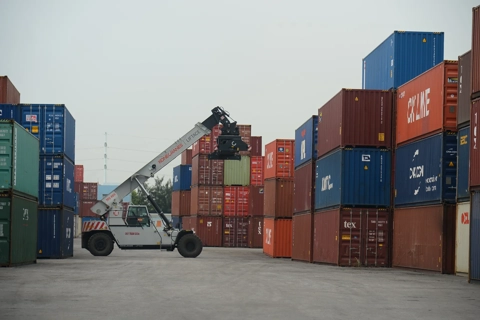
Trade performance remains a bright spot for Hanoi’s economy. In the first six months of 2016, the Capital produced a large merchandise trade surplus, which is a big year-on-year improvement and reflects continued growth in exports while import demand has eased.
Hanoi enjoyed relatively high economic growth in the first half of the year with good performances in the service and industry-construction sectors, officials said at a municipal People’s Council meeting.
A report by the Economics-Budget Committee of the municipal People’s Council said that in order to meet the annual target, the city would have to achieve a growth rate of 10-11 percent in the remaining months of the year, which would be difficult.
This period also saw significant improvements in attracting investment capital, with a more than fourfold year-on-year increase in investment capital in industrial zones. The city authority approved most planning schemes at subdivision and district levels, which paved the way for appropriate investment to be carried out.
The application of information technology in administrative reform was boosted, resulting in considerable changes to the procedures of business registration, tax filing and the issuance of land right certificates. In the first six months, 98 percent of tax filing and 95 percent of tax payments were done online.
Members of the municipal People’s Council also pointed out other areas that need improvement. Wastewater treatment facilities would be completed and operating by the end of this year. The construction of other treatment facilities, which are slated for the 2017-2020 period, would also be accelerated. With the overall solutions, significant dynamics are being created to promote economic growth of the Capital.