Hanoi's parks and flower gardens – little known stories
Parks and flower gardens add to the urban beauty of Hanoi.
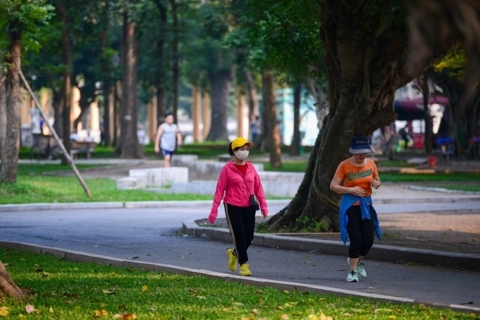
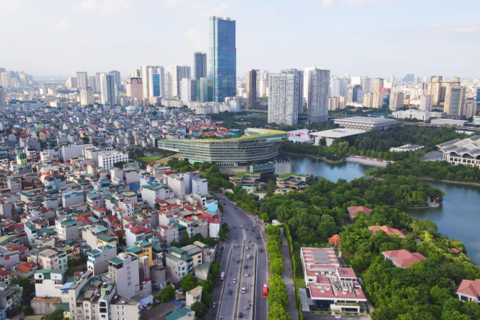
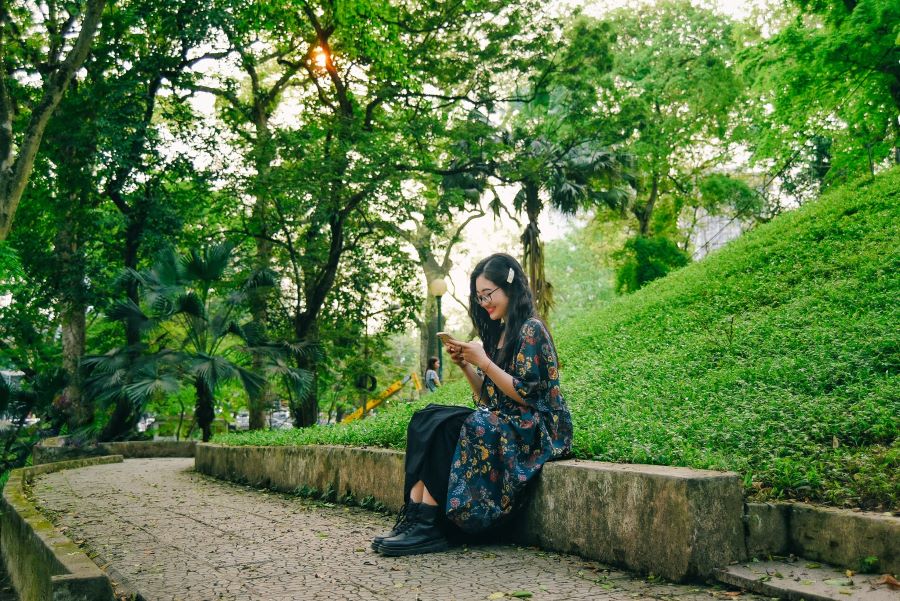
There are stories, parks, and flower gardens around Hanoi, home to more than 60 parks and flower gardens covering 300 ha or 2% of the city's total land area, that arouse the curiosity of not a few people - either tourists or locals.
| The lush green space of Bach Thao or Botanical Garden in Hanoi. Photo: Pham Tu |
Parks and flower gardens during the French colonial period
From the late 19th century until 1954, Hanoi had only one park called Bach Thao or "Jardin Botanique de Hanoi" ("Hanoi Botanical Garden" in French), and 16 flower gardens with an average area of about 100 square meters each.
Except for the park, all the gardens bore the names of French personalities more or less connected with the former French Indochina. In those that were crowded with visitors on weekends or holidays, statues and monuments were even erected in honor of colonial officials.
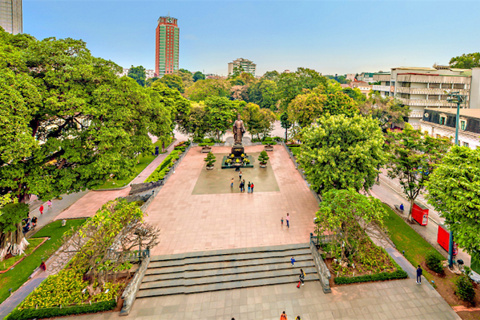
In particular, today's Ly Thai To Flower Garden was originally the Paul Bert Flower Garden, named after a French Resident General who died of dysentery in late 1886 and whose statue was placed here in 1890. Similarly, Joost Van Vollenhoven, acting Governor General of Indochina from January 4, 1914 to March 5, 1915, had his monument erected in Bach Thao Park in 1925.
| Ly Thai To flower garden on the shore of Hoan Kiem Lake in the old days. File Photo |
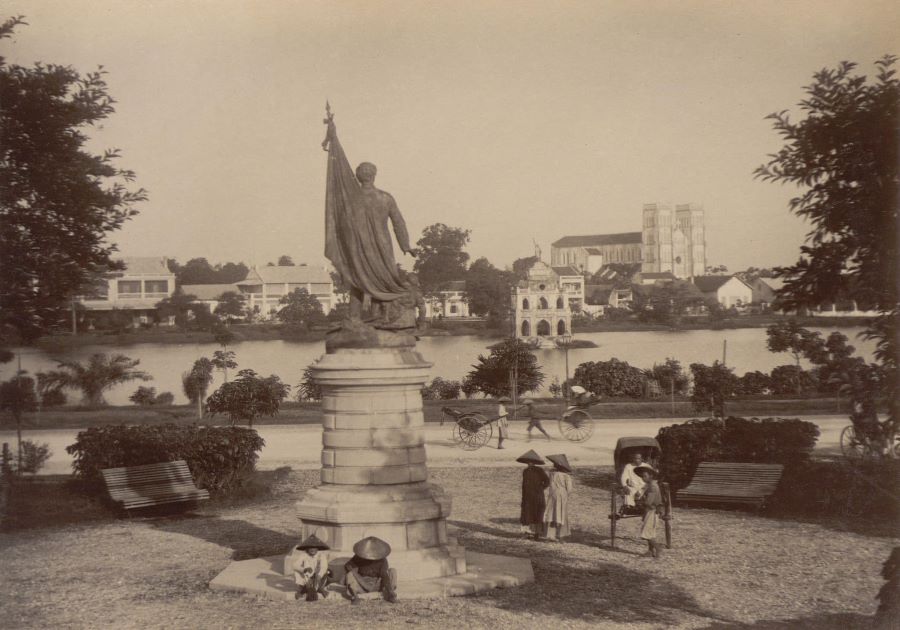
On Bo Song ("River Bank") Street, now Tran Nhat Duat Street, they built a monument to Jean Dupuis, a French dealer and explorer. In Chi Lang Flower Garden (now Lenin Park), a "Monument to the Dead" was erected to commemorate those who died fighting for France.
Meanwhile, Laurent Chavassieux Flower Garden (now Dien Hong Park) housed a memorial to Laurent Chavassieux, another acting Governor-General of Indochina, who held the position between March 10, 1894 and October 26, 1894.
Several years ago, in an online article about the memorial in Dien Hong Park, also known as the "Toad Flower Garden," the author believed that the stone block on top was a coffin containing the remains of Laurent Chavassieux. The article was immediately referenced by several websites with shocking headlines such as "Hanoi worships colonizer's remains".
In fact, at the end of the 19th century, there was a cemetery near Truc Bach Lake for French people who had died in North Vietnam, which was later moved to the site of today's Nguyen Cong Tru apartment building. When Chavassieux died, he was buried there like his other compatriots.
| Dien Hong Park before renovation. Photo: Jenna |
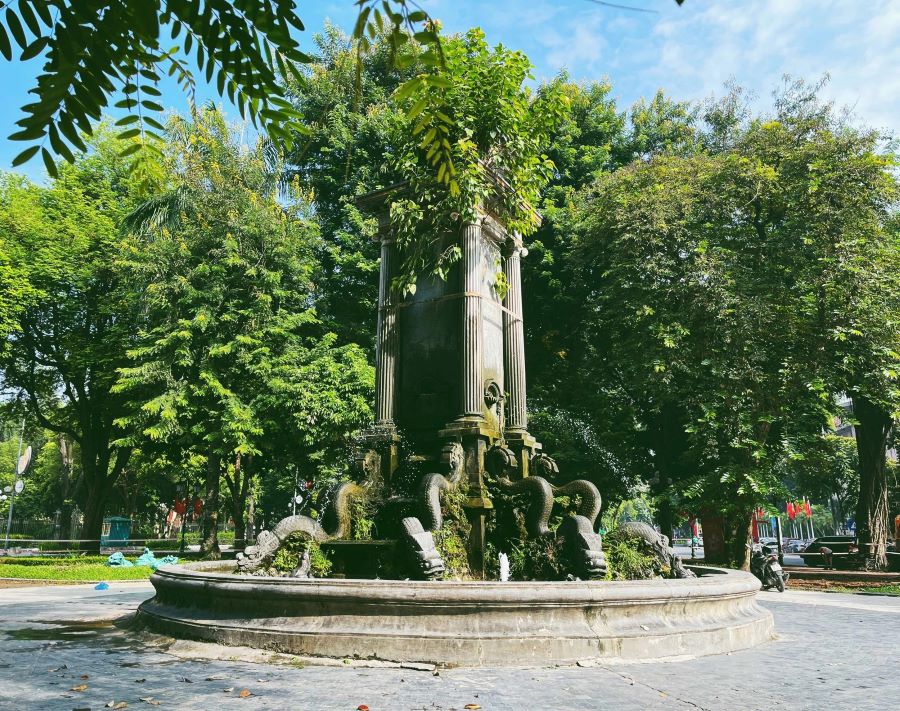
Chavassieux was a Catholic. According to canon law at the time, the dead were to be "deeply buried," so it seems highly unlikely that the government would exhume his remains and place them in a coffin. Many Hanoi cultural researchers, such as Hoang Dao Thuy, Nguyen Van Uan, or Nguyen Vinh Phuc, have looked through Hanoi archives of documents in French. If what the article mentions is true, they would have provided their confirmations long ago. The author must have made a translation error.
Renaming and building up more new “green lungs” of Hanoi
On March 9, 1945, the Japanese army overthrew the French and formed a new government in April, with Tran Trong Kim as Prime Minister. On July 20, 1945, Japan handed over Hanoi, Haiphong, and Danang to Vietnamese administrators, and Dr. Tran Van Lai was invited to become mayor of Hanoi.
One of his first moves was to change the names of the city's streets and flower gardens. French names were replaced with the names of historical places such as Lam Son, Chi Lang, Tay Son, Bai Say, Yen The, or Ba Dinh. For the first time in Vietnamese history, the flower garden at the intersection of Tho Nhuom and Hai Ba Trung Streets was given the name of a concubine of King Tran Due Tong, Bich Luu.
| The Thu Le Park. Photo: Traveloka |

On August 1, 1945, the mayor personally ordered and witnessed the removal of numerous French statues in the flower gardens, with the exception of the one named after the famous microbiologist Louis Pasteur.
On September 2, 1945, the Democratic Republic of Vietnam was born and Dr. Tran Duy Hung became the new mayor of Hanoi. On December 1 of that year, he approved a list of renamed streets and flower gardens in Hanoi. Accordingly, some of the flower garden names given by Tran Van Lai were changed, while others were given entirely new names.
In 1949, when former Emperor Bao Dai became Chief of State of French-occupied Vietnam, Hanoi's streets and flower gardens underwent another name change. Some streets regained their pre-1945 French names, while parks and flower gardens were basically named as they had been under Tran Duy Hung. On February 28, 1951, Hanoi Mayor Tham Hoang Tin issued a decree to rename streets, except for parks and flower gardens.
| The Thong Nhat Park. Photo: Anh Tu |
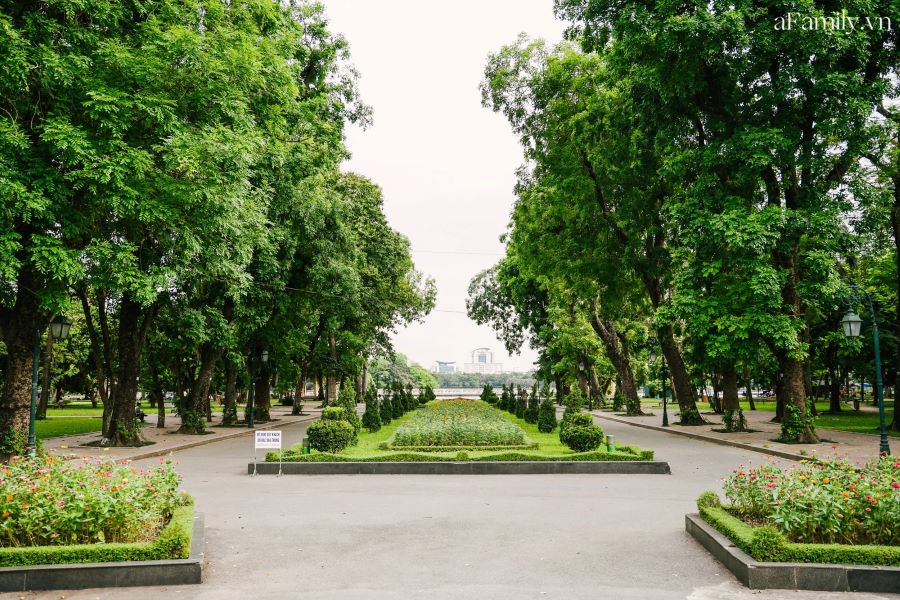
After 1954, the city of Hanoi decided to build more parks. Therefore, Thong Nhat Park was built with the contributions of tens of thousands of working days from Hanoi's officials, workers, and people. Thu Le Park was built in the same way in the 1970s.
Nowadays, parks and flower gardens in Hanoi often have the same name as the commune, district, or ward they belong to. However, the naming method used by Tran Van Lai and Tran Duy Hung can be considered more beneficial in terms of historical education.