Work on Hanoi’s second metro line to drag on for another 5 years
Hanoi’s second metro line is expected to operate at 35 kilometers per hour on average and 80 kilometers per hour at maximum.
The Hanoi People's Committee has proposed to extend the completion period of the Nhon-Hanoi Station urban rail project, the city's second metro route, for another five years and increase the investment capital by VND1.9 trillion (US$80.5 million).
The committee said at a session of the municipal People's Council on September 12 that the elevated stretch of the route could be completed in late 2022 and the entire metro line will be inaugurated in 2027.
The Hanoi People's Committee said that increasing the total investment budget was a necessity due to changes in exchange rates and the readjustment of initial designs and technical requirements. Multiple delays in the project have led to changes to the original schedule.
Besides, it blamed difficulties in cleaning up the site, the incompetence of contractors and consultants, inconsistencies between international contracts and Vietnamese laws, and the influence of the Covid-19 pandemic for the delay.
The impact of the Covid-19 pandemic has caused the interruption in the importation of equipment and the mobilization of experts from Europe. This has led to lengthy equipment bidding and rising costs.
The delay in site clearance and relocation of technical infrastructure has also affected the project’s progress. There are bidding packages that are 5-6 years behind schedule for not having cleared land.
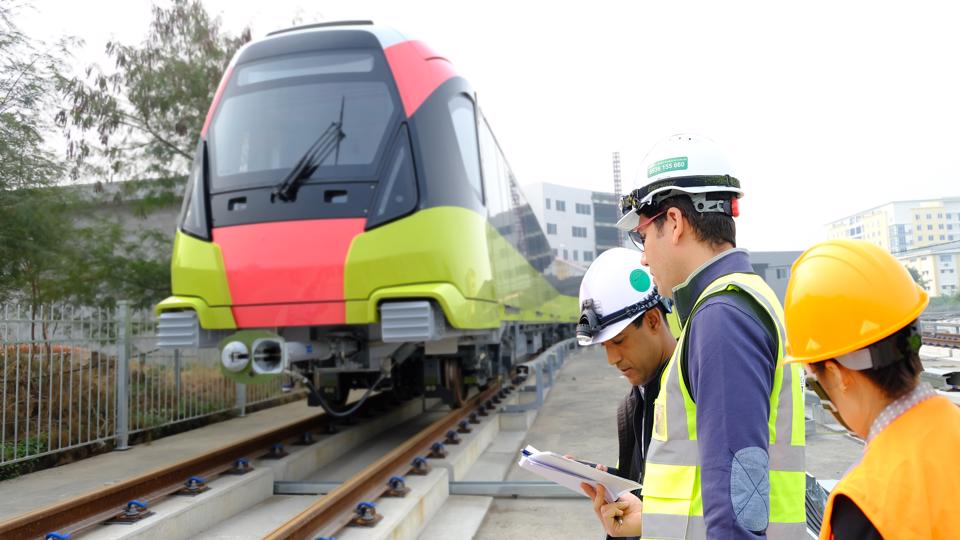
Engineers are busy working to ensure the progress of the Nhon - Hanoi Station urban railway project, which is likely to be lagged behind schedule for five years. Photo: Pham Hung/ The Hanoi Times |
The extension of the contract period and the costs incurred have given rise to intractable disputes with international contractors.
Due to these inconveniences, the execution of nine out of ten bidding packages is prolonged with cost overruns.
Work on the city's second metro railway project started in 2009 and was initially scheduled for completion in 2022, but construction progress has been delayed for the above-mentioned reasons.
The Hanoi Urban Railway Management Board (MRB) said the entire project is about 74.36% complete. Of that, the elevated section is 95.1% complete and the underground section is 33%.
The MRB added that it was working with consultants and contractors to focus on the elevated section to put it into operation by the end of 2022 while continuing to handle issues to speed up the progress of the underground section.
Hanoi's second metro line will run 12.5 kilometers from Nhon in the western district of Nam Tu Liem via Kim Ma Street to the downtown Hanoi Railway Station (one of Vietnam's major train hubs), with eight elevated stations and four underground.
The trains are expected to operate at 35 kilometers per hour on average and 80 kilometers per hour at maximum, the same speed as metros in Paris, Berlin and various cities in Asia.
The project is funded by official development assistance loans from the French government, French Development Agency, Asian Development Bank, European Investment Bank, and domestic counterpart funds.
Last month, Prime Minister Pham Minh Chinh asked relevant agencies to seek funding from the state budget to cover the additional costs incurred on the Nhon-Hanoi station subway line, rather than official development assistance (ODA).
The prime minister said obtaining additional ODA funds would require completing complicated procedures involving many types of foreign currencies, different donors and risks of exchange rate fluctuations.
Chinh stressed that the investor, Hanoi authorities, consultants and contractors were responsible for the delays. He said their coordination has not been efficient and problems were not addressed in time.
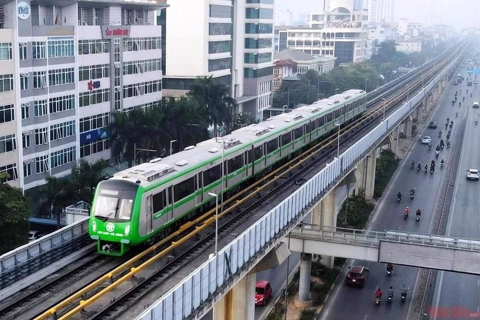
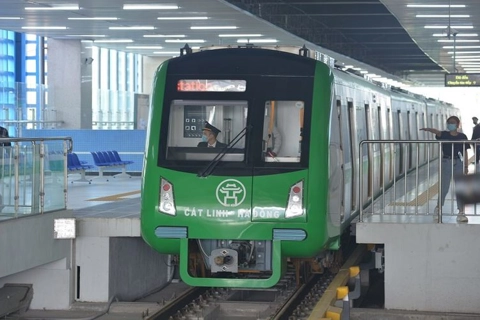
The capital city's first metro route, Cat Linh - Ha Dong urban railway, also Vietnam’s first one, became operational last November.