14TH NATIONAL CONGRESS OF THE COMMUNIST PARTY OF VIETNAM
Log in
Hanoi

Hanoi's US$2.8 billion fifth metro line project approved

This is one of eight metro projects planned by Hanoi to improve the city's mass transit system by 2030.

The State Appraisal Council has approved the plan for Hanoi's fifth metro line, connecting Van Cao Street and Hoa Lac High-Tech Park, with a total investment of over VND65 trillion (US$2.8 billion), according to the city's People's Committee.

As one of eight metro lines Hanoi plans to build by 2030 to improve the city's public transportation system and ease traffic congestion, the fifth line will facilitate fast and convenient mobility between suburban and urban areas.

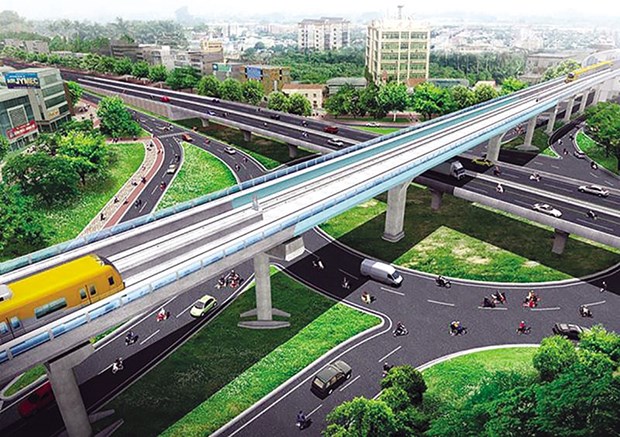
A rendered image of Hanoi's fifth metro line project. Photo: The Hanoi People’s Committee

With a total length of 38.43 kilometers, the line will run 6.5 kilometers underground and 2 kilometers on elevated tracks. The fifth metro line will pass through seven districts. After running underground through Van Cao, Lieu Giai and Nguyen Chi Thanh streets, it will surface at Thang Long Boulevard. The elevated section will be built above Le Quang Dao Street.

Of the total 21 stations, six will be underground and 15 will be above ground, with a rolling stock of 25 to 40 trains of four to six carriages each, running at a speed of 120 kilometers per hour on the elevated section and 90 kilometers per hour underground.

The metro project will have two depots, one in Hoai Duc District, with an area of about 18 hectares, and the other in Thach That District, with an area of about 6.9 hectares.

Of the estimated cost of more than VND65 trillion (US$2.8 billion), VND24.8 trillion (US$1 billion) will be spent on construction and VND16.6 trillion (US$713 million) on equipment.

In terms of funding sources, VND15 trillion (US$646 million) will come from the city's budget, about VND18 trillion (US$773 million) will come from proceeds of capital divestment from state-owned enterprises, VND10 trillion (US$430 million) from government bonds, and the rest from loans.

The line is expected to operate 26 trains in 2025, 37 trains in 2035, and 38 trains in 2050 to connect the western part of the city with the central area.

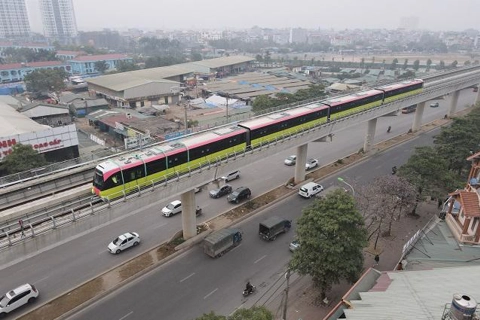
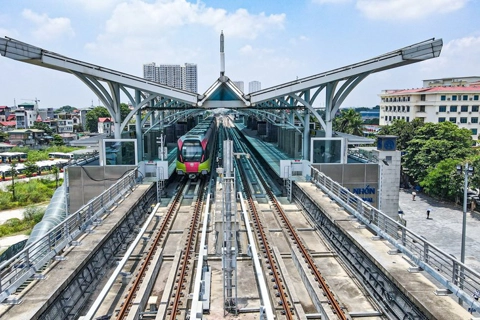
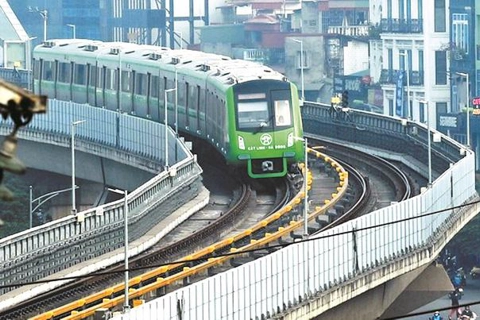
Hanoi's first metro project, Cat Linh-Ha Dong, has been in commercial operation since November last year. Trial operation of the second metro line, Nhon-Hanoi Railway Station, is scheduled for the end of 2023, and the metro line could be operational by the end of 2027. The second line is expected to help reduce Hanoi's vehicle emissions by 20,000 tons annually.
Reactions:
Share:
Trending
Most Viewed
Related news
Hanoi health sector targets digital leap under new Party resolution

Hanoi health sector targets digital leap under new Party resolution

Hanoi sets 2026 as a breakthrough year for healthcare reform, accelerating digital transformation, restructuring hospital networks and tightening food safety management under Politburo Resolution 72.

Hanoi launches state-backed innovation hub to drive digital economy

Hanoi launches state-backed innovation hub to drive digital economy

The new innovation center is designed to connect policy, technology and talent, aiming to accelerate digital transformation, support startups and position the capital as a global testing hub for emerging technologies and creative industries.

ASEAN youth showcase climate innovations at Hanoi exhibition

ASEAN youth showcase climate innovations at Hanoi exhibition

Young innovators from Vietnam and across ASEAN presented practical climate solutions in Hanoi, highlighting grassroots initiatives tackling plastic waste, renewable energy and sustainable livelihoods.

Hanoi issues action plan to implement 14th Party Congress resolution

Hanoi issues action plan to implement 14th Party Congress resolution

The goal is to turn policies into outcomes under the principle of “less talk, more action, effective results to the end, all for the capital and its people.”

ASEAN youth chart next phase of climate action in Hanoi

ASEAN youth chart next phase of climate action in Hanoi

Home to more than 680 million people, many in vulnerable coastal and low-lying areas, ASEAN is on the front line of climate change, facing rising seas, fiercer storms, prolonged droughts and accelerating biodiversity loss that endanger the region’s economic resilience and social stability.

Hanoi launches sweeping overhaul to unlock state economy growth

Hanoi launches sweeping overhaul to unlock state economy growth

Hanoi has unveiled an ambitious five-year plan to reform governance, mobilize public assets and restructure state enterprises, aiming to turn the state economy into a powerful engine of sustainable growth.

Hanoi puts people first in implementing four strategic Party resolutions

Hanoi puts people first in implementing four strategic Party resolutions

Hanoi launches comprehensive action plans to implement Politburo Resolutions 71, 72, 79 and 80, prioritizing people-centered reforms in education, healthcare, culture and state economic development.

Vietnamese families blend Tet travel trends with enduring traditions

Vietnamese families blend Tet travel trends with enduring traditions

More young Vietnamese families choose travel over staying home during the Lunar New Year holiday, seeking fresh experiences while keeping core traditions intact.