Investment
Improving public expenditure quality in Vietnam
The implementation of fiscal decentralization in Vietnam since the late 1980s has resulted in local authorities now controlling more than half of total government spending, and 60% of capital investment.
The State budget law (SBL), revised in 2015, has continued this process of decentralization by enhancing provincial responsibilities for borrowing and debt management. This has included allowing provincial governments to officially record budget deficits, expanding their ability to source funding from municipal bonds and commercial borrowing, and requiring provinces to take a larger share of responsibility for repaying official development assistance (ODA) and concessional loans mobilized by the national government on their behalf.
At the same time, the 2015 SBL has relaxed provincial borrowing ceilings, putting in place a tiered system that allows (i) major cities to have accumulated borrowing of up to 60% of their retained local revenue, (ii) provinces that do not rely on central government balancing transfers for their recurrent expenditure (surplus provinces) to have outstanding loans up to 30% of their retained local revenue,1 and (iii) provinces that do rely on central government balancing transfers for their recurrent expenditure (deficit provinces) to have outstanding loans up to 20% of their retained local revenue.
Consequently, since 2015, provincial borrowing and debt stocks have begun to grow. Between 2015 and 2017, total outstanding debt owed by provincial governments is expected to double to about $3.5 billion. These amounts remain relatively small against total national public debt levels of about $115 billion. However, further growth is expected. The government’s Medium-term Debt Management and borrowing Repayment Plan, 2016–2020 forecasts provincial government debt to reach $8.2 billion by 2020, a fivefold increase on their 2015 level.
While the devolution of public debt management has the potential to enhance accountability for how borrowed funds are used to lift service delivery, if not managed well, it also has the potential to create a build-up of fiscal risks. Ensuring provincial governments have the knowledge and systems to effectively manage and coordinate their new public borrowing responsibilities will be vital to avoid a buildup of liabilities and ensure reforms have their intended impact and are sustainable.
As such, incomplete regulations guiding provincial debt management responsibilities need to be addressed. As a first step, this will include detailed guidelines by the national government on how to prepare medium-term debt management plans. over time, support will also be required for clarifying ODA and on-lending policies, commercial bank borrowing processes, procedures for municipal bond issuances, provincial debt reporting processes, and management of provincial state infrastructure assets created by public borrowings.
At the same time as regulations are being upgraded, provincial governments also need to strengthen their own staff capacity to manage public borrowing and repayment. Based on the requirements of the 2015 SBL and Public investment law (2014) provincial governments will now have to (i) prepare medium-term debt management plans that link provincial public investment plans and fiscal policies, (ii) strengthen intergovernmental coordination for provincial public debt information by improving debt reporting and recording systems, and (iii) upgrade their own provincial regulations on public debt management.
To ensure national government can maintain tight control of total public borrowing, it is essential that a disciplined, transparent, subnational borrowing recording system is put in place. Exactly which debt information management system is most appropriate for Vietnam’s needs will require further analysis, but as provincial borrowing grows, the existing system of spreadsheets will not serve this purpose. Detailed guidelines are also needed to inform the consistency of provincial government debt management information to ensure that provincial government are using the same financial assumptions when calculating repayment needs, debt and borrowing limits, and cash flow forecasts.
A well-developed debt information management system would also help to track and report against a range of subnational debt metrics including—total debt to revenue, deficit-to-revenue ceilings, and debt service to expenditure or revenue ceiling—to monitor repayment capacity and verify that certain provincial governments are not increasing their deficit to revenue to receive subsidies or paying unsustainable interest expense charges to service their debt.
Finally, legal upgrades are needed to provide a clear legal framework for banks to handle default or insolvency by provincial governments that considers the interests of all parties. the legal framework should include the enforcement of budget constraints as well as mechanisms for renegotiating or liquidating the outstanding provincial debt. ideally, new regulations should include a provision that acknowledges commercial bank loans as “lawful financial sources” for borrowing by provincial people’s committees. commercial banks should be free to determine the risk premiums for different provincial governments, based on a comprehensive risk management review process with credit quality of the borrower and bankability of the projects driving their credit decisions.

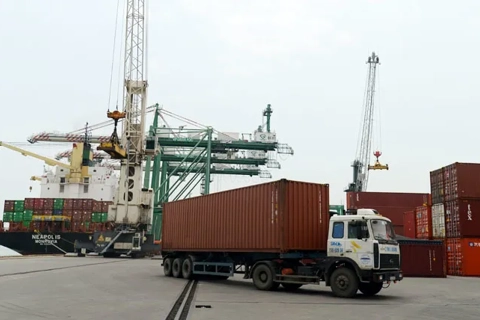
Effective debt management will help Vietnam to invest more in infrastructure development.
|
Consequently, since 2015, provincial borrowing and debt stocks have begun to grow. Between 2015 and 2017, total outstanding debt owed by provincial governments is expected to double to about $3.5 billion. These amounts remain relatively small against total national public debt levels of about $115 billion. However, further growth is expected. The government’s Medium-term Debt Management and borrowing Repayment Plan, 2016–2020 forecasts provincial government debt to reach $8.2 billion by 2020, a fivefold increase on their 2015 level.
While the devolution of public debt management has the potential to enhance accountability for how borrowed funds are used to lift service delivery, if not managed well, it also has the potential to create a build-up of fiscal risks. Ensuring provincial governments have the knowledge and systems to effectively manage and coordinate their new public borrowing responsibilities will be vital to avoid a buildup of liabilities and ensure reforms have their intended impact and are sustainable.

Composition of National and Provincial Expenditure (2017), % total expenditure.
|
At the same time as regulations are being upgraded, provincial governments also need to strengthen their own staff capacity to manage public borrowing and repayment. Based on the requirements of the 2015 SBL and Public investment law (2014) provincial governments will now have to (i) prepare medium-term debt management plans that link provincial public investment plans and fiscal policies, (ii) strengthen intergovernmental coordination for provincial public debt information by improving debt reporting and recording systems, and (iii) upgrade their own provincial regulations on public debt management.
To ensure national government can maintain tight control of total public borrowing, it is essential that a disciplined, transparent, subnational borrowing recording system is put in place. Exactly which debt information management system is most appropriate for Vietnam’s needs will require further analysis, but as provincial borrowing grows, the existing system of spreadsheets will not serve this purpose. Detailed guidelines are also needed to inform the consistency of provincial government debt management information to ensure that provincial government are using the same financial assumptions when calculating repayment needs, debt and borrowing limits, and cash flow forecasts.
A well-developed debt information management system would also help to track and report against a range of subnational debt metrics including—total debt to revenue, deficit-to-revenue ceilings, and debt service to expenditure or revenue ceiling—to monitor repayment capacity and verify that certain provincial governments are not increasing their deficit to revenue to receive subsidies or paying unsustainable interest expense charges to service their debt.
Finally, legal upgrades are needed to provide a clear legal framework for banks to handle default or insolvency by provincial governments that considers the interests of all parties. the legal framework should include the enforcement of budget constraints as well as mechanisms for renegotiating or liquidating the outstanding provincial debt. ideally, new regulations should include a provision that acknowledges commercial bank loans as “lawful financial sources” for borrowing by provincial people’s committees. commercial banks should be free to determine the risk premiums for different provincial governments, based on a comprehensive risk management review process with credit quality of the borrower and bankability of the projects driving their credit decisions.