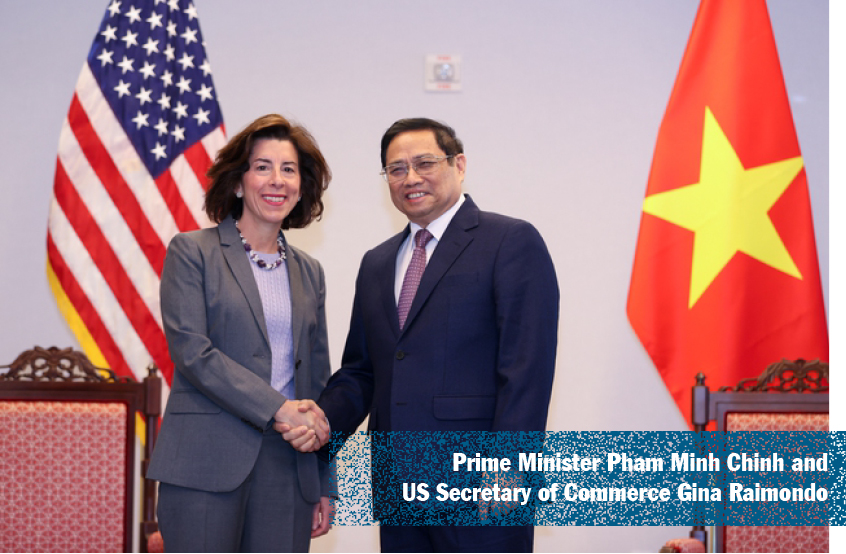
In the emerging semiconductor industry, the US is willing to provide policy support to Vietnam as American companies increase their presence in the country.
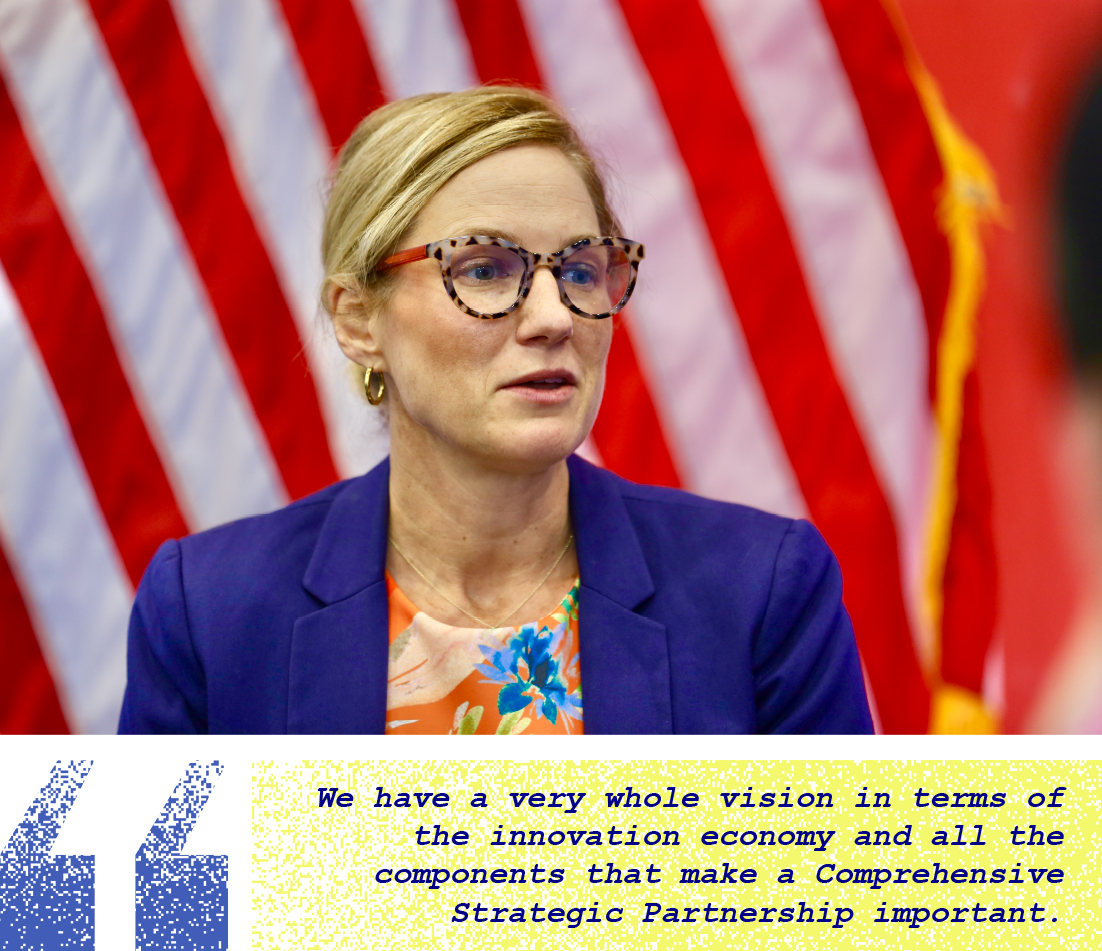
Lynne Gadkowski, Economic Counselor at the US Embassy in Hanoi, commented in a recent interview with The Hanoi Times.
It was a very exciting and historic visit by President Biden. It was about looking back and looking ahead. The Comprehensive Strategic Partnership (CSP) for all of us is a range of topics. It's cooperation on education, clean energy, science, and technology to create an innovative economy and move Vietnam up in the supply chain. The US is now a comprehensive strategic partner in supporting these goals of Vietnam.
Part of the message we are delivering today is that semiconductors are critical. We learned during Covid-19 that there's a challenge with global supply. But a whole element of the Vietnamese economy is not about semiconductors.
I also really want to stress the importance of the investment climate in Vietnam. Besides attractive components like land, incentives, and skilled laborers, another critically important element is access to green tech, green and clean energy.
I was in Ho Chi Minh City last October and went to see a manufacturing facility that does medical devices and aeronautics. In this company or facility we visited, they have rooftop solar that they've done themselves. It's 100% self-contained rooftop solar. So, that is a critical element for investors today. All companies these days focus on their triple bottom line or their environmental, social, and governance (ESG) goals.
This is something that the US, along with many other partners, is focused on. A lot of it is about clean energy and making sure that there is access to clean energy. That is something that we are proud of, that our American companies are leading the way, but they also have the Conference of the Parties (COP) commitments or energy commitments. And we want Vietnam to be an attractive destination for those parts.
I can just add two more points specifically on semiconductors. First, there was a very big announcement last month from Amkor, which is a $1.6 billion investment in Bac Ninh province. So it's really exciting to have a US company in the north. It can increase Vietnam's contribution to the global supply chain.
It's well-timed regarding an announcement following the President's visit, but it's been in the works for several years.
Second, we're in close contact with the ministries developing the Vietnam National Semiconductor Strategy. When that comes out, it's going to guide how Vietnam sees its future in this sector. So we're continuing to watch and provide input as requested by the private sector from some of our own research labs, research, and experience from the experts.
We have a very holistic vision of the innovation economy and all the components that make a comprehensive strategic partnership important. We also recognize that the semiconductor space is critical to your government, and we are pleased that our companies are here and doing their part, and that we were able to work together on the policy side as well.
Vietnam is already doing it. They already have mechanisms to facilitate commerce. I love going to places where you're going to pay with a QR code, you're going to transfer money that way.
That's already happening. Part of it is having safe, connected, secure connections and trusted networks. And that was another part of the broad strategic partnership conversation about making sure that when a Vietnamese citizen or a Vietnamese consumer connects to a network and connects to WiFi, it's safe and their data is secure and well managed. I think that was an exciting element of the CSP conversation.
Another element of that is looking at how we're working on things like AI and 5G. We're having those conversations, again, at the policy level with different stakeholders. With the private sector, we're excited that conversations and collaborations are happening because it's part of this broader, secure ecosystem to do not just commerce, but communications and education and digital transformation. It's critical.
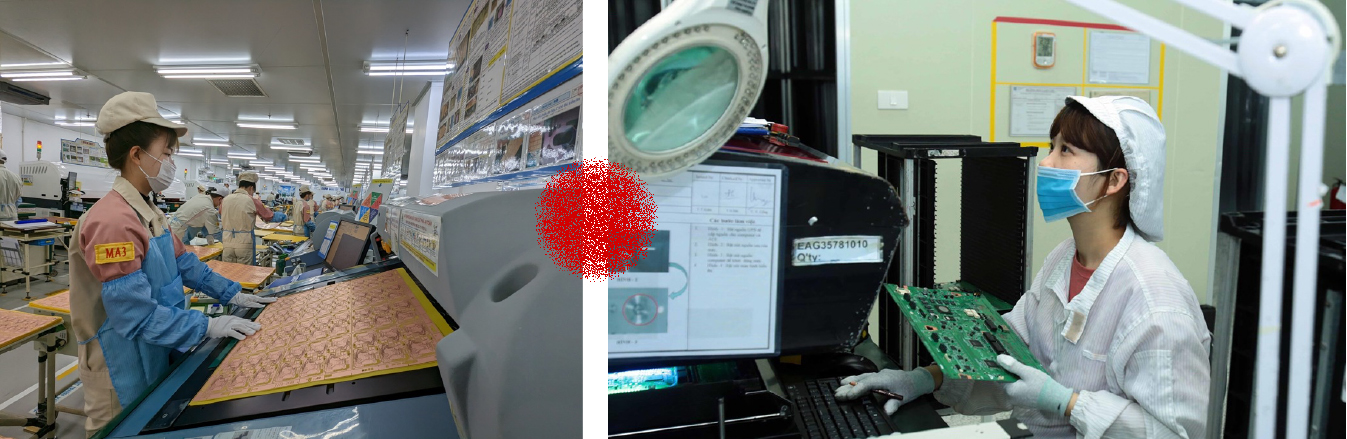
I'm going back to this visit in Ho Chi Minh City. The plant is growing 50% every year, but its workforce is only expanding by 15%. So their demand and workforce are still growing. But there's so much that's automated. And it's only going to shift at the same time. So I'm struck by the fact that these things are happening.
And in terms of diversification, as great as semiconductors are, again, there's a whole sea of ways that Vietnam can engage in the innovation economy, and you're doing that.
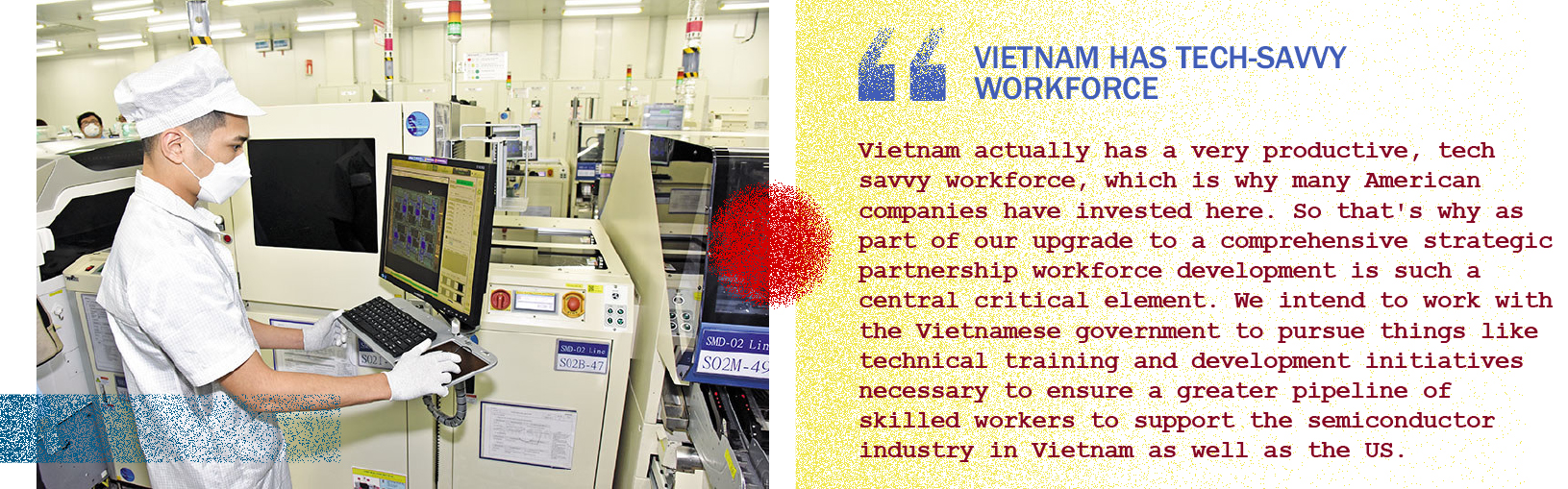
And finally is the pipeline of talent. Vietnam recognizes its own need for more engineers. It is a growth area. This is something that Vietnam is very aware of. And this is where the US hopes to partner with various initiatives around science, technology, engineering, and mathematics (STEM) education, and also higher education collaboration. It's part of this broader digital and innovation economy ecosystem that Vietnam is driving, and we're happy to partner with them as well.
Vietnam and the US are still discussing how to promote STEM education and cooperation. I also mentioned English language training for secondary and technical professionals. The US Agency for International Development (USAID) is working with the Ministry of Industry and Trade, the Ministry of Planning and Investment on digital economy policies.
The importance of labor practices is an element of the clean supply chain. And Vietnam and the United States have a bilateral labor dialogue where the labor ministries of both countries have an annual conversation about labor practices. This is important as companies look to a very competitive global marketplace where quality labor standards are implemented and enforced.
The vision of the Vietnamese government is solid, with a lot of political will and commitment, which is extremely important.
Now it's a matter of maintaining the momentum, which is a great signal of the beginning of a new chapter. We are focusing on how to sustain the commitment.
It's about planting the seed, having the fertile ground to plant the seed, and making it grow. So we are committed to doing that.
In addition, it is also necessary to ensure the investment climate. In the competitive semiconductor industry, many other markets have one-stop shops for different types of strategic investments and priority investments. So we hope that this is part of the vision for the NIC and some of these high-quality investments in Vietnam.
In general, Vietnam's position in this area is strong and the direction from the top is clear. It's a matter of execution and one final point is to make sure that it's not exclusive to where there's already quite a concentration of economic activity.