Malaysia turns down China’s South China Sea claims
With Malaysia's latest move, the rejection of China’s maritime claims in the resources-rich sea weighs on than ever before.
Malaysia has said China’s claims to maritime features in the South China Sea have “no basis under international law.”
| Syed Mohamad Hasrin bin Tengku Hussin, Permanent Representative of Malaysia to the United Nations. Photo: Malaysia’s Ministry of Foreign Affairs |

Malaysia has underscored its legal position on this sea in a note verbale sent on July 29 to the United Nations’ Secretary General António with reference to China’s Note Verbale CML/14/2019 dated December 12, 2019, saying “the government of Malaysia rejects in its entirety the content of the Note Verbale of the People’s Republic of China.”
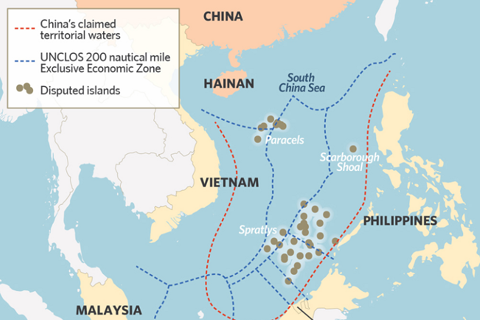
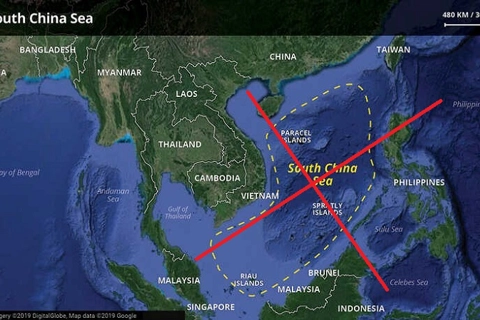
“The Government of Malaysia rejects China’s claims to historic rights, or other sovereign rights or jurisdiction, with respect to the maritime areas of the South China Sea encompassed by the relevant part of the ‘nine-dash line’ as they are contrary to the Convention (the United Nations Convention on the Law of the Sea 1982 – UNCLOS 1982) and without lawful effect to the extent that they exceed the geographic and substantive limits of China’s maritime entitlements under the Convention,” read the note verbale.
Shahriman Lockman, fellow at Institut Kajian Strategik dan Antarabangsa and fellow at Institute of Strategic and International Studies, Malaysia, has clarified the phrase China’s claims to maritime features in the South China Sea have “no basis under international law” that none of the rocks in the South China Sea belongs to China.
The New Straits Times cited Dr Mohd Hazmi Mohd Rusli from the Royal Malaysian Navy Volunteer Reserve, as saying that international law dictates that a nation must be a persistent objector in objecting practices of other states it is not in agreement with.
He went on to say that remaining silent is not an option, noting that objection has to be done persistently, continuously, and constantly as reaffirmed by Malaysia’s Foreign Minister Datuk Seri Hishammuddin Hussein through a report in Berita Harian on July 16.
Therefore, China and other claimant states – all of which are state-parties to the UNCLOS – must act in accordance with what is allowed by the convention in pushing forward the consultation on the Code of Conduct to further safeguard peace and stability of the South China Sea, Dr Mohd Hazmi Mohd Rusli emphasized.
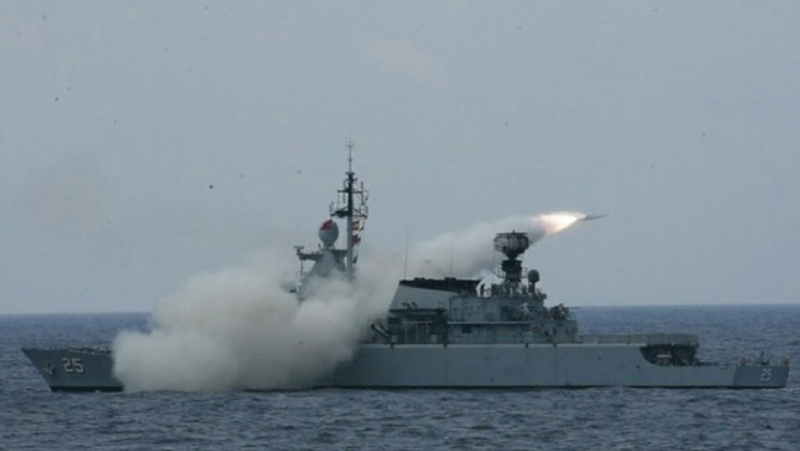
An Exocet missile is fired from a Malaysian ship during military training in the South China Sea, July 16, 2019. Photo: Royal Malaysian Navy |
“Lawfare” chorus
Earlier on July 23, in a note verbale to the UN, Australia rejected any China’s maritime claims that are inconsistent with the UNCLOS 1982 and Chinese claims to ‘historic rights’ or ‘maritime rights and interests’ in the South China Sea.
Australia said it does not accept China’s assertion in its note of April 17, 2020 that its sovereignty claims over the Paracel Islands and the Spratly Islands are "widely recognized by the international community."
There is no legal basis for China to draw straight baselines connecting the outermost points of maritime features or ‘island groups’ in the South China Sea, including around the ‘Four Sha’ or ‘continental’ or ‘outlying’ archipelagos, according to Permanent Mission of the Commonwealth of Australia to the UN.
Australia has been the second nation without South China Sea boundaries to turn down China's unlawful claims.
On June 1, US Representative to the UN Kelly Craft said in a letter sent to the UN secretary general that the US “rejects these maritime claims as inconsistent with international law as reflected in the 1982 Law of the Sea Convention.”
Washington sent the letter regarding Note Verbale No. CML/14/2019 sent by the Permanent Mission of the People’s Republic of China on December 12, 2019 in response to the submission by Malaysia to the Commission on the Limits of the Continental Shelf (CLCS) dated December 12, 2019.
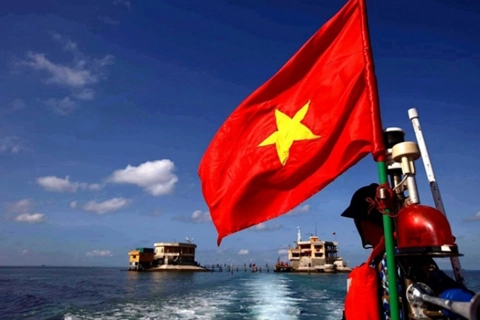
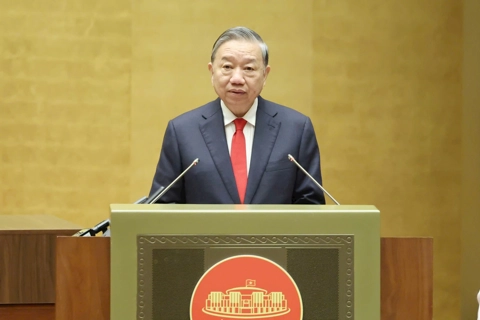
On March 30, Vietnam sent a dispatch turning down China’s claims on the South China Sea, saying China’s claims go beyond the UNCLOS 1982 and infringe on the UNCLOS-based rights of the other claimants.
Hanoi has said that the UNCLOS is the sole source for rights over waters.