Nurturing green growth: IFAD’s partnership for Vietnam’s sustainable agriculture
IFAD and Vietnam are combining global expertise with local innovation to create a greener and more prosperous future.
THE HANOI TIMES — The International Fund for Agricultural Development (IFAD) has once again affirmed its mission to strengthen partnerships for innovative solution-based rural development in Vietnam, as it has been supporting the country over the past three decades.
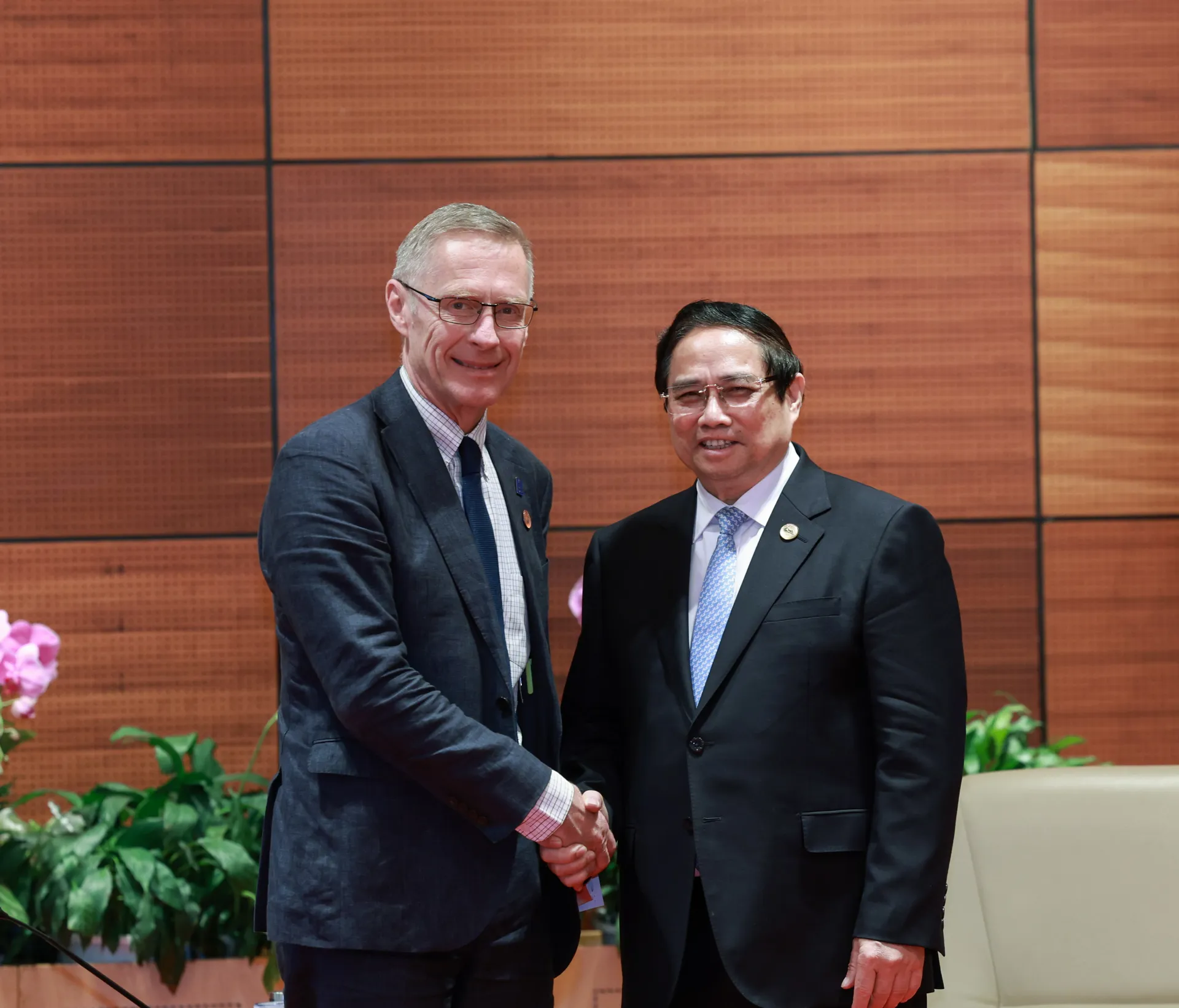
Donal Brown, Associate Vice-President of the International Fund for Agricultural Development (IFAD), at a meeting with Vietnam's Prime Minister Pham Minh Chinh in Hanoi on April 17. Photos: Hoang Pham/The Hanoi Times
Accordingly, the transformative potential of agricultural innovation took center stage during the visit to Vietnam this week, paid by Donal Brown, Associate Vice-President of IFAD.
In his four-day visit to Vietnam, Brown engaged in a high-level meeting with Prime Minister Pham Minh Chinh on April 17 to discuss mutual goals for sustainable and inclusive rural development.
“Vietnam is a trailblazer in using innovation to overcome agricultural challenges,” Brown said at the meeting with the PM. He stressed the importance of scaling successful initiatives to equip smallholder farmers with the resilience, technology, and market access necessary to thrive in an evolving agricultural landscape.
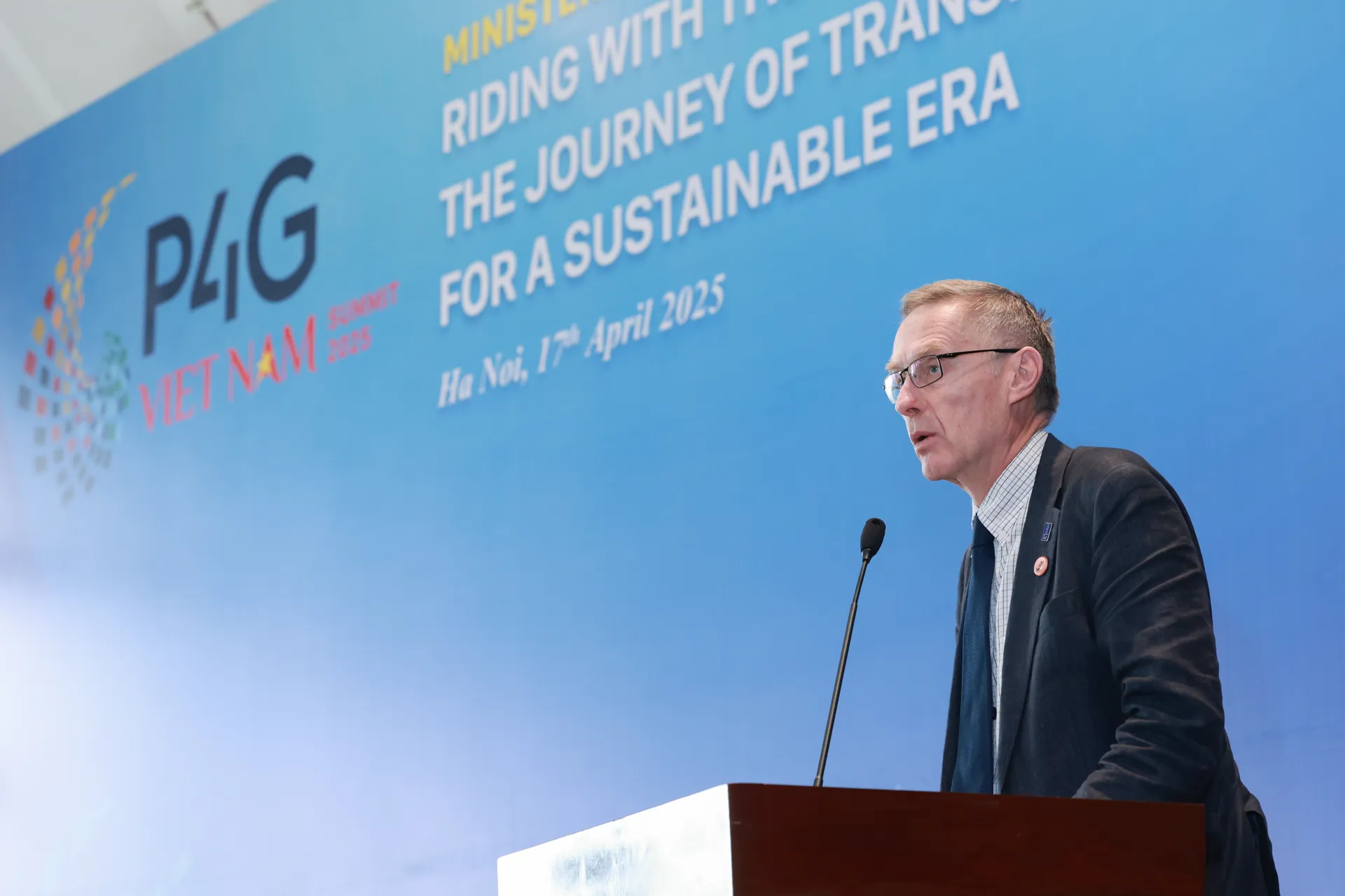
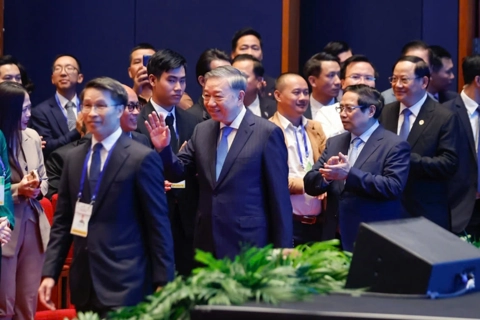
Donal Brown at the P4G Summit in Hanoi on April 17.
During the visit, Brown participated in the 2025 P4G Hanoi Summit themed “Global Partnership for an Inclusive, Sustainable, Innovative, and Human-Centric Green Transition,” which took place on April 16-17 and convened global leaders to address urgent climate and development challenges through collaborative innovation.
Brown was a key speaker at a ministerial panel discussion on the “Green Revolution 4.0” on April 17, when he emphasized the critical need for strategic investments to combat global food insecurity and climate change.
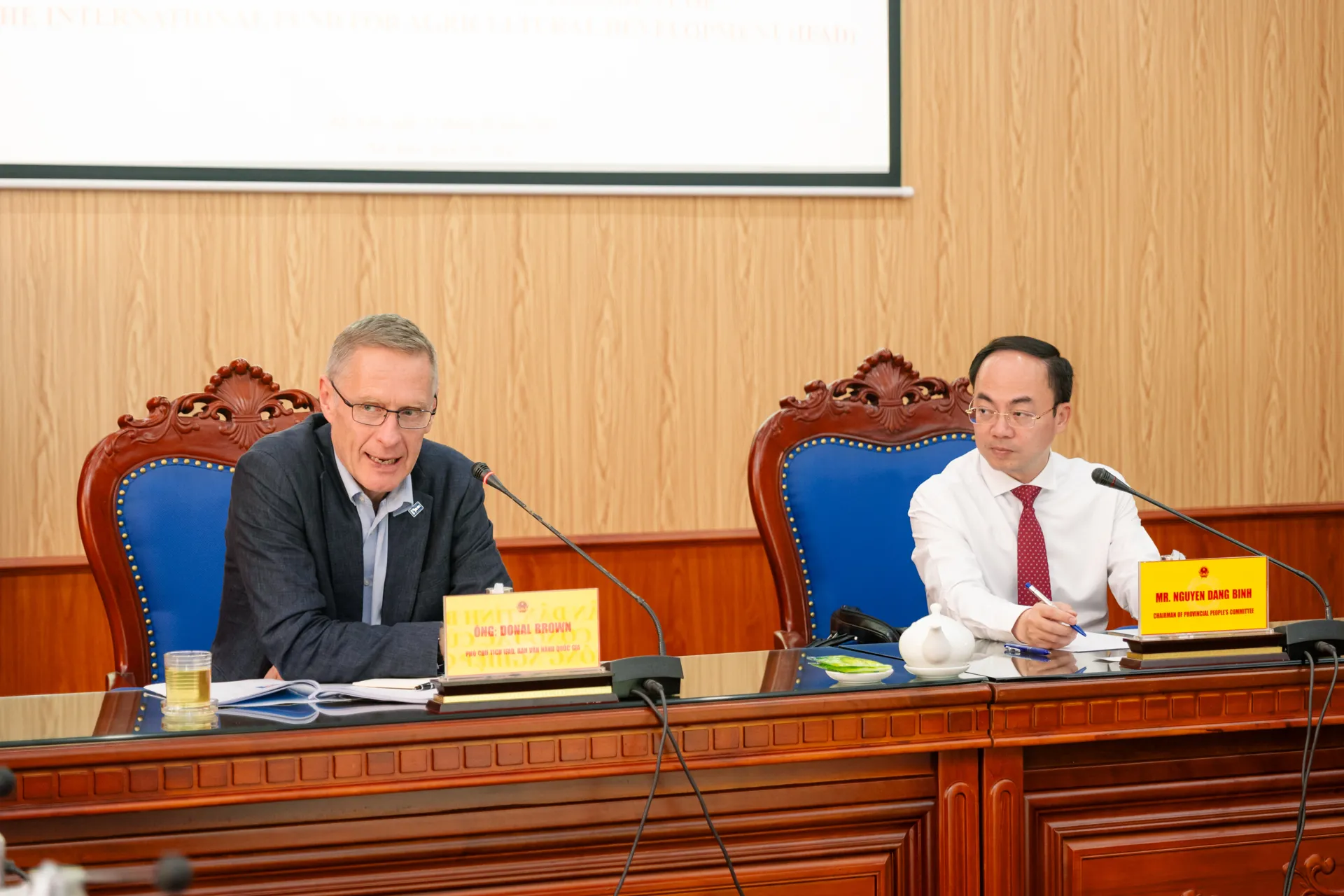
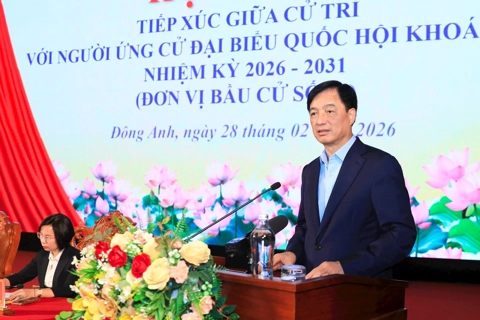
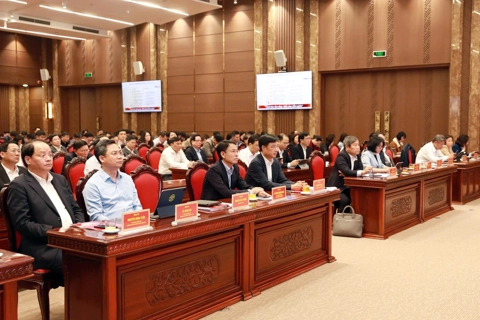
Donal Brown at the meeting with Nguyen Dang Binh, Chairman of the Bac Kan People's Committee.
“The Green Revolution 4.0 is not just about technology, it’s about transformation,” he told The Hanoi Times. Brown highlighted the importance of connecting farmers to practical solutions, such as drought-resistant crops and smart irrigation systems, and the need for inclusive, accessible innovation in Vietnam to ensure no one is left behind.
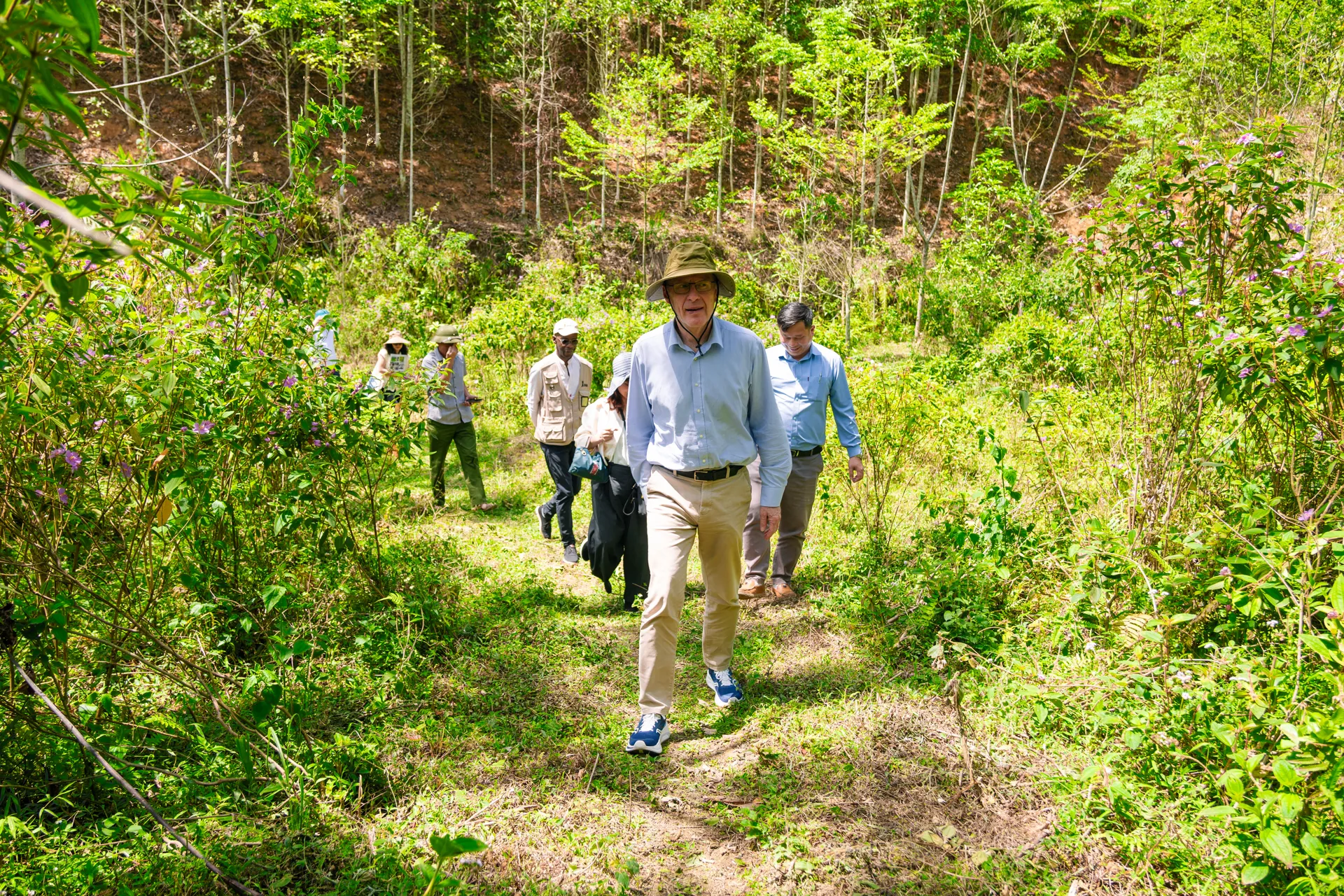
Donal Brown visits medicinal herb farming cultivated under the forest canopy in Ba Be District, Bac Kan.
As part of his visit, Brown traveled to the northern province of Bac Kan to observe IFAD’s work in action. At the Vietnam Misaki Company in Cho Moi District, he witnessed firsthand how smallholder farmers are adopting innovative practices to enhance livelihoods and build climate resilience.
These models are helping farmers establish sustainable value chains, enabling them to access markets and improve productivity while preserving natural resources.
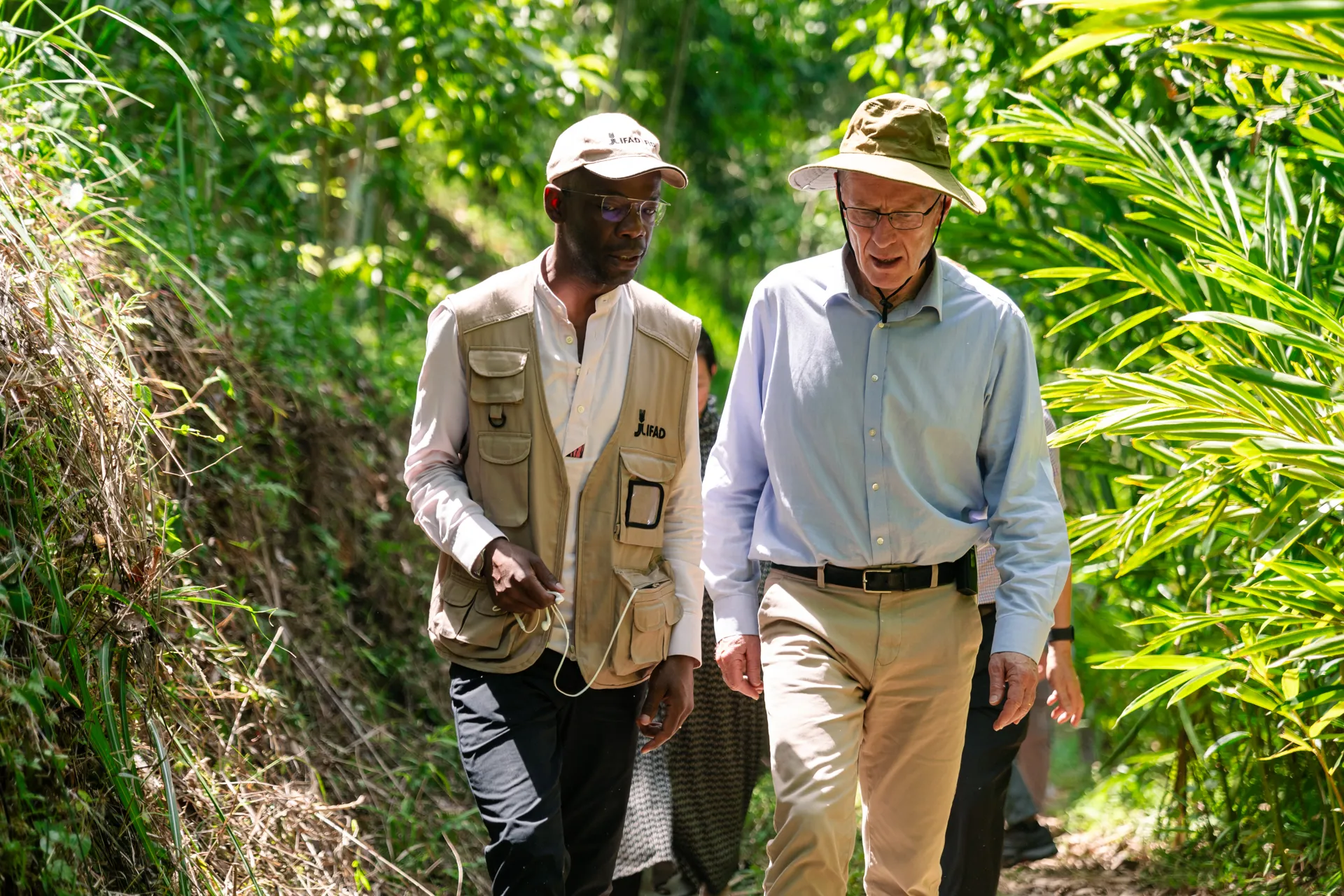
IFAD Associate Vice-President Donal Brown and IFAD Vietnam Country Director & Head of Mekong Multi-Country Office Ambrosio N. Barros in the trip to Bac Kan.
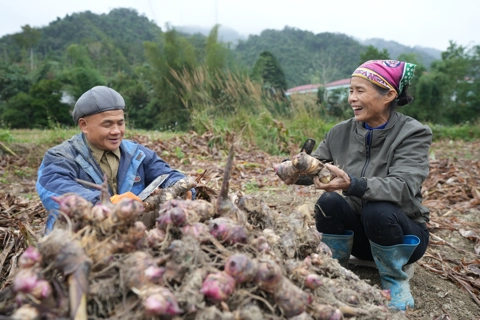
In addition, Brown visited a model project in My Phuong Commune, Ba Be District, where medicinal herbs are cultivated under the forest canopy. This approach, implemented by the Ta Anh Cooperative, showcases how sustainable land use and innovative agricultural practices can improve local livelihoods.
The project features the cultivation of Purple Cardamom and integrates traditional knowledge with modern economic development strategies. The model, established in 2020, has already begun to make a significant impact in the region by promoting reforestation and providing an alternative income source for local communities.
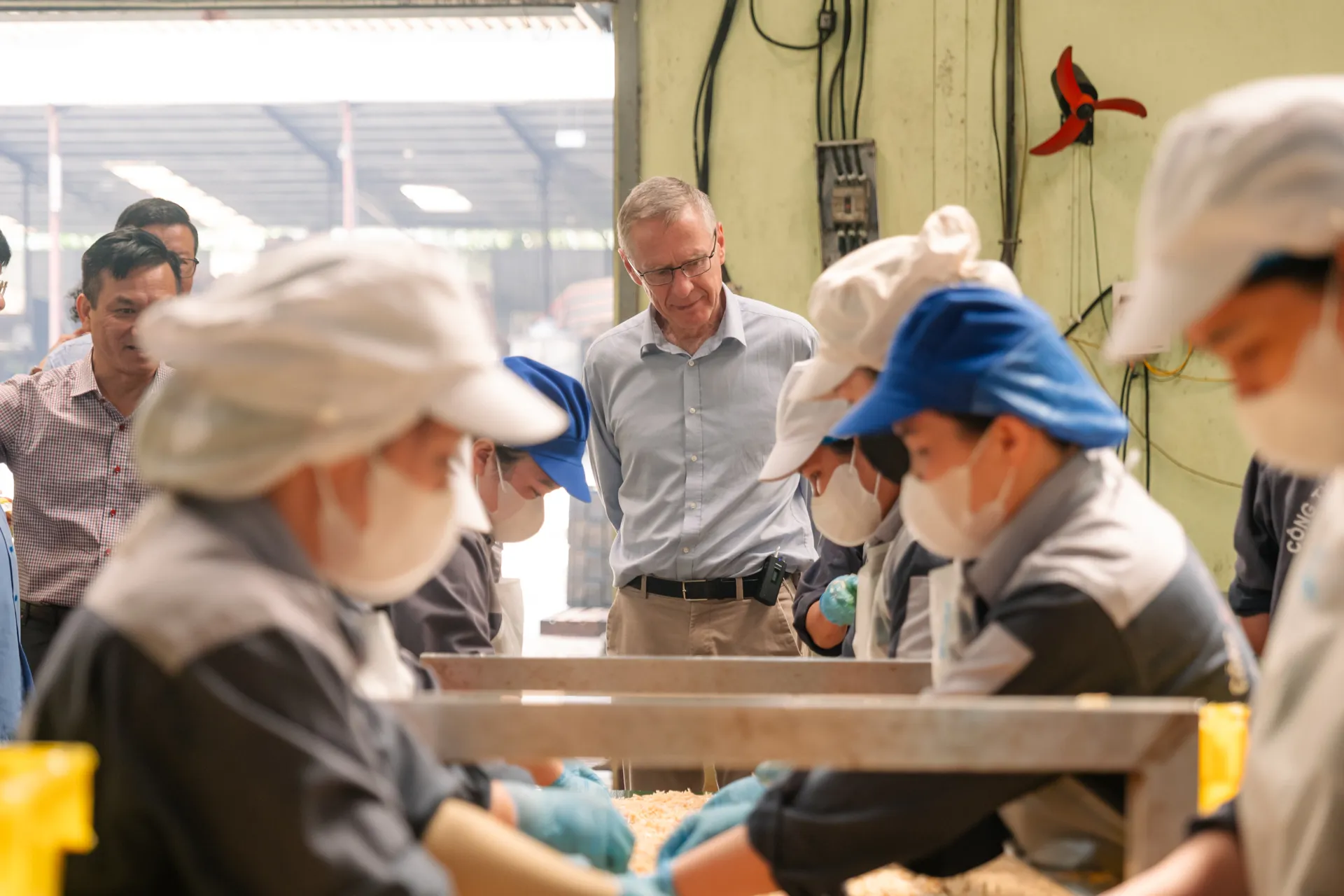
Donal Brown witnesses how smallholder farmers are adopting innovative practices to enhance livelihoods in Bac Kan.
During the four-day trip, Brown reiterated IFAD’s strengthened partnership with Vietnam following over three decades that resulting in improving rural livelihoods and reducing poverty in many parts of Vietnam and remarkably benefiting more than 800,000 rural individuals.
He said IFAD-supported projects empower farmers to adopt sustainable practices and expand their market access, especially the inclusion of women and youth, ensuring vulnerable populations play a central role in Vietnam’s sustainable development efforts.
Brown’s visit reaffirmed IFAD’s strong commitment to fostering innovative agricultural solutions that drive economic growth while ensuring food security and environmental sustainability.
Through empowering farmers and investing in cutting-edge technologies, IFAD envisions a resilient future that uplifts communities across Vietnam, Brown affirmed with The Hanoi Times.
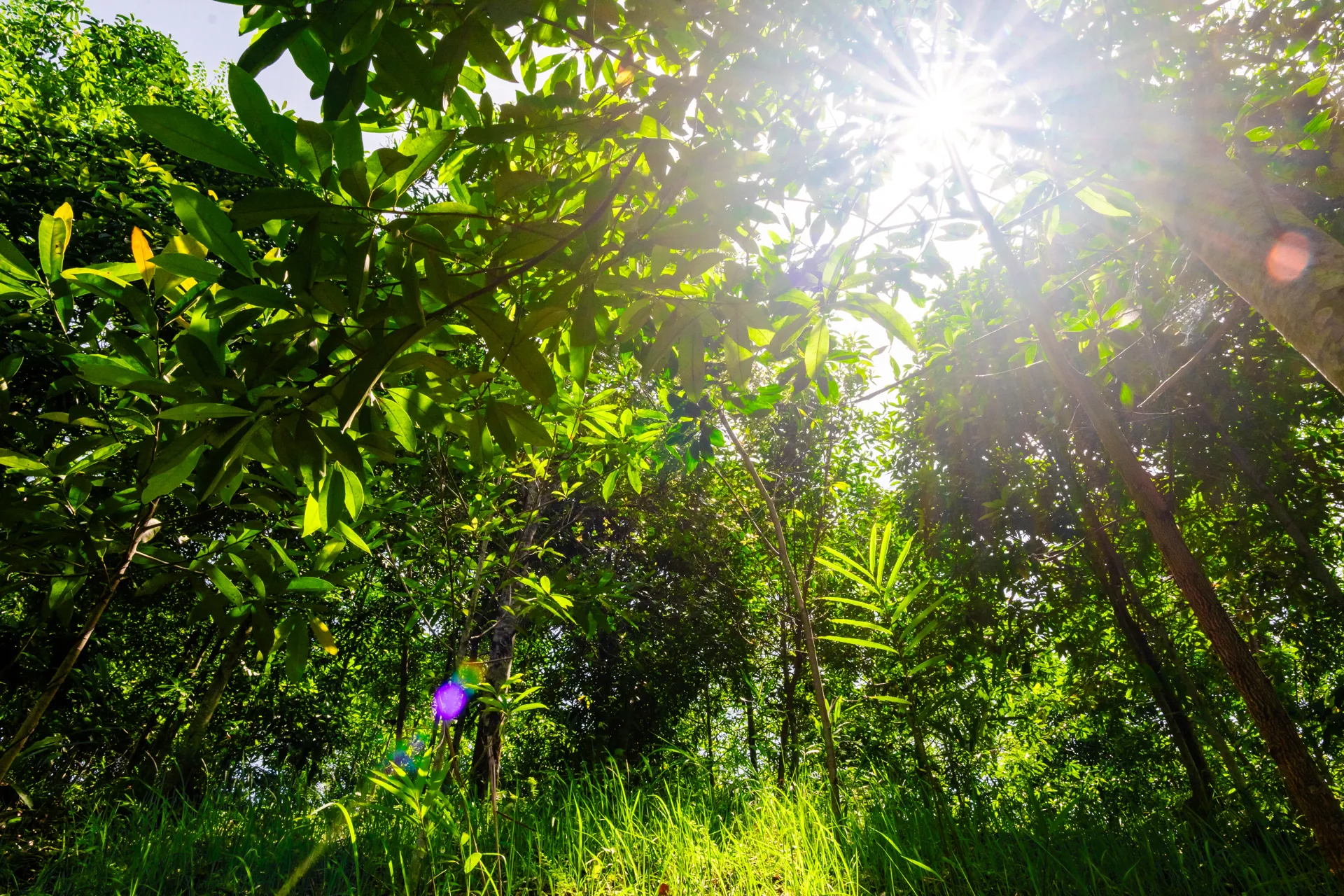
IFAD's support over the three decades helps Vietnam move toward a greener growth path.
By bringing together global expertise and local ingenuity, IFAD and Vietnam are paving the way for transformative change, fostering a greener, more prosperous future for generations to come, he emphasized.
The International Fund for Agricultural Development (IFAD), established in 1977 and based in Rome, Italy, is a specialized agency of the United Nations and an international financial institution dedicated to providing loans for agricultural development, supporting farmers, and promoting food security. Vietnam has been a member of IFAD since its inception in 1977.