Vietnam endorses multilateralism and attaches importance to the role of multilateral organizations, especially the United Nations, in contributing to global governance and addressing common global challenges.
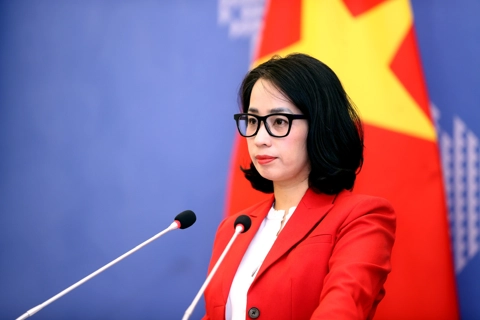
THE HANOI TIMES — Vietnam upholds multilateralism and the role of multilateral institutions in promoting global governance and resolving common global issues based on the UN Charter and international law, Spokesperson Pham Thu Hang of the Ministry of Foreign Affairs said.
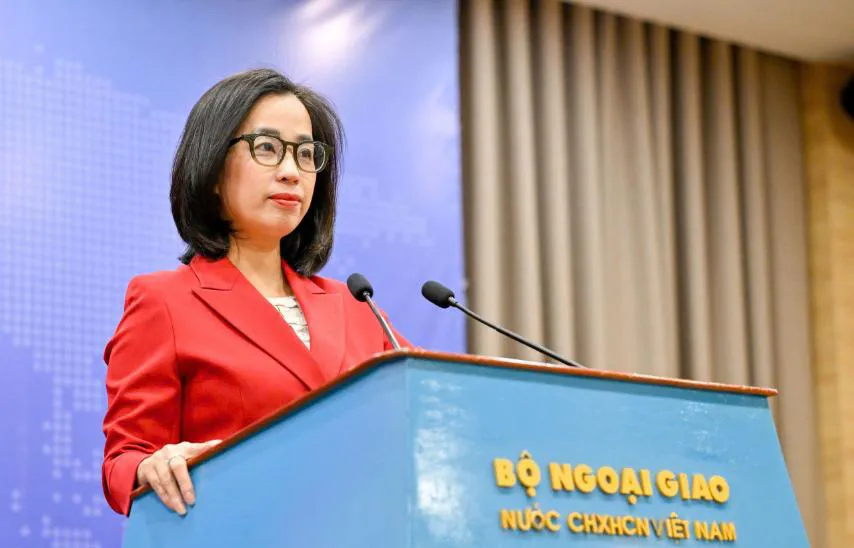
Spokesperson Pham Thu Hang of the Ministry of Foreign Affairs at the Ministry's monthly press briefing on January 8. Photo: MoFA
She made the remarks on January 8 at the ministry’s monthly press briefing in response to questions about Vietnam’s stance on the United States’ recent withdrawal from 66 international organizations, including several United Nations bodies.
“Vietnam expects countries to continue upholding multilateralism and to contribute to building and strengthening multilateral institutions and international law in the interests of peace, stability, cooperation and sustainable development,” Hang said.
She added that Vietnam stands ready to participate in and contribute to global and regional multilateral mechanisms to the best of its ability.
The US State Department on January 8 released a list of 66 organizations from which the United States has withdrawn. The list includes the UN Framework Convention on Climate Change, the International Atomic Energy Agency, the International Law Commission and the UN Democracy Fund.
According to a State Department statement, the administration of Donald Trump views these institutions as “redundant in scope, mismanaged, unnecessary, wasteful, poorly run, captured by the interests of actors advancing their own agendas contrary to US interests, or a threat to the nation’s sovereignty, freedoms and prosperity."
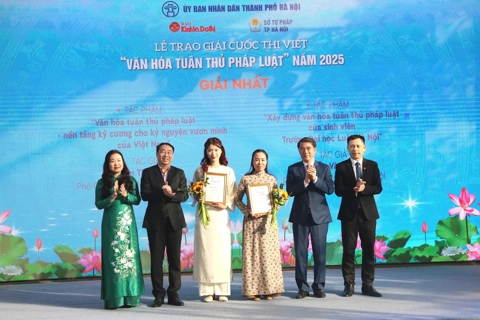
With contributions ranging from schoolchildren to senior citizens, “The Culture of Law Compliance 2025” writing contest has grown into a nationwide civic conversation on how respect for the law takes root in daily life across Vietnam.
Partner status positions Vietnam as a bridge between Southeast Asia and the Global South, amplifying its voice in shaping a multipolar world order rooted in law and equity.
Being an integral part of Vietnam’s overall development, migrant women should be equipped with digital skills to thrive in the future workforce while being protected from cyber violence.
The candidates pledge institutional reform, infrastructure upgrades and a stronger focus on science, technology and public services as the capital prepares for the 16th National Assembly term.
As climate risks intensify across Southeast Asia, young people are being called upon to move from awareness to action, harnessing technology, creativity and policy engagement to accelerate environmental solutions.
The three resolutions on education, healthcare reform and cultural development are closely interconnected and mutually reinforcing, all directed toward building a capital that is cultured, civilized, modern and happy.
Developing the state economy and Vietnamese culture forms the twin pillars of a unified development strategy, one strengthening material capacity, the other reinforcing cultural and social resilience.
A central message of the 14th National Party Congress and the 18th Congress of the Hanoi Party Organization (2025-2030) is that people’s happiness must be at the core of development. All policies be grounded in citizens’ legitimate rights and interests, with public satisfaction serving as the ultimate measure of success.
Vietnam has reaffirmed its strong commitment to meeting international standards on tax transparency and information exchange following the European Union's adding Vietnam to its list of non-cooperative tax jurisdictions.
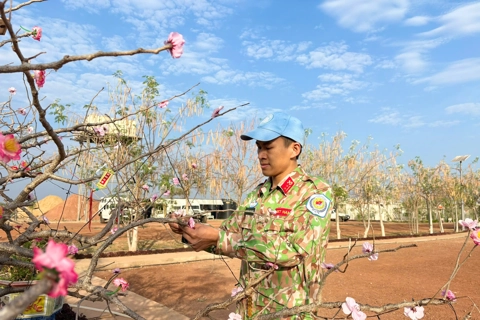
Under the dry winds and red dust of Abyei and Bentiu, mission compounds glow with paper blossoms and steaming banh chung, as each square rice cake carries from Vietnam to Africa a message of solidarity, compassion and enduring cultural identity.