Log in
Econ

One oil-fired power plant in Vietnam upgraded into LNG-fueled generator

The upgrade will help cut the CO2 emissions almost in half for each kilowatt hour produced on-site.

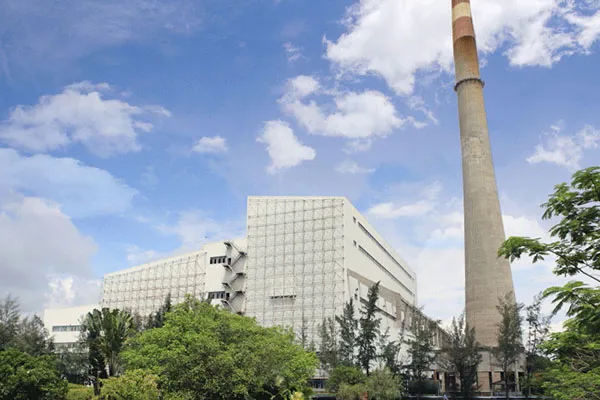
The Hiep Phuoc 1 steam power plant in Ho Chi Minh City will be upgraded into a combined cycle power plant fired with liquefied natural gas (LNG) instead of the oil that has been used to date, with equipment provided by Siemens.

 The Hiep Phuoc 1 steam power plant. Photo: cscec-sea.com


This project will increase the plant’s generation capacity by roughly 780 megawatts (MW) to approximately 1,200 MW, Siemens said in a statement, without specifying the cost of the equipment.

By changing the fuel, deploying modern F-class gas turbines from Siemens, and using the waste heat from the gas turbines to produce electricity, the CO2 emissions can be cut almost in half for each kilowatt hour produced on-site.

The scope of supply from Siemens includes three SGT5-4000F gas turbines, three generators, three heat recovery steam generators, related electrical equipment and the SPPA-T3000 control system.

Once the power plant has been upgraded, the waste heat from the gas turbines will be used to generate steam. The steam obtained will be used to drive the existing steam turbines and generators for electricity production.

Recommissioning of the upgraded plant is scheduled for second half of 2022. To meet the current electricity demand in Vietnam, Hiep Phuoc Power Co. Ltd. will be able to provide around 520 MW to the grid by mid-2021 through open cycle operation.

Besides Hiep Phuoc 1 plant, Siemens has supplied equipment for other combined cycle power plants in Vietnam such as the Phu My 2-1 and Phu My 3 extensions as well as the Ca Mau 1&2 and Nhon Trach 2 power plants.


Reactions:
Share:
Trending
Most Viewed
Related news
Real estate firms sell bonds worth $402 million in May

Real estate firms sell bonds worth $402 million in May

Real estate companies have raised $862 million from bond issuance in April and May, thanks to an improved business environment and better access to funding.

Vietnam unveils new strategies to boost domestic market, aid businesses

Vietnam unveils new strategies to boost domestic market, aid businesses

As global trade uncertainties grow, Vietnam sees the domestic market not only as a key consumption driver but also a “lifeline” for businesses hit by protectionist export barriers.

Vietnam eyes US tilapia export boost as global supply falls

Vietnam eyes US tilapia export boost as global supply falls

Vietnam aims to increase tilapia output to 400,000 tons by 2030, making it the second-largest freshwater export species after pangasius.

Vietnam’s enterprises must act fast to weather US tariff shock: Experts 

Vietnam’s enterprises must act fast to weather US tariff shock: Experts 

Many of the key Vietnamese exports, such as wood products, electronics, and textiles, that are not on the US exclusion list could face steep tariffs.

Vietnam's mobile money pilot program extended to end of 2025

Vietnam's mobile money pilot program extended to end of 2025

Mobile Money, launched by the Ministry of Science and Technology, differs from e-wallets by linking users’ payment accounts directly to mobile phone numbers.

Vietnam taps innovation, global ties to elevate national brand

Vietnam taps innovation, global ties to elevate national brand

Vietnam is intensifying efforts to enhance its national brand, leveraging innovation, global partnerships, and strategic policies to bolster its global competitiveness and market presence.

Vietnam extends US$3.9 billion loan package for agro-forestry-fisheries

Vietnam extends US$3.9 billion loan package for agro-forestry-fisheries

The government has expanded the scope and scale of the credit program for the sectors which brought about US$62.4 billion worth of exports in 2024.

Vietnamese public shows rising satisfaction in 2024 PAPI survey

Vietnamese public shows rising satisfaction in 2024 PAPI survey

The 2024 PAPI survey found increasing citizen satisfaction with governance, but highlighted persistent administrative challenges, climate vulnerability, and gaps in access to public services.