Opportunity for Hanoi to adopt sustainable urban development model
Ongoing shortcomings in current urban structures have been one of the main reasons for the transmission of the virus.
Hanoi is in the process of revising the master planning for the 2021-2030 period, with a vision to 2050, which offers the city an opportunity to turn to a more resilient and sustainable urban infrastructure model to better cope with future natural disasters and pandemics.
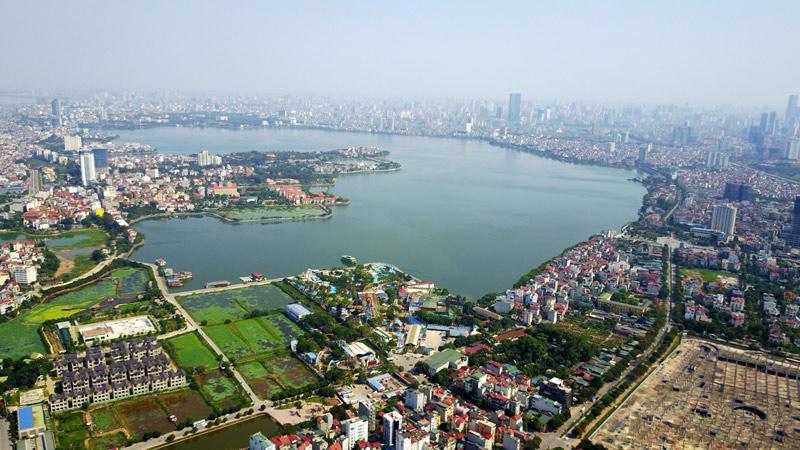
| Hanoi West Lake. Photo: Pham Hung |
Chief of Office of the Vietnam Association of Architects Pham Thanh Tung shared the view in an article written for The Hanoi Times.
According to Tung, the Covid-19 pandemic forced governments around the world to change their mindset and awareness on state governance and sustainable urban development, especially those in the poor and developing countries.
“The pandemic has brought to the surface weaknesses of thousands of cities around the world, including metropolises,” Tung said.
The rapid urbanization and chaotic city expansion in the poor and developing countries have caused severe consequences to societies, Tung added, referring to the disparity in land ownership between the people, real estate developers, and local authorities.
“People’s livelihoods are facing the threats from depleted natural resources, polluted environment, and degraded ecosystems, while public health has been negatively impacted by climate change, pandemic and urban development,” he continued.
In Vietnam, major urban cities such as Hanoi and Ho Chi Minh City are still struggling with the Covid-19 impacts that slow down economic growth and cause social instability.
“Many experts warn ongoing shortcomings in current urban structures have been one of the main reasons for the transmission of the virus,” he said.
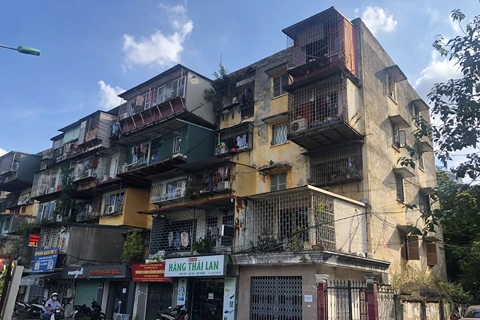
“A complicated network of narrow alleys of up to 1.5-2.5 meters wide which are inaccessible for ambulances or firetrucks. The dwellers there, mostly the poor, workers or immigrants, are living in old buildings with only a few meters of separation from each other and lack utilities. They are the most vulnerable to the pandemic,” Tung noted.
The case of the authorities in Hanoi having to relocate nearly 2,000 families in Thanh Xuan Trung Ward, Thanh Xuan District, one of the city’s most densely populated places, to avoid further infections or thousands of migrant workers leaving urban cities for their hometown due to increasingly difficult living environment are striking examples of such an issue.
New urban planning model for future
Recently, the 15-Minute City, an urban planning model developed by French-Colombian scientist Carlos Moreno has won the Obel Award for 2021.
The concept envisions a city in which citizens can access their daily necessities by foot or by bike within 15 minutes, creating a more sustainable human-centric urban environment.
The 15-Minute City, once seen as impractical by many urban planners since its first introduction in 2016, has now received public attention and become more feasible amid the pandemic.
In many developed countries, especially Europe, authorities are promoting the 15-Minute City as one of the recovery strategies. Paris is the first to adopt this ambitious concept, with an aim for every street in the French capital to have bicycle lanes, removing 70% of parking areas and instead dedicating these areas for parks and playgrounds.
Others such as Houston, Milan, Brussel, Valencia, and Melbourne are making a similar move, where people could find almost all of their daily needs within the walking distance, by bicycles or public transportation in 15-20 minutes.
Tung expected this would become an inevitable trend for major cities in the era of Industry 4.0, especially as this would help enhance their resilience against the Covid-19 pandemic that is disrupting socio-economic activities.
Given this context, Hanoi is taking a serious approach to studying the model of satellite city or “city within a city” as one of the key changes during the revised master planning for the 2021-2030 period.
Satellite cities such as Hoa Lac, Son Tay, Phu Xuyen, Soc Son, Xuan Mai, or those in close proximity of Red River such as Dong Anh, Gia Lam, would soon become green and smart cities that help ease the current overloading in downtown areas.
“In line with such efforts, investments in public infrastructure and urban railway networks connecting satellite cities and new residential areas would soon improve the situation in the whole areas,” he said.
| “It is the right time for the Government to look at a suitable urban planning model that is best equipped to protect people’s lives and socio-economic development against the pandemic.” |