Investment
Policy leverage to direct FDI capital in Vietnam's transport infrastructure
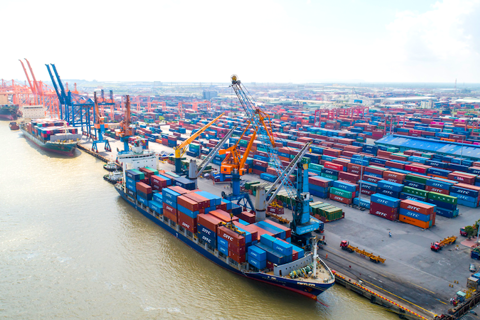
Effective regulations and incentives should be taken to lure FDI capital inflows into the country’s transport infrastructure as the sector is showing less attractive to foreign investors due to policy bottlenecks, experts said.
Vietnam is in dire needs of private investment, especially from foreign funds, to complete many important transport projects as the state cannot afford it.
Between now and 2020, the country expects to finish construction of about 654 kilometers out of 1,300 kilometers of highway.
It also considers the building of many new roads and hi-speed railways to get connected with ASEAN, Great Mekong Sub-region (GMS) and trans-Asia road systems, while paying attention to airport development, including the construction of Long Thanh International Airport with capacity of 100 million passengers and 5 million tons of cargo in the southern province of Dong Nai.
The Ministry of Transport (MoT) estimated that the total capital for developing the transport infrastructure in the country for 2018-2023 will be at roughly VND1,015 trillion (US$48 billion), of which more than VND300 trillion (US$13.21 billion) will come from the private sector.
However, foreign investments in transport infrastructure projects in road, railways, airports and inland waterways sectors, especially road, are very modest despite great interest from foreign investors. Currently, all investment capital in road projects comes from the state and domestic firms.
According to the MoT, FDI into road development goes through three different models, including BOT (Build-Operate-Transfer) and PPP (Public-Private-Partnership) projects where foreign investors contribute capital and directly manage and exploit the completed project; where they hold the right to exploit the routes; or where they buyout domestic enterprises to replace them in the project.
Under these three formats, road infrastructure projects in Vietnam had come to the attention of foreign investors. For example, Nexco (Japan) proposed a BOT component project of Phap Van-Cau Gie Expressway, while Infrastructure Leasing & Financial Services Limited (IL&FS) from India wanted to buy 70 percent of the Hanoi-Haiphong Expressway BOT project and Vinci (France) offered to buy the rights to collect tolls on Cau Gie-Ninh Binh Expressway. However, up to now, none of these projects have been awarded a contract due to policy bottlenecks.
Guaranteed policies needed
According to experts, transport infrastructure projects require large capital, long time to breakeven, while the country has no streamlined legal system and incentive policies for the sector, which has discouraged foreign investors from joining the sector despite their great interest.
Nagai Katsuro, deputy ambassador of Japan to Vietnam, admitted despite keen interest in traffic infrastructure development projects in Vietnam, Japanese investors are unlikely to participate in PPP projects without minimum revenue guarantees.
At present, PPP investment is regulated by Decree No.15/2015/ND-CP and Decree No.30/2015/ND-CP. However, the decree doesn’t mention to guaranteed policies, such as the risk-sharing mechanism, exchange rates and revenue guarantees, which are considered the most concerns of foreign investors.
According to experts, besides forming a state support fund and ensuring transparency, a new PPP investment law with a risk-sharing mechanism will be the keys to open up FDI flows into the transport sector.
The bottlenecks must be solved to enhance FDI flows to large-scale infrastructure projects, such as the US$5 billion North-South Highway project, the first stage of the US$5.45 billion Long Thanh International Airport project, and the US$58 billion North-South high-speed railway, they said.
Deputy Minister of Transport Nguyen Ngoc Dong said that Vietnam is continuously improving the law on PPP investments to enable to create favorable conditions for foreign investors as the government is calling for their investment in the country’s transport projects under the PPP model.

Vietnam needs US$48 billion to develop transport system from now to 2023
|
It also considers the building of many new roads and hi-speed railways to get connected with ASEAN, Great Mekong Sub-region (GMS) and trans-Asia road systems, while paying attention to airport development, including the construction of Long Thanh International Airport with capacity of 100 million passengers and 5 million tons of cargo in the southern province of Dong Nai.
The Ministry of Transport (MoT) estimated that the total capital for developing the transport infrastructure in the country for 2018-2023 will be at roughly VND1,015 trillion (US$48 billion), of which more than VND300 trillion (US$13.21 billion) will come from the private sector.
However, foreign investments in transport infrastructure projects in road, railways, airports and inland waterways sectors, especially road, are very modest despite great interest from foreign investors. Currently, all investment capital in road projects comes from the state and domestic firms.
According to the MoT, FDI into road development goes through three different models, including BOT (Build-Operate-Transfer) and PPP (Public-Private-Partnership) projects where foreign investors contribute capital and directly manage and exploit the completed project; where they hold the right to exploit the routes; or where they buyout domestic enterprises to replace them in the project.
Under these three formats, road infrastructure projects in Vietnam had come to the attention of foreign investors. For example, Nexco (Japan) proposed a BOT component project of Phap Van-Cau Gie Expressway, while Infrastructure Leasing & Financial Services Limited (IL&FS) from India wanted to buy 70 percent of the Hanoi-Haiphong Expressway BOT project and Vinci (France) offered to buy the rights to collect tolls on Cau Gie-Ninh Binh Expressway. However, up to now, none of these projects have been awarded a contract due to policy bottlenecks.
Guaranteed policies needed
According to experts, transport infrastructure projects require large capital, long time to breakeven, while the country has no streamlined legal system and incentive policies for the sector, which has discouraged foreign investors from joining the sector despite their great interest.
Nagai Katsuro, deputy ambassador of Japan to Vietnam, admitted despite keen interest in traffic infrastructure development projects in Vietnam, Japanese investors are unlikely to participate in PPP projects without minimum revenue guarantees.
At present, PPP investment is regulated by Decree No.15/2015/ND-CP and Decree No.30/2015/ND-CP. However, the decree doesn’t mention to guaranteed policies, such as the risk-sharing mechanism, exchange rates and revenue guarantees, which are considered the most concerns of foreign investors.
According to experts, besides forming a state support fund and ensuring transparency, a new PPP investment law with a risk-sharing mechanism will be the keys to open up FDI flows into the transport sector.
The bottlenecks must be solved to enhance FDI flows to large-scale infrastructure projects, such as the US$5 billion North-South Highway project, the first stage of the US$5.45 billion Long Thanh International Airport project, and the US$58 billion North-South high-speed railway, they said.
Deputy Minister of Transport Nguyen Ngoc Dong said that Vietnam is continuously improving the law on PPP investments to enable to create favorable conditions for foreign investors as the government is calling for their investment in the country’s transport projects under the PPP model.