Red River’s alluvial islet: New green lung
The rapid urbanization in Hanoi has significantly reduced the amount of living space available, leaving residents with fewer recreational areas, particularly in the inner city core.
Many believe that, once the Red River zoning plan is approved, the alluvial islet will become the city's new green lung, effectively addressing the issue of insufficient green space.
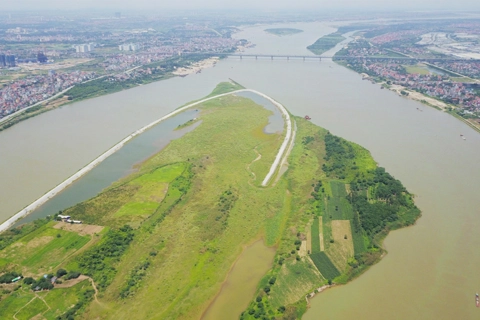
| The alluvial islet. Photo: Hai Linh/The Hanoi Times |
Untapped potential
According to statistics, the area of the Red River's alluvial islet spans approximately 329 hectares across four districts: Hoan Kiem, Ba Dinh, Tay Ho, and Long Bien. However, the harsh reality is that much of this land remains unused, leading to various issues, including breaches of dike regulations and significant landscape and environmental hygiene problems due to inadequate management.
Moreover, most of the islet lies on the borders of several districts, making it challenging to delineate boundaries on the ground. The management of land and construction in this area has not received adequate attention or a consistent approach, resulting in violations of land use and construction orders.
Architect Nguyen Toan Thang, the Head of the Hoan Kiem District Urban Management, emphasized that alongside these existing issues, there has long been a collective ambition to maximize the value of the Red River islet’s space and landscape.
“In the past, this goal faced legal hurdles, particularly concerning dike laws. However, with the recent approval of the Red River zoning plan by the Hanoi People's Committee, there are now favorable conditions for developing the river into a vital urban landscape axis, especially the alluvial islet area, aiming to create green spaces right in the heart of the city,” Thang said.
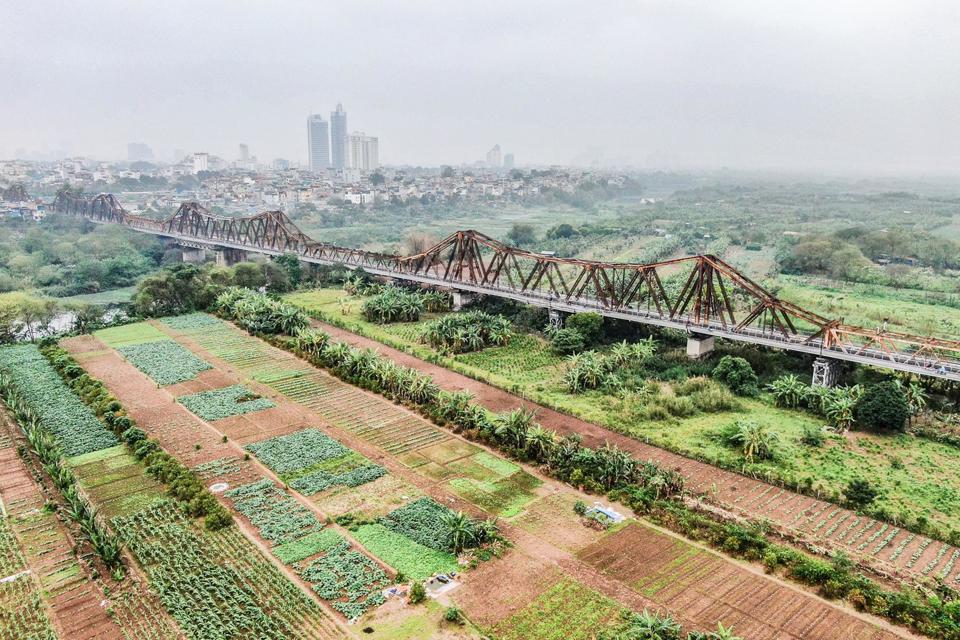
He added that the most significant portion of the alluvial islet lies beneath the Long Bien Bridge, primarily within the Hoan Kiem administrative boundaries, offering a vast green space of around 23 hectares. In recent years, the water level of the Red River has rarely risen, and the area of the alluvial islet has remained largely unchanged.
Upstream, various hydropower projects have diminished the river’s flooding, and even during the rainy season, the alluvial islet has been transformed into farmland and spontaneous recreational areas for many Hanoi residents. This highlights the great potential and the vast opportunities of the Red River islet, which deserve attention and development, he said.
“The alluvial islet is a precious gift of land from nature to Hanoi. It is also the last remaining space in Hoan Kiem District, along with Ba Dinh, Tay Ho, and Long Bien, that can be developed into an attractive public green and ecological area,” Thang stated.
He also noted that Hoan Kiem District is working with Ba Dinh, Tay Ho, and Long Bien to gradually establish a plan to effectively utilize the alluvial islet’s land resources, which is in line with its potential and advantages.
Thang said this will enhance the landscape, contribute to socio-economic development, and ensure national security while implementing the Red River zoning plan approved by the Hanoi People's Committee.
“The focus will be on enhancing green models such as parks, specialized green areas, and high-quality urban agriculture, along with tourism and recreational activities. This aligns with the socio-economic development goals of each locality,” he continued.
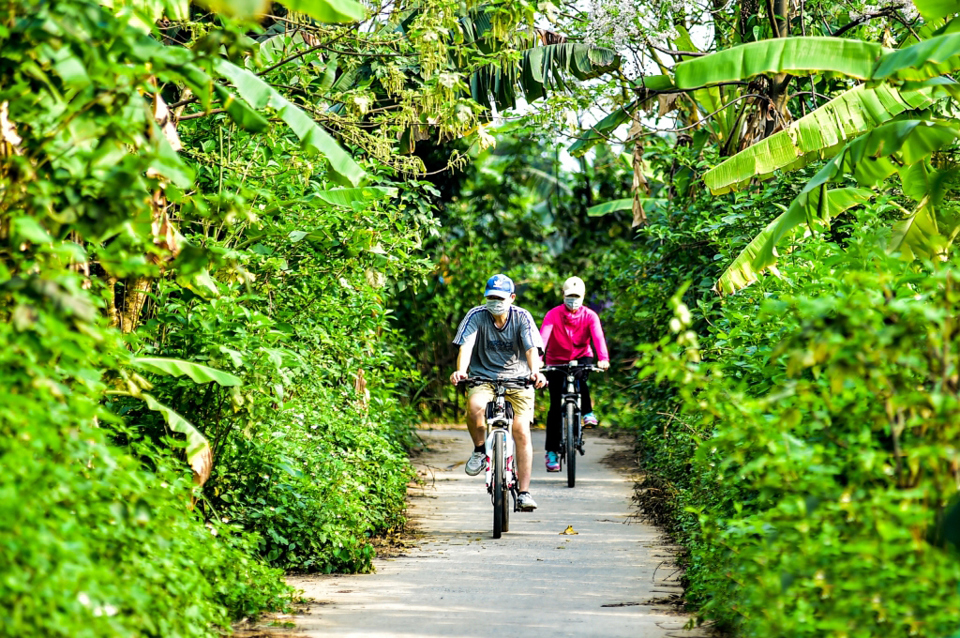
| Tourists explore the alluvial islet by bike. Photo: Pham Hung/The Hanoi Times |
Strong public support
The plan aims to create green spaces, including urban parks, theme parks, and flood parks, by utilizing the landscapes along the banks of the Red River based on natural conditions, topography, and current land use. The riverbanks and the river itself are mostly unstable areas, making them suitable for ecological spaces and natural restoration.
In certain areas adjacent to the historic inner city, plans will involve solid embankments to facilitate cultural public spaces close to the water. Additionally, the landscape organization will incorporate greenery, water features, and urban amenities based on principles of natural restoration, creating natural parks, urban parks, and extensive public spaces. A portion of the agricultural space will become parks, integrating urban agriculture with outdoor tourism activities to increase usage efficiency.
Tran Thi Thanh, from 24 Bach Dang Alley, Chuong Duong Ward, expressed that the plan to transform the entire alluvial river islet area into an urban park and green ecological park has received widespread support from the community.
“We are excited about how the implementation of this plan will dramatically change the urban landscape of the area,” Thanh told The Hanoi Times.
According to Thanh, for many years Chuong Duong Ward, particularly near the riverbank, has seen the development of dense residential with narrow alleys filled with cramped homes. The riverbank is plagued by direct wastewater drains, exacerbated by some residents’ disregard for environmental hygiene by littering, and open burning.
The ongoing construction of more hydropower dams upstream has led to stagnant, poorly circulated water in the area between the riverbank and the alluvial islet in Hoan Kiem, creating unpleasant odors. This pollution dissipates during the rainy season when the river flushes out the accumulated waste and debris.
Sharing a desire for the successful implementation of the plan, Do Thi Kim Anh, Deputy Secretary of the Bach Dang Neighborhood Front Committee in Chuong Duong Ward, emphasized that the creation of a green and ecological park in the alluvial islet area is essential. It will not only maximize the area’s potential but also transform the urban landscape and improve environmental hygiene along the riverbank.
Anh further noted that while awaiting the implementation of the plan, residents of Bach Dang have actively supported Hoan Kiem’s call for a sustainable green environment.
“Locals have organized clean-up efforts, clearing overgrown areas and collecting litter, resulting in a clean, beautiful road adorned with greenery and flowers—a cherished space for residents to enjoy, relax, and engage in recreational activities to enhance their health,” she said.