Urban rail projects in Hanoi and HCMC must be prioritized: Politburo
The Politbureau's conclusion called for the study and piloting of public investment-private management and private investment-public use models, as well as the completion of Transit Oriented Development (TOD) models.
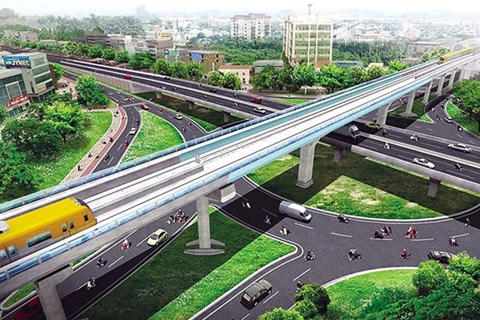
The Politburo has decided that Hanoi, Ho Chi Minh City and other major cities in Vietnam will continue to develop mass transit infrastructure, especially urban rail.
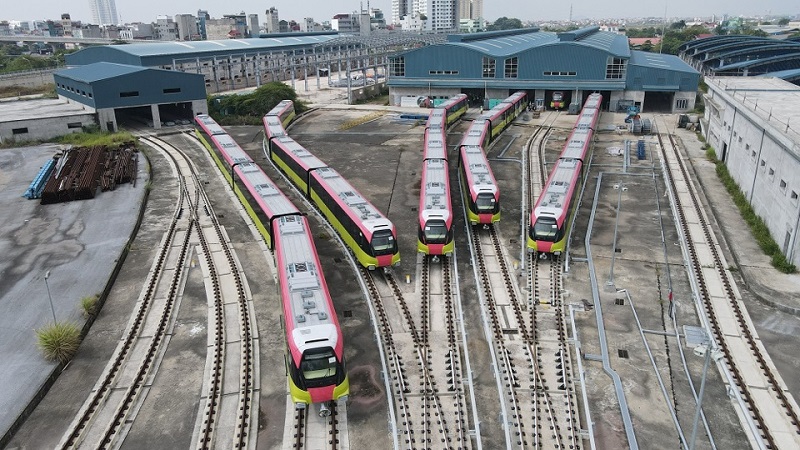
| The depot of the Nhon-Hanoi Station line. Photo: Pham Cong/The Hanoi Times |
The decision is part of the conclusion recently signed by Permanent Member of the Secretariat of the Party Central Committee (PCC) Truong Thi Mai to realize Resolution 13-NQ/TW of the Central Committee of the Communist Party of Vietnam dated January 16, 2012 on building a synchronized infrastructure system to transform Vietnam into a modern industrial country.
Under the conclusion, the Politburo sets the direction of the effective implementation of the viewpoints, goals and development orientations of the infrastructure of transport, electricity, irrigation and the one to respond to climate change, urban areas, industrial parks and economic zones; making full use of the existing infrastructure system, enhancing intra-regional and inter-regional connectivity, narrowing regional and regional gaps and fostering the rational and effective use of land, water, forests and other resources.
The conclusion requires urgent review, amendment and promulgation of policies and laws related to the development of infrastructure systems associated with the goal of building modern industry by 2030.
It called for the study and piloting of public investment-private management and private investment-public use models, as well as the completion of Transit Oriented Development (TOD) models.
The conclusion emphasizec the establishment of mechanisms and policies that are strong enough to promote the creation of a number of leading large economic groups with sufficient resources and modern management capacity to access and master advanced technology in the investment and construction of large infrastructure projects that are important and strategic for the country's development.
It stressed the need to improve the effectiveness and efficiency of state management, decentralise and delegate power in accordance with the organisational and implementation capacity of Party committees, authorities and local leaders, and promote their responsibility, shorten the decision-making process so as to facilitate investment implementation.
It called for administrative reform, facilitating the exchange of data between investment procedures and land, construction, bidding and environmental procedures;
The conclusion emphasized the improvement of the investment and business environment, creating conditions for the involvement of the non-state economic sector. It also provides for the decentralisation of investment and the allocation of responsibility for investment decisions to the leader.
It required a focused, targeted, medium-term public investment plan that links and closely coordinates central and local government and municipalities in the development of the infrastructure system.
The conclusion also urged to review and build databases on socio-economic, natural resources and environment of regions and localities to ensure consistency and connection with the national database system.