Log in
Econ

US agency cancels anti-dumping tariff on Vietnamese shrimp

The subsidiary of the Vietnamese shrimp manufacturer, MSeafood, has not violated the US trade law.

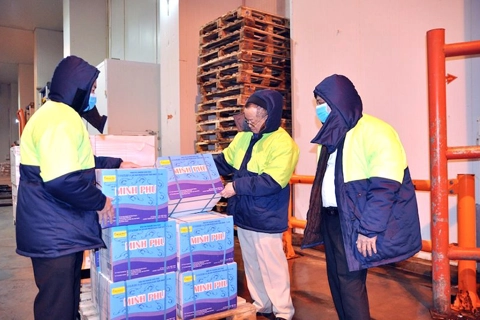
The US Customs and Border Protection (CBP) has canceled anti-dumping duties on the Vietnamese Minh Phu Seafood Corporation’s frozen shrimp for export to the US. 

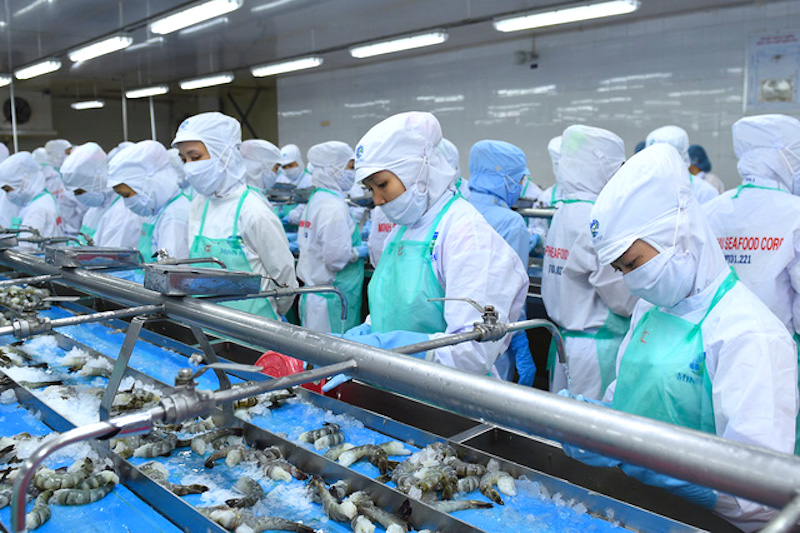
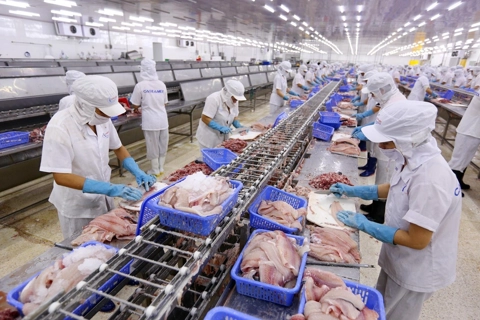
 Local people are working at a factory of Minh Phu Seafood Corporation. Photo: VGP

The CBP under the Enforce and Protect Act (EAPA) concluded on October 13, 2020 that Minh Phu violated the US commercial law by using frozen warm water shrimp imported from India to avoid dumping tax. In addition, the company did not provide sufficient evidence as required to prove that it did not import India’s shrimps for transshipping to the US. Therefore, Minh Phu’s shrimp exported to the US will be subject to an anti-dumping tax of 10% after the CBP’s eight-month investigation.

However, according to Minh Phu, the CBP’s decision does not base on conclusive proofs. Therefore, the company filed an appeal against it.  

Previously, the Vietnamese seafood group actively cooperated and invited the CBP to Vietnam for an investigation, which was not materialized, leading to its inaccurate conclusion on the company’s traceability system on imported and domestic raw material shrimps.

From late July 2019, Minh Phu has stopped importing shrimps from India, as the material source in the country is sufficient for its production and processing activities.

Currently, the company has effectively operated a high-tech shrimp farming model in two farming areas in Kien Giang province and Loc An Commune in Dat Do district in Ba Ria-Vung Tau province with 600 hectares and 300 hectares, respectively. 

Besides, the company has established a network to connect and supply shrimps throughout the Mekong Delta region.
Reactions:
Share:
Trending
Most Viewed
Related news
Real estate firms sell bonds worth $402 million in May

Real estate firms sell bonds worth $402 million in May

Real estate companies have raised $862 million from bond issuance in April and May, thanks to an improved business environment and better access to funding.

Vietnam unveils new strategies to boost domestic market, aid businesses

Vietnam unveils new strategies to boost domestic market, aid businesses

As global trade uncertainties grow, Vietnam sees the domestic market not only as a key consumption driver but also a “lifeline” for businesses hit by protectionist export barriers.

Vietnam eyes US tilapia export boost as global supply falls

Vietnam eyes US tilapia export boost as global supply falls

Vietnam aims to increase tilapia output to 400,000 tons by 2030, making it the second-largest freshwater export species after pangasius.

Vietnam’s enterprises must act fast to weather US tariff shock: Experts 

Vietnam’s enterprises must act fast to weather US tariff shock: Experts 

Many of the key Vietnamese exports, such as wood products, electronics, and textiles, that are not on the US exclusion list could face steep tariffs.

Vietnam's mobile money pilot program extended to end of 2025

Vietnam's mobile money pilot program extended to end of 2025

Mobile Money, launched by the Ministry of Science and Technology, differs from e-wallets by linking users’ payment accounts directly to mobile phone numbers.

Vietnam taps innovation, global ties to elevate national brand

Vietnam taps innovation, global ties to elevate national brand

Vietnam is intensifying efforts to enhance its national brand, leveraging innovation, global partnerships, and strategic policies to bolster its global competitiveness and market presence.

Vietnam extends US$3.9 billion loan package for agro-forestry-fisheries

Vietnam extends US$3.9 billion loan package for agro-forestry-fisheries

The government has expanded the scope and scale of the credit program for the sectors which brought about US$62.4 billion worth of exports in 2024.

Vietnamese public shows rising satisfaction in 2024 PAPI survey

Vietnamese public shows rising satisfaction in 2024 PAPI survey

The 2024 PAPI survey found increasing citizen satisfaction with governance, but highlighted persistent administrative challenges, climate vulnerability, and gaps in access to public services.