Vietnam aviation industry to get bustling in H2
Vietnam Airlines will resume direct flights between Vietnam and Asia, Europe, and Oceania from July to October 2021.
Vietnam’s aviation industry is forecast to recover in the second half (H2) of this year fueled by accelerated vaccination in the country and the world in general.
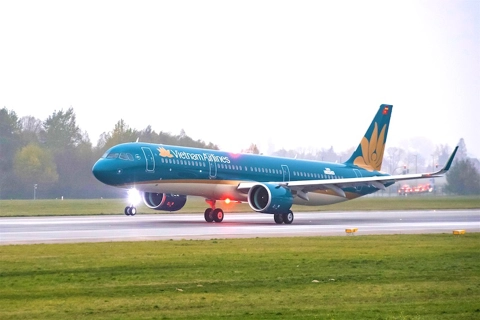
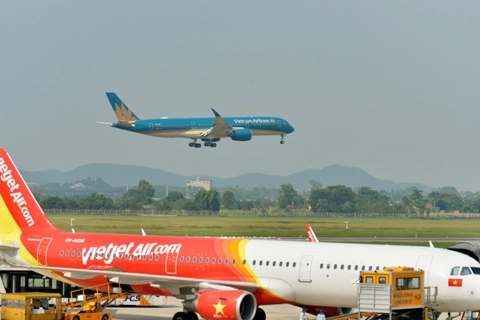
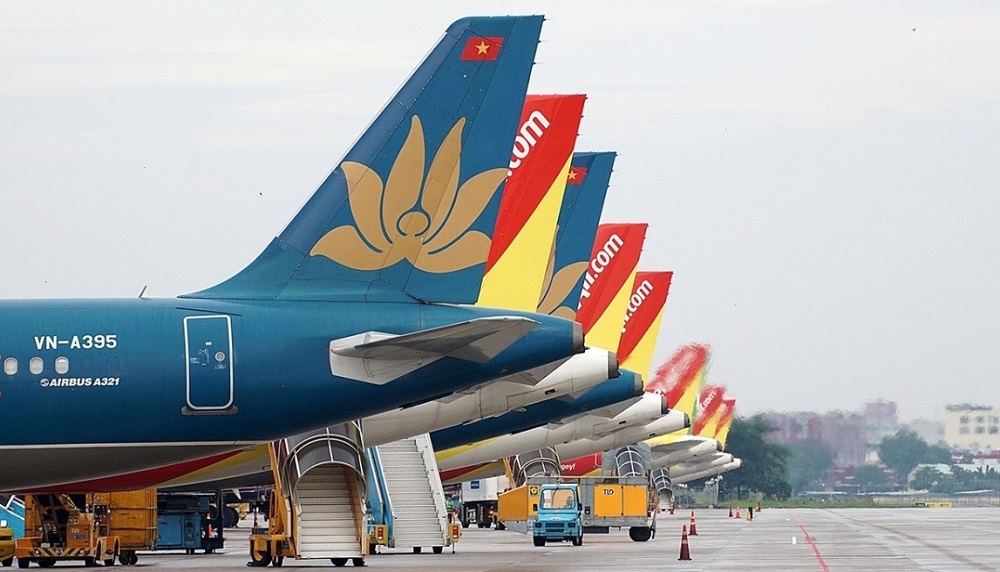
| Airplanes of Vietnam's airlines. Photo: VnExpress |
Many of Vietnam’s key aviation markets such as Northeast Asia and Europe will soon achieve herd immunity that largely supports the gradual reopening of international flights at the end of the third quarter or the fourth quarter of 2021, according to Head of the Civil Aviation Authority of Vietnam (CAAV) Dinh Viet Thang.
Specifically, the national flag carrier Vietnam Airlines will resume direct flights between Vietnam and Asia, Europe, and Oceania from July to October 2021.
Under the plan released on July 12, Vietnam Airlines will resume the Hanoi-Tokyo, Japan flights on Wednesdays and Saturdays from July 17 to October 30; the Ho Chi Minh City-Bangkok, Thailand every Wednesday, and the Tokyo-Ho Chi Minh City on Thursdays between August 1 and September 3.
In addition, the airlines will re-operate the Hanoi-Frankfurt, Germany flights on July 25-28 and August 21; the Hanoi-London the UK on August 13 and September 2; and the return flights one day later.
The Ho Chi Minh City-Sydney flights are scheduled from July 15 to October 30 and the Ho Chi Minh City-Melbourne from July 20 to October 30.
Vietnam Airlines’ upcoming plan is aimed to make full use of vaccination-based opening in order to carry both freight and passengers in round-trip flights to maximize the manpower and boost revenues amid Covid-19 impact.
To support the international flights, Vietnam Airlines will pilot the application of the International Air Transport Association (IATA) Travel Pass, a digital travel mobile app providing passengers with Covid-19 testing results and vaccination status, as of July 15.
Chairman and CEO at British Airways Sean Doyle described the move as “a solution that plays an important role in the resumption of international routes, helping people feel secure to travel and work.”
Longer roadmap
Vietnam’s international passenger market likely takes two or three years to return to the growth rate of 2019 [before the global health crisis] but the domestic flights are expected to bounce back shortly after the pandemic is brought under control, according to Vietnam Airlines’ Chairman Dang Ngoc Hoa.
In 2019, Vietnam’s airports welcomed 116 million passengers, up 12% year-on-year. Cargo increased by 11% to 1.5 million tons and aircraft movement increased by 13% to 740,000 flights.
“With an optimistic scenario, by 2023 or 2024, Vietnam’s aviation market is projected to recover to the same size in 2019,” he stressed.
Head of CAAV Thang said: “Vietnam’s aviation market will begin to recover from the middle of the third quarter of 2021 with more than 70 million passengers travel by air in 2021."
In the coming time, passengers remain foreign diplomats, experts, and Vietnamese returnees in addition to freight.
In the first half of this year, Vietnam’s aviation industry welcomed 26.8 million arrivals, down 19.4% year-on-year while freight increased by 12.7%, statistics by CAAV showed.
Vietnam is the world’s seventh fastest-growing aviation market. In the 2016-2021 period, Vietnam is expected to have the highest average growth rate in Southeast Asia at 17.4%, compared to the 6.1% in ASEAN. The major drivers of this development include a growing tourism industry, the emergence of low-cost carriers, and strong economic growth, according to the US Department of Commerce.
Vietnam has 22 airports, of which 11 are international and 11 are domestic. The total designed capacity of Vietnam airports is approximately 96 million passengers per year.