Investment
Vietnam can position itself to be regional tech hub
Eased business conditions and skilled workforce have enabled Vietnam to compete with leading regional rivals.
Vietnam can position itself as an alternative rather than a direct competitor with Singapore to be the regional tech hub with its investment in technologies, eased business conditions, and skilled workforce, a global expert has said.
First of all, the government has recognized the potential of investing in technology and taking the lead in regional digital development and fruits that have been seen, said CFO of Singapore-based private holding company Kusto Group.
New high-tech parks have been established in Hanoi, Ho Chi Minh, and elsewhere, and the benefits of teaching computer science at school are beginning to bear fruit, the expert told The Business Times.
For large electronics corporations who are already moving manufacturing from China to Vietnam, the ability to employ skilled staff may mean these big players make longer-term investments.
Meanwhile, smaller-scale entrepreneurial investors focus on start-ups whose business particularly includes online services and fintech.
These fields offer foreign investor more room to diversify their investment portfolio in their global operations, according to the expert.
Secondly, infrastructure investment and eased business conditions will be decisive in ensuring that Vietnam can fulfill this potential.
Indeed, the country has risen from 104th place in the World Bank’s Ease of doing Business Rankings in 2007 to 68th place in 2017, proving that the country can continue to develop a supportive environment for these crucial elements.
Thirdly, the middle class is growing to reach around 44 million by 2020, and the figure will be more than double by 2030.
A robust and competitive workforce serves as one of Vietnam’s greatest assets.
In reality, a large workforce with competitive wages will boost production and consumption and act as a driver for growth.
This factor has driven foreign firms’ investment in infrastructure, including high-end real estate sector, office, hospitality, and industrial property in big cities of Hanoi and Ho Chi Minh City.
Given the opportunities in this sector, investors are able to leverage their positive experience across their operations.
Accordingly, the signs of Vietnam’s dynamic transition are visible from the construction of infrastructure and value-added manufacturing to the increasing number of housing and mixed-use real estate projects.
Much of that economic success is attributable to the government’s policies that have brought greater predictability to the investment climate which has attracted long-term foreign direct investment.
In addition, more than a million people are added to the workforce annually, giving the country a “golden population structure.”

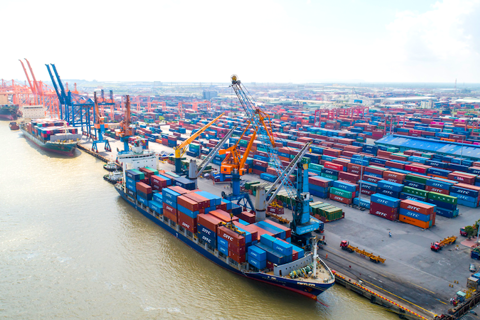
Illustrative photo
|
New high-tech parks have been established in Hanoi, Ho Chi Minh, and elsewhere, and the benefits of teaching computer science at school are beginning to bear fruit, the expert told The Business Times.
For large electronics corporations who are already moving manufacturing from China to Vietnam, the ability to employ skilled staff may mean these big players make longer-term investments.
Meanwhile, smaller-scale entrepreneurial investors focus on start-ups whose business particularly includes online services and fintech.
These fields offer foreign investor more room to diversify their investment portfolio in their global operations, according to the expert.

Vietnam's GDP by sectors in 2015. Photo: EC-LEDS
|
Indeed, the country has risen from 104th place in the World Bank’s Ease of doing Business Rankings in 2007 to 68th place in 2017, proving that the country can continue to develop a supportive environment for these crucial elements.
Thirdly, the middle class is growing to reach around 44 million by 2020, and the figure will be more than double by 2030.
A robust and competitive workforce serves as one of Vietnam’s greatest assets.
In reality, a large workforce with competitive wages will boost production and consumption and act as a driver for growth.
This factor has driven foreign firms’ investment in infrastructure, including high-end real estate sector, office, hospitality, and industrial property in big cities of Hanoi and Ho Chi Minh City.
Given the opportunities in this sector, investors are able to leverage their positive experience across their operations.
Accordingly, the signs of Vietnam’s dynamic transition are visible from the construction of infrastructure and value-added manufacturing to the increasing number of housing and mixed-use real estate projects.
Much of that economic success is attributable to the government’s policies that have brought greater predictability to the investment climate which has attracted long-term foreign direct investment.
In addition, more than a million people are added to the workforce annually, giving the country a “golden population structure.”