Log in
Econ

Vietnam car sales surge 127% in March

Domestic travel resumed in a number of provinces/cities as a result of the country’s effective Covid-19 containment is a major boost for sales figure.

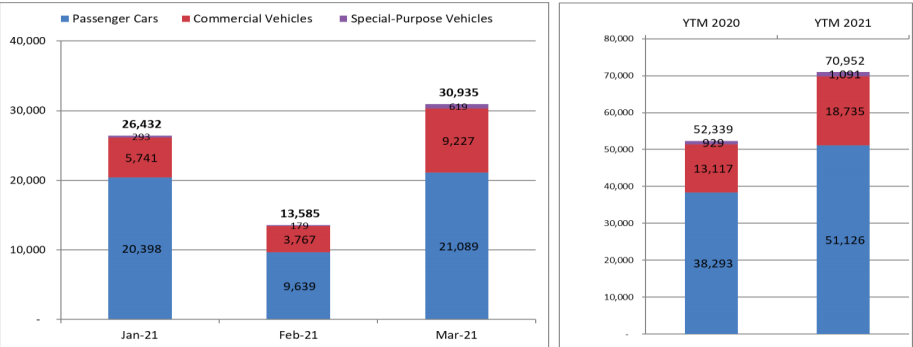
The number of cars sold in Vietnam in March surged by 127% against the previous month to nearly 31,000 units, according to data released monthly by the Vietnam Automobile Manufacturers’ Association (VAMA).

 The sales figure for the first quarter rose by 36% year-on-year to 70,952. Source: VAMA

The volume included over 21,000 passenger cars, representing a whopping increase of 119% month-on-month, while the remaining were commercial cars (9,277), and special-purpose vehicles (619).  

As many as nearly 17,200 locally assembled cars were sold in the period, up 99% against the previous month, and the figure of imported cars rose by 177% to around 13,800 units.

Overall, the sales figure for the first quarter rose by 36% year-on-year to 70,952, in which both domestic- and imported cars recorded positive growth rates of 24% and 55% to 40,262 and 30,690, respectively.

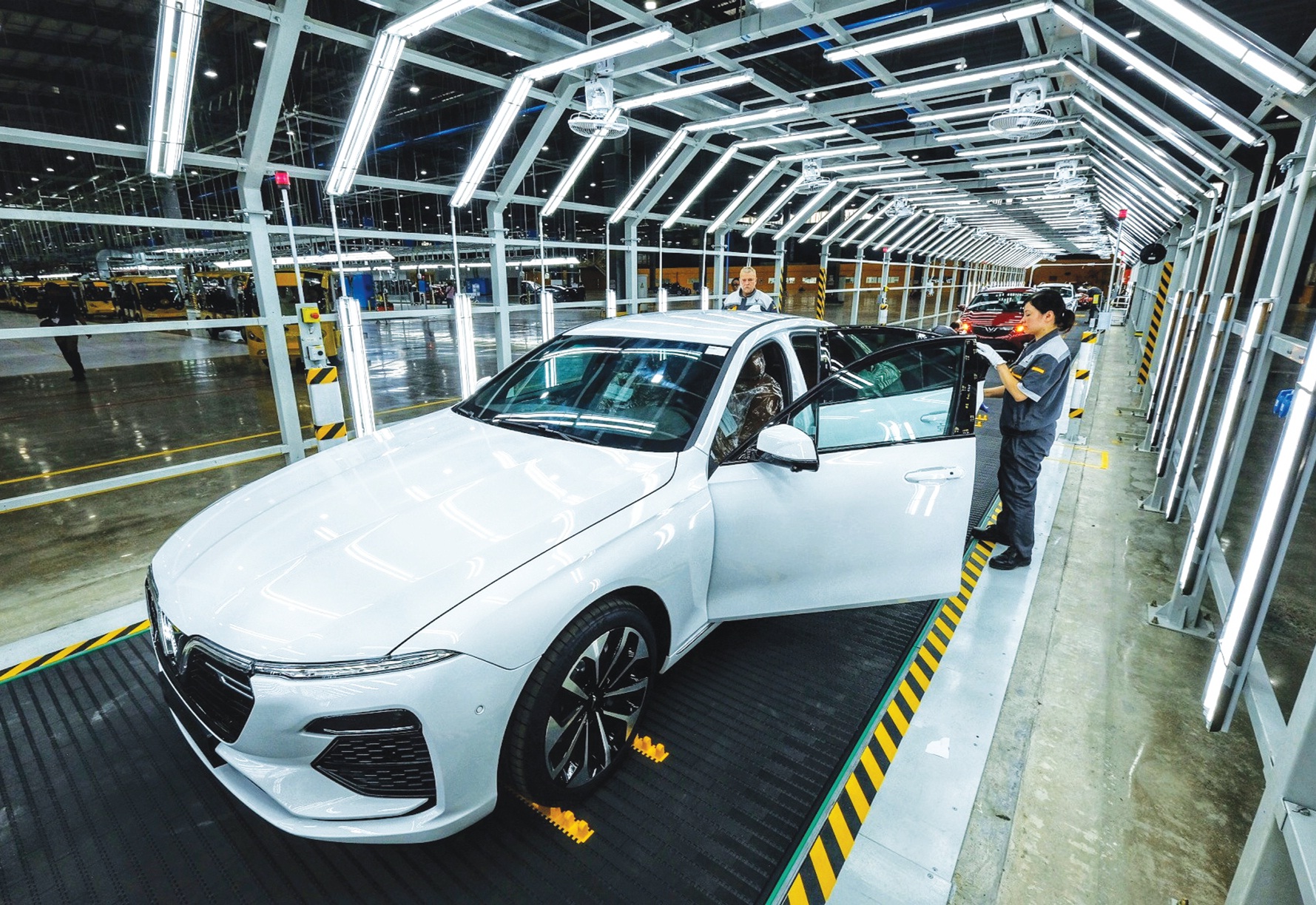
 Car production at Vinfast manufacturing plant. Photo: Pham Hung

Truong Hai Auto Corporation (Thaco) led the market in the period with nearly 25,000 units sold, up 55% year-on-year and accounting for 37% of the total sales in the market, followed by TC Motor (9,079) and Toyota (15,886).

According to experts, in addition to attractive sales promotion offered by car dealers, the fact that domestic travel has resumed in a number of provinces/cities as a result of the country’s effective Covid-19 containment is a major boost for sales figure.

Strong market performance in March has also backed up expectation for a more positive sale figures for the second quarter given the launch of new car models, scheduled to be around April. 
Reactions:
Share:
Trending
Most Viewed
Related news
Real estate firms sell bonds worth $402 million in May

Real estate firms sell bonds worth $402 million in May

Real estate companies have raised $862 million from bond issuance in April and May, thanks to an improved business environment and better access to funding.

Vietnam unveils new strategies to boost domestic market, aid businesses

Vietnam unveils new strategies to boost domestic market, aid businesses

As global trade uncertainties grow, Vietnam sees the domestic market not only as a key consumption driver but also a “lifeline” for businesses hit by protectionist export barriers.

Vietnam eyes US tilapia export boost as global supply falls

Vietnam eyes US tilapia export boost as global supply falls

Vietnam aims to increase tilapia output to 400,000 tons by 2030, making it the second-largest freshwater export species after pangasius.

Vietnam’s enterprises must act fast to weather US tariff shock: Experts 

Vietnam’s enterprises must act fast to weather US tariff shock: Experts 

Many of the key Vietnamese exports, such as wood products, electronics, and textiles, that are not on the US exclusion list could face steep tariffs.

Vietnam's mobile money pilot program extended to end of 2025

Vietnam's mobile money pilot program extended to end of 2025

Mobile Money, launched by the Ministry of Science and Technology, differs from e-wallets by linking users’ payment accounts directly to mobile phone numbers.

Vietnam taps innovation, global ties to elevate national brand

Vietnam taps innovation, global ties to elevate national brand

Vietnam is intensifying efforts to enhance its national brand, leveraging innovation, global partnerships, and strategic policies to bolster its global competitiveness and market presence.

Vietnam extends US$3.9 billion loan package for agro-forestry-fisheries

Vietnam extends US$3.9 billion loan package for agro-forestry-fisheries

The government has expanded the scope and scale of the credit program for the sectors which brought about US$62.4 billion worth of exports in 2024.

Vietnamese public shows rising satisfaction in 2024 PAPI survey

Vietnamese public shows rising satisfaction in 2024 PAPI survey

The 2024 PAPI survey found increasing citizen satisfaction with governance, but highlighted persistent administrative challenges, climate vulnerability, and gaps in access to public services.