Econ
Vietnam moves up 13 places in 2019 Economic Freedom Index
The country’s overall score has increased by 2.2 points, with a sharp increase in fiscal health and higher scores for investment freedom and judicial effectiveness outpacing a decline in monetary freedom.
Vietnam is ranked 128th out of 180 countries and territories with score 55.3 in Heritage Foundation’s latest report on 2019 Index of Economic Freedom, up 13 places from the previous rank of 141st and 53.1 points.
In the latest report, the country’s overall score has increased by 2.2 points, with a sharp increase in fiscal health and higher scores for investment freedom and judicial effectiveness outpacing a decline in monetary freedom.
In 2018, Vietnam's economy expanded at a very fast rate and is expected to benefit from new global supply chains that evolve from ongoing US–China trade tensions.
To continue strong economic growth, Vietnam will need to reform state-owned-enterprises, reduce red tape, improve business-sector transparency, and increase recognition of private property rights, stated the report.
“Strengthening institutions to make the regulatory regime more efficient, shrinking the bloated and opaque bureaucracy and making it more transparent, and bolstering the weak judicial system would also promote economic freedom,” the report added.
Specifically, Vietnam’s business freedom increased by 0.3 points, indicating a positive transformation into a more market-oriented economy. Moreover, administrative procedures have been streamlined, and the regulatory framework for smaller businesses has been improved.
Labor freedom increased by 2.4 points, as stated the labor market has become more flexible and dynamic, the report stated..
However, the country’s monetary freedom declined by 6.5 points. According to the report, it was due to the government’s tightened price controls for air travel, energy, utilities, natural resources, pharmaceuticals, education, health care, and some housing in 2018 to fight inflation.
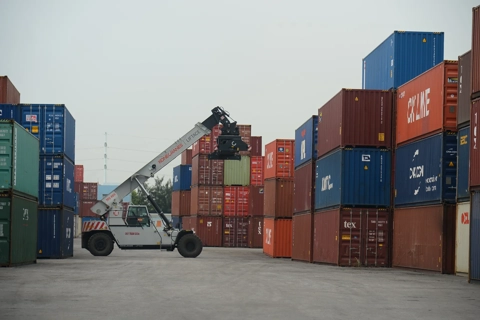
Vietnam remained an open market for trade, as the combined value of exports and imports is equal to 200.3% of GDP. The average applied tariff rate is 2.9%. As of June 30, 2018, according to the WTO, Vietnam had 80 nontariff measures in force.
Additionally, foreign investment restrictions related to commodity trading have been eased, while the state remains involved in the financial sector. About 30% of adult Vietnamese use formal banking services.
The report suggested Vietnam improve the status of property rights. Fiscal health remained a concern, it stressed. Over the past three years, government spending has amounted to 29.4% of the country’s output (GDP), and budget deficits have averaged 5.7% of GDP. Public debt is equivalent to 58.2% of GDP.

Source: Heritage Foundation.
|
In 2018, Vietnam's economy expanded at a very fast rate and is expected to benefit from new global supply chains that evolve from ongoing US–China trade tensions.
To continue strong economic growth, Vietnam will need to reform state-owned-enterprises, reduce red tape, improve business-sector transparency, and increase recognition of private property rights, stated the report.
“Strengthening institutions to make the regulatory regime more efficient, shrinking the bloated and opaque bureaucracy and making it more transparent, and bolstering the weak judicial system would also promote economic freedom,” the report added.
Specifically, Vietnam’s business freedom increased by 0.3 points, indicating a positive transformation into a more market-oriented economy. Moreover, administrative procedures have been streamlined, and the regulatory framework for smaller businesses has been improved.
Labor freedom increased by 2.4 points, as stated the labor market has become more flexible and dynamic, the report stated..
However, the country’s monetary freedom declined by 6.5 points. According to the report, it was due to the government’s tightened price controls for air travel, energy, utilities, natural resources, pharmaceuticals, education, health care, and some housing in 2018 to fight inflation.
Vietnam remained an open market for trade, as the combined value of exports and imports is equal to 200.3% of GDP. The average applied tariff rate is 2.9%. As of June 30, 2018, according to the WTO, Vietnam had 80 nontariff measures in force.
Additionally, foreign investment restrictions related to commodity trading have been eased, while the state remains involved in the financial sector. About 30% of adult Vietnamese use formal banking services.
The report suggested Vietnam improve the status of property rights. Fiscal health remained a concern, it stressed. Over the past three years, government spending has amounted to 29.4% of the country’s output (GDP), and budget deficits have averaged 5.7% of GDP. Public debt is equivalent to 58.2% of GDP.