Econ
Vietnam prepares workforce to accommodate influx of companies amid US-Sino trade war
Vietnam rushes to prepare manpower in a goal of training 2 million people at vocational schools.
The US plan to place tariffs on additional US$300 billion worth of Chinese goods has sparked the relocation of multinational companies from China to Vietnam, and such relocation plans raise the question of what Vietnam acts to accommodate influx of companies in the unpredicted trade conflicts between the world’s largest economies.
The Vietnamese government has a goal of training 2 million people in vocational schools to meet the growing demand for technical skills among multinational companies, according to CNBC.
More than 90% of students trained in technical skills, such as welding or making electronics, can get hired, Professor Nguyen Quang Huy told CNBC, adding that it’s very easy to get a job, and a lot of companies need more people.
The country’s middle class is growing to reach around 44 million by 2020, and the figure will be more than doubled by 2030.
In addition, more than a million people are added to the workforce annually, giving the country a “golden population structure”, according to Singapore-based private holding company Kusto Group.
Meanwhile, beneficial firms in Vietnam, mostly apparel and shoe makers, are starting to grow to meet higher requirements.
Textile firm TNG Investment & Trading told CNBC that it’s never seen an expansion like this before. Last year, the firm hired 3,000 employees, bringing its total to 15,000.
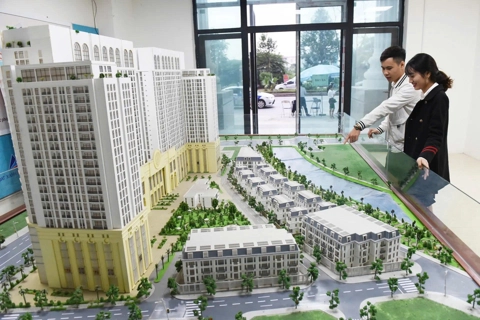
The expansion has required TNG to build an apartment complex to accommodate the additional employees. The company needs to build a home for the people than actually building a factory to retain high-skilled workers for long strategies, according to TNG’s Linh Nguyen.
The aforementioned moves are part of preparations for the upcoming demand. In fact, multinational companies are starting to question whether it’s time to shift production out of China due to the ongoing trade war between Washington and Beijing.
Many firms are already making the move to other countries, with Vietnam as one of the main destination for relocation due to tensions between the world’s two largest economies.
Some of them, such as Brooks Running, which is part of Warren Buffett’s Berkshire Hathaway, are not waiting to see if the additional China tariffs will go into effect.
CNBC reported that CEO Jim Weber said back in May that Brooks would be predominantly in Vietnam by the end of the year. He also said about 8,000 jobs will move there from China.
However, Vietnam still lacks much of the infrastructure to accommodate the expected influx.
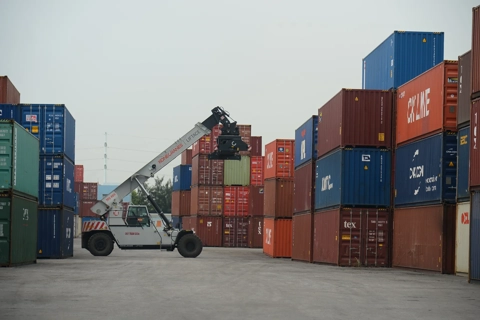
The country needs to raise capacity of terminals, mostly ports and improve logistics sector. Vietnam is building a deep-water port that can make transfers easier, but that won’t open for another three years.

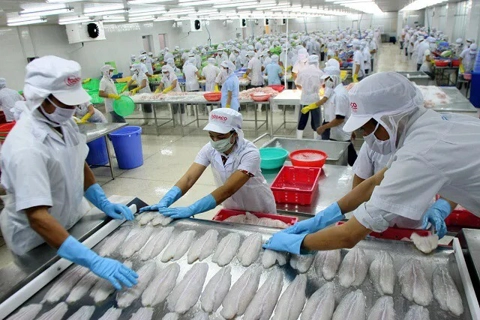
Textile workers. Illustrative photo
|
More than 90% of students trained in technical skills, such as welding or making electronics, can get hired, Professor Nguyen Quang Huy told CNBC, adding that it’s very easy to get a job, and a lot of companies need more people.
The country’s middle class is growing to reach around 44 million by 2020, and the figure will be more than doubled by 2030.
In addition, more than a million people are added to the workforce annually, giving the country a “golden population structure”, according to Singapore-based private holding company Kusto Group.

Engineers. Illustrative photo
|
Textile firm TNG Investment & Trading told CNBC that it’s never seen an expansion like this before. Last year, the firm hired 3,000 employees, bringing its total to 15,000.
The expansion has required TNG to build an apartment complex to accommodate the additional employees. The company needs to build a home for the people than actually building a factory to retain high-skilled workers for long strategies, according to TNG’s Linh Nguyen.
The aforementioned moves are part of preparations for the upcoming demand. In fact, multinational companies are starting to question whether it’s time to shift production out of China due to the ongoing trade war between Washington and Beijing.
Many firms are already making the move to other countries, with Vietnam as one of the main destination for relocation due to tensions between the world’s two largest economies.
Some of them, such as Brooks Running, which is part of Warren Buffett’s Berkshire Hathaway, are not waiting to see if the additional China tariffs will go into effect.
CNBC reported that CEO Jim Weber said back in May that Brooks would be predominantly in Vietnam by the end of the year. He also said about 8,000 jobs will move there from China.
However, Vietnam still lacks much of the infrastructure to accommodate the expected influx.
The country needs to raise capacity of terminals, mostly ports and improve logistics sector. Vietnam is building a deep-water port that can make transfers easier, but that won’t open for another three years.