Econ
Vietnam raises US$6.3 billion from state capital divestment
Vietnam’s government raked in nearly VND144.58 trillion (US$6.34 billion) through equitisation and divestment at State-owned enterprises (SOEs) last year.
According to a new report on the management and use of State capital and assets, the proceeds were 2.41 times higher than the target of VND60 trillion set by the National Assembly.
The report showed that the value of State capital at SOEs equitised last year was at VND160.08 trillion, rising 6.34 times against the previous year.
Last year, the government also approved the equitisation plans of 69 SOEs. The State holdings in some of the SOEs were very large, such as Vietnam Rubber Group (VND38.8 trillion), Electricity Generator No.3 (VND26.1 trillion), PV Oil (VND10.34 trillion), PV Power (VND23.42 trillion) and Binh Son Refinery (VND31.04 trillion).
In the first quarter of this year, the proceeds from SOEs divestment was more than VND1.39 trillion ($61.5 million), the Ministry of Finance reported.
The government in Q1 also approved the equitisation plans for two State-owned companies, Phuoc An-Dak Nong Coffee Company and Van Tuong Company, at a total value of VND987 billion ($43.48 million). The state holdings in these companies are VND187 billion ($3.83 million).
Vietnam considers 2018 a key year in the country’s SOE restructuring plan, targeting to equitise at least 86 SOEs in the year with 64 of which being large size. The target is tough, but experts believed it is feasible thanks to many favorable conditions including high economic growth and macroeconomic stability.
According to Dang Quyet Tien, director general of the Ministry of Finance’s Department of Corporate Finance, the number of SOEs earmarked for equitisation and divestment in 2018 account for over 50 and 46 per cent of the total number planned for 2017-2020.
“Therefore, 2018 can be considered an important year for SOE reform. Nonetheless, the annual equitisation and divestment schedule could be subject to changes as precisely 127 SOEs would be equitised and 406 would be divested by the end of 2020,” Tien said.
Early this year, Deputy Prime Minister Vuong Dinh Hue also told the media that Vietnam is dramatically accelerating sales of stakes in SOEs, announcing this year’s plan to sell 6.5 times more shares than it offered last year.
The plan is aimed to boost revenue and ease a strained budget, while seeking to exceed its economic growth target this year.
“We need more foreign investment but also want to lure good investors who can help our companies improve corporate governance,” Hue said. The assets the government plans to sell “will include leading companies in energy, power and petroleum,” he said.
Vietnam has struggled to privatize state companies with many of them finding it difficult to value their shares. The government is working on plans to allow more foreign ownership in sectors include banks, Hue said.
He said that economic growth this year may match 2017’s pace of 6.8 percent -- slightly higher than the 6.7 percent target set by the government -- despite risks of rising trade protectionism around the world.
“There are some risks and challenges remaining in the Vietnamese economy but the biggest challenge will be that we want to grow faster but also in a sustainable manner at a time when there are unpredictable movements in the world economies,” Hue said.
The economy, which posted a total trade value last year that was 1.93 times bigger than its GDP, is susceptible to global turbulence that can quickly have a direct impact on Vietnam in terms of trade, investment, currency, he added.
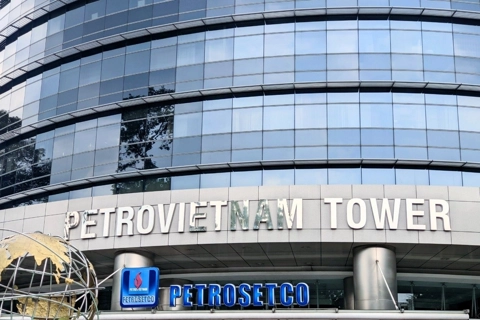
The State divested capital at Dung Quat Refinery
|
Last year, the government also approved the equitisation plans of 69 SOEs. The State holdings in some of the SOEs were very large, such as Vietnam Rubber Group (VND38.8 trillion), Electricity Generator No.3 (VND26.1 trillion), PV Oil (VND10.34 trillion), PV Power (VND23.42 trillion) and Binh Son Refinery (VND31.04 trillion).
In the first quarter of this year, the proceeds from SOEs divestment was more than VND1.39 trillion ($61.5 million), the Ministry of Finance reported.
The government in Q1 also approved the equitisation plans for two State-owned companies, Phuoc An-Dak Nong Coffee Company and Van Tuong Company, at a total value of VND987 billion ($43.48 million). The state holdings in these companies are VND187 billion ($3.83 million).
Vietnam considers 2018 a key year in the country’s SOE restructuring plan, targeting to equitise at least 86 SOEs in the year with 64 of which being large size. The target is tough, but experts believed it is feasible thanks to many favorable conditions including high economic growth and macroeconomic stability.
According to Dang Quyet Tien, director general of the Ministry of Finance’s Department of Corporate Finance, the number of SOEs earmarked for equitisation and divestment in 2018 account for over 50 and 46 per cent of the total number planned for 2017-2020.
“Therefore, 2018 can be considered an important year for SOE reform. Nonetheless, the annual equitisation and divestment schedule could be subject to changes as precisely 127 SOEs would be equitised and 406 would be divested by the end of 2020,” Tien said.
Early this year, Deputy Prime Minister Vuong Dinh Hue also told the media that Vietnam is dramatically accelerating sales of stakes in SOEs, announcing this year’s plan to sell 6.5 times more shares than it offered last year.
The plan is aimed to boost revenue and ease a strained budget, while seeking to exceed its economic growth target this year.
“We need more foreign investment but also want to lure good investors who can help our companies improve corporate governance,” Hue said. The assets the government plans to sell “will include leading companies in energy, power and petroleum,” he said.
Vietnam has struggled to privatize state companies with many of them finding it difficult to value their shares. The government is working on plans to allow more foreign ownership in sectors include banks, Hue said.
He said that economic growth this year may match 2017’s pace of 6.8 percent -- slightly higher than the 6.7 percent target set by the government -- despite risks of rising trade protectionism around the world.
“There are some risks and challenges remaining in the Vietnamese economy but the biggest challenge will be that we want to grow faster but also in a sustainable manner at a time when there are unpredictable movements in the world economies,” Hue said.
The economy, which posted a total trade value last year that was 1.93 times bigger than its GDP, is susceptible to global turbulence that can quickly have a direct impact on Vietnam in terms of trade, investment, currency, he added.