Vietnam urges direct purchase for more types of electricity
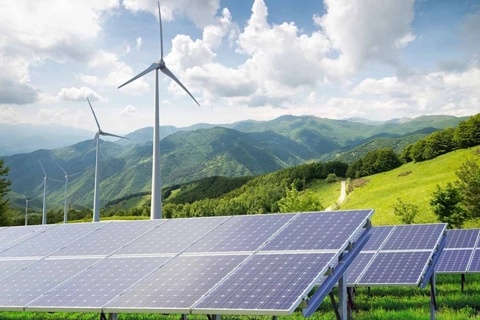
The Government’s stance is to encourage all forms of renewable energy, not just wind and solar.
Deputy Prime Minister Tran Hong Ha has requested the Ministry of Industry and Trade (MoIT) to consider including biomass and waste-to-energy sources in direct power purchase agreements (DPPA), allowing them to bypass the state-owned Vietnam Electricity (EVN).
| Deputy Prime Minister Tran Hong Ha at the meeting. Photos: Duc Tuan |
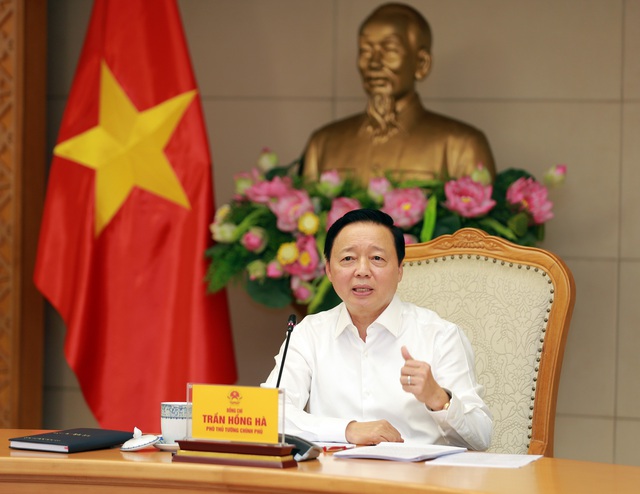
The deputy prime minister highlighted the view during a Government discussion of the draft decree on the DPPA mechanism on June 7. This was the second meeting within a month at which the government and relevant agencies discussed the initiative.
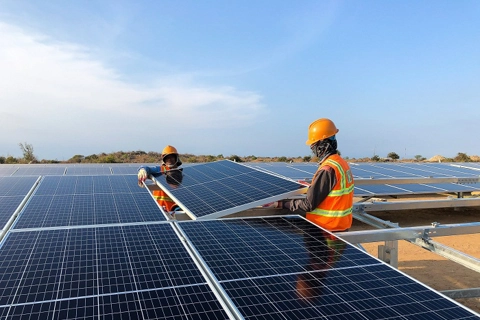
In the draft decree, the MoIT proposed two DPPA models: one using private power lines and the other through the national grid (via EVN). The power supply would come from renewable energy plants (wind and solar) with a capacity of over 10 MW if connected to the grid, or with no capacity limit if using private lines.
For grid-connected cases, Deputy Minister of Industry and Trade Nguyen Sinh Nhat Tan explained that renewable energy producers would participate in the competitive wholesale electricity market under the DPPA model. The 10 MW cap is seen as favorable for market entry.
"In the future, if operations run smoothly, we can consider removing or lowering this limit," he stated.
Deputy Prime Minister Ha emphasized that the DPPA mechanism is revolutionary, particularly in encouraging investment and developing a competitive retail electricity market. Citing the Electricity Law and Resolution 55 of the Politburo, which aims to develop a competitive, diversified electricity market, he urged the MoIT to include biomass and waste-to-energy sources.
"The spirit is to encourage all forms of renewable energy, not just wind and solar," he said.
Foreign-invested enterprises have long advocated for the DPPA mechanism, believing it would have a positive impact on competition in the energy sector. Large corporations like Samsung, Heineken, and Nike, with an average monthly consumption exceeding 1,000,000 kWh, are interested in participating.
A survey by the MoIT late last year showed that about 20 large companies wish to buy electricity directly from generators, with a total demand of nearly 1,000 MW. Additionally, 24 renewable energy projects with a capacity of 1,773 MW want to sell electricity through the DPPA mechanism, while 17 projects with a capacity of 2,836 MW are considering participation.
The draft decree stipulates that buyers must be organizations or individuals using electricity for production with a voltage level of 22 kV or higher and an average monthly consumption of 500,000 kWh. Smaller consumers, such as small businesses and households, are currently not eligible for direct purchase.
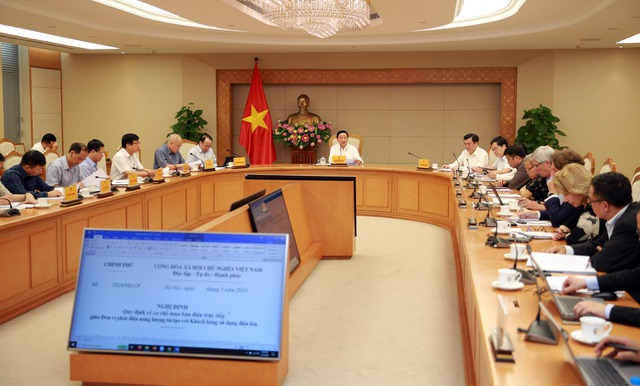
| Overview of the meeting. |
Ha, however, questioned the rationale behind the 500,000 kWh per month threshold, asking for a clear definition of large consumers and clarity on whether industrial zones could represent their customers when buying electricity.
Deputy Minister Tan from the MoIT replied that the threshold for defining large customers was set to balance different objectives. According to surveys of power companies, there are nearly 1,500 large customers consuming over 1 million kWh per month, accounting for 26% of total consumption, and about 3,000 customers consuming over 500,000 kWh per month, accounting for 30%.
"In order to balance the demand from clean energy customers and the financial impact on EVN and power generators, the Ministry of Industry and Trade proposes a threshold of 500,000 kWh per month," he explained.
Tran Viet Hoa, Director of the Electricity Regulatory Authority of Vietnam (ERAV) under the MoIT, noted that the key innovation of the DPPA mechanism is that renewable energy producers can sell into the electricity market, and large electricity consumers can buy directly at market prices. Currently, customers can only purchase electricity through power companies at the average retail price.
Hoa emphasized that the policy should encourage and effectively manage direct power purchases via private lines to avoid issues like fire hazards and landscape scarring. He also called on the MoIT to transparently outline the costs associated with using EVN or third-party transmission services, including infrastructure and loss charges, so that buyers and sellers can make informed decisions.