Mekong region acts towards sustainable infrastructure development
The Friends of the Mekong meeting focuses discussion on human resource development, digital economy, sustainable water, natural resource management, and environmental protection.
The first Friends of the Mekong Policy Dialogue under the new Mekong-US Partnership has offered recommendations on sustainable infrastructure development and connectivity in support of a secure, prosperous, and open Mekong Region.
| US Deputy Secretary of State Stephen Biegun said at a Mekong-US Partnership meeting in 2020. Photo: Vietnam News Agency |
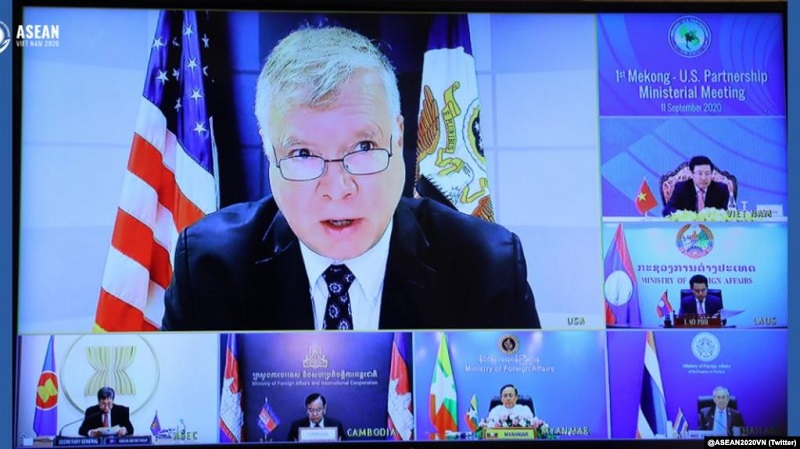
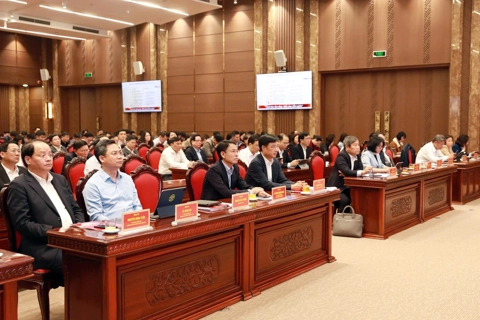
The dialogue, which was convened earlier this week by the US and Vietnam with the participation of 17 countries and institutions, including Australia, Japan, South Korea, Brunei, New Zealand, the EU, the Asian Development Bank, the World Bank, the ASEAN Secretariat, and the Mekong River Commission.
The event also covers other contents including human resource development and building the foundations for a Mekong digital economy; sustainable water, natural resource management, and environmental protection; as well as Covid-19 response and regional collaboration on health security.
In his remarks, Principal Deputy Assistant Secretary of State for East Asian and Pacific Affairs Ambassador Atul Keshap highlighted the importance of this region to ASEAN centrality and to the ASEAN Outlook on the Indo-Pacific, according to the US Department of State.
The meeting is further evidence of the expanded US commitment to the Mekong region, the department said.
In September 2020, foreign ministers from Mekong-region countries and Deputy Secretary of State Stephen Biegun, along with the ASEAN Secretary-General, launched the Mekong-US Partnership.
They pledged to deepen and broaden relations, focusing on critical issues like economic connectivity and infrastructure, human resources development, natural resources, and non-traditional security, including transnational crime, disaster preparedness, and health security.
The Mekong-US Partnership includes the Governments of the United States, Burma, Cambodia, Lao PDR, Thailand and Vietnam.
The Mekong-US Partnership (MUSP) seeks to encourage equitable, sustainable, and inclusive growth in the Lower Mekong Region.
The MUSP seeks to meet regional development challenges by implementing capacity building projects and programs with active involvement and close cooperation of the governments in the Mekong region.
Its goal is to deliver equitable, sustainable, and inclusive economic growth among the five MUSP partner countries by promoting connectivity and collaboratively addressing regional trans-boundary development and policy challenges.
Carl Thayer, Southeast Asia-specialized emeritus professor the University of New South Wales, Canberra, said many programs to be undertaken by the Mekong-US Partnership are structured multilaterally among six states, the US, Cambodia, Laos, Myanmar, Thailand and Vietnam.
The professor said the US has three main motivations in creating the Mekong-US Partnership: (1) to address emerging challenges in the Lower Mekong such as pandemic response, transboundary water management, and cyber security; (2) to increase the US engagement with the five Lower Mekong states as part of a larger strategy of US engagement with ASEAN; and (3) to counter China’s influence and provide an alternative to China’s Belt and Road Initiative.
According to Prof. Thayer, at the launch of the Mekong-US Partnership, Secretary of State Mike Pompeo accused the Chinese Communist Party (CCP) with threatening “the Mekong’s natural environments and economic autonomy.” He directly charged China with exacerbating the historic drought in 2019 by withholding water upstream.