What’s behind the Mekong-US Partnership?
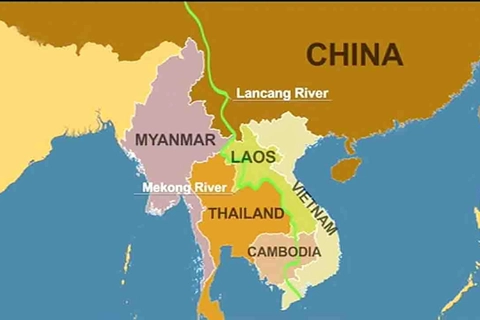
Five countries of the Mekong sub-region are believed to be important to the US and its vision of a free and open Indo-Pacific region.
The countries in the recently-launched Mekong-US Partnership are of great significance to Washington's vision of a free and open Indo-Pacific region.
In a latest move, the US has committed roughly US$153 million initially to support expanded regional cooperation with five countries namely Myanmar, Cambodia, Laos, Thailand and Vietnam that US Assistant State Secretary David Stilwell called "important to the US."
| Emeritus Professor Carl Thayer of the University of New South Wales, Canberra. Source: Carl Thayer's facebook |
.jpg)
To see motivation and meaning of the Mekong-US partnership, Emeritus Professor Carl Thayer of the University of New South Wales, Canberra has shared with Hanoitimes his views on the issue.
Could you please talk about the motivation behind the Mekong-US Partnership, its origin, role and meaning? Mekong countries in this partnership means China is excluded?
Prof. Carl Thayer: The Mekong-US Partnership grew out of the Lower Mekong Initiative. It held its first meeting on September 11 this year. The Mekong-US Partnership aim is to expand programs that were carried out under the Lower Mekong Initiative by achieving three main goals: (1) to build regional capacity to increase, transparency, good governance, and sustainable development; (2) to strengthen public and private connectivity between the US and Cambodia, Laos, Myanmar, Thailand and Vietnam; (3) and to identify and find solutions for key regional challenges by working with international partners. The US made an initial pledge of US$153 million to fund joint projects.
Many programs to be undertaken by the Mekong-US Partnership are structured multilaterally among six states, the US, Cambodia, Laos, Myanmar, Thailand and Vietnam.
The US also will execute some of its initiatives through the Mekong River Commission which has experienced staff and long-standing programs. The Mekong River Commission has four members (Cambodia, Laos, Thailand and Vietnam) and two dialogue partners (China and Myanmar).
The US has three main motivations in creating the Mekong-US Partnership: (1) to address emerging challenges in the Lower Mekong such as pandemic response, transboundary water management, and cyber security; (2) to increase the US engagement with the five Lower Mekong states as part of a larger strategy of US engagement with ASEAN; and (3) to counter China’s influence and provide an alternative to China’s Belt and Road Initiative.
What is the difference between the Mekong-US Partnership and the Mekong Lower Initiative?
Prof. Carl Thayer: The Mekong-US Partnership replaces the Lower Mekong Initiative (2009-2020) as the main form of US engagement with the five riparian states on the Lower Mekong. The LMI had two main pillars: (1) Water, food and environment and (2) Human development and connectivity. Over the last eleven years the US provided US$3.5 billion in assistance in six areas: health, economic growth, peace and security, human rights and governance, education and social services, and humanitarian assistance.
The Mekong-US Partnership will provide funding for seven areas: (1) emergency health to combat Covid-19, (2) upgrading energy systems, (3) law enforcement and justice, (4) energy infrastructure and energy markets, (5) regional governance through increased transparency, East-West connectivity, women’s economic empowerment, and water security (6) disaster relief exercises, and (7) policy dialogues.
| US Secretary of State Mike Pompeo has made efforts to promote the Mekong-US Partnership. Photo: US Mission to ASEAN |
.png)
How Mekong countries welcome the Mekong-US Partnership and Washington's pledge to cooperate and support?
Prof. Carl Thayer: Because of the long-standing and broad nature of US assistance, the Mekong-US Partnership initiative has been welcomed by all the five riparian states because the partnership addresses key priorities set by ASEAN including connectivity and sustainable development.
Would you please give some brief on the current situation of Mekong river, dam construction, and impact on downstream and basin?
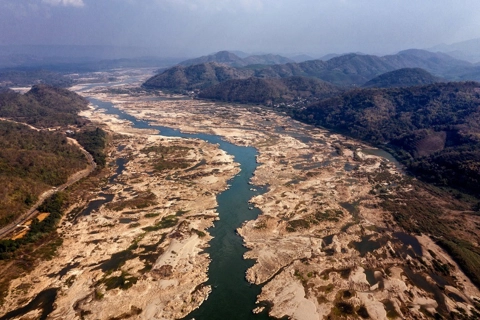
Prof. Carl Thayer: Since the 1990s, China has constructed a cascade of eleven major dams on the Upper Mekong, including five dams built in the last three years. China’s water management during widespread severe drought last year became a matter of controversy and point of contention between China and the US.
In April 2020, Alan Basist (Eyes on Earth Inc.) and Claude Williams (Global Environmental Satellite Applications, Inc.) published a US-funded research report that concluded, “The five dams built since 2017 are compounding the alteration of natural river flow as the reservoirs are filled and water is released… The severe lack of water in the Lower Mekong during the wet season of 2019 is largely influenced by the restriction of water flowing from the Upper Mekong during that time.”
This document is widely referred to as the Eyes on Earth report.
Geng Shuang, a spokesperson for China’s Ministry of Foreign Affairs, dismissed the Eyes on Earth report as “groundless” and argued that China did not limit the flow of water even though it too suffered severe drought last year.
The Mekong River Commission (MRC) responded by issuing a report that assessed the Eyes on Earth report “does not provide robust scientific evidence that the storing of water in Chinese reservoirs caused the exceptionally low flows in the LMB [Lower Mekong Basin] at Vientiane in 2019 and 2020.”
The MRC report determined “that the 2019 drought was due to very low rainfall during the wet season with a delayed arrival and earlier departure of monsoon rains and an El Nino event that created an abnormally higher temperature and higher evapotranspiration.” The report concluded that “water infrastructures in the Lower Mekong tributaries – where some 73 out of 150 planned dams have been installed over the last 55 years – could have various degrees of impact on the flow.”
At the launch of the Mekong-US Partnership, Secretary of State Mike Pompeo accused the Chinese Communist Party (CCP) with threatening “the Mekong’s natural environments and economic autonomy.” He directly charged China with exacerbating the historic drought in 2019 by withholding water upstream. Pompeo called on the Lower Mekong countries “to hold the CCP accountable to its pledge to share its water data. That data should be public. It should be released year-round… [and] shared through the Mekong River Commission.”